Tuesday, January 18, 2011

Herpers Herping

One of the most rewarding experiences about field herping is that it allows you to meet other herpers from different regions of the country who share the same passion that you do. Over the years, I've been fortunate enough to meet some really interesting people from all over the country, from out west in Colorado, southeast to Florida, and north to Canada. I'll just share some photos from the past few years of various herpers I've had the pleasure to herp with over the past few years.

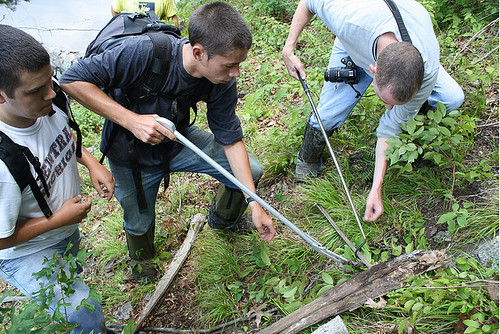
Myself, Todd Pierson, & Robbie Webb extracting a Copperhead from a log in southern Indiana

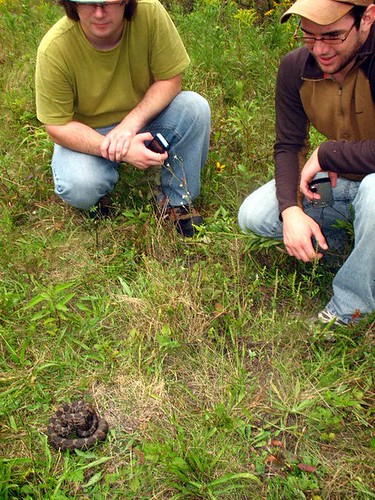
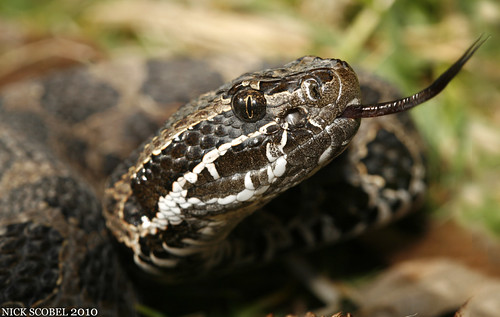
Chris & Colin Boguslawski with a large Eastern Massasauga Rattlesnake

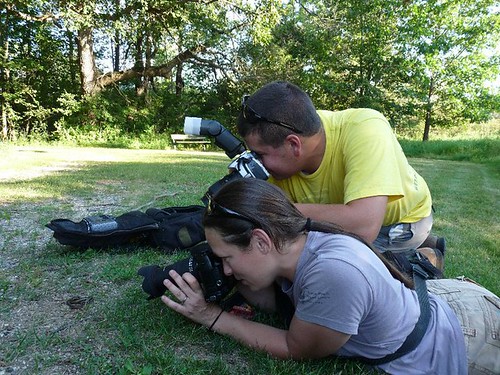
Kara Pattison & Myself photographing a Butler's Garter Snake

Jake Seals & Myself photographing a Western Mud Snake

Alex Clark, Carl Koch, & Myself sporting Massasauga gear in Illinois

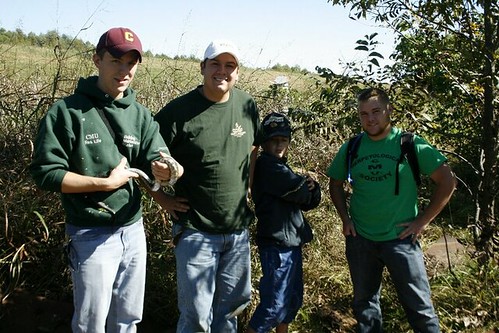
Alex Clark, Myself, Raymond, & Dusty Jordan with Kingsnakes in Illinois

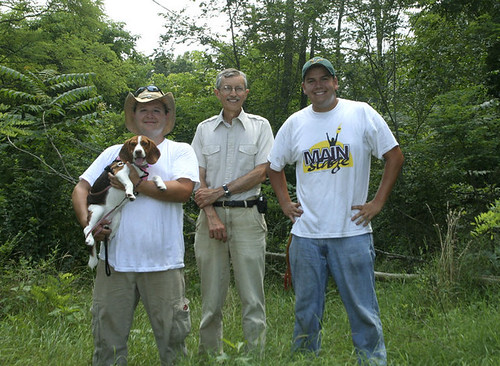
Herpetologists Dave Mifsud, Jim Harding, & Myself at Box Turtle Site in Michigan

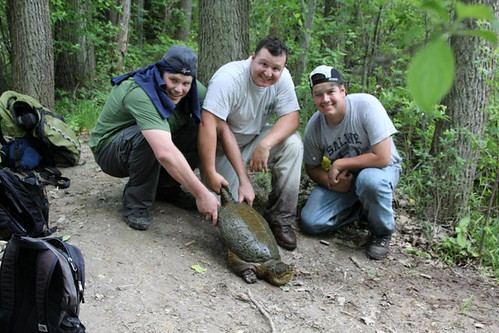
Jason Folt, Dave Mifsud, & Myself with a large Snapping Turtle in Ontario, Canada

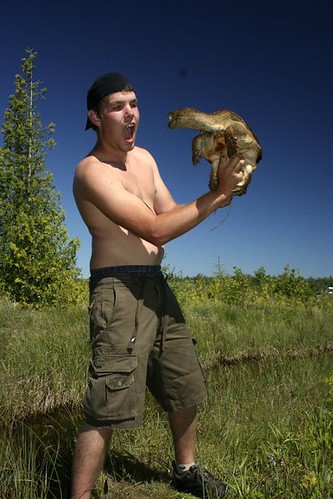
Josh Vandermuelen gets cuddly with a Snapper in Ontario, Canada

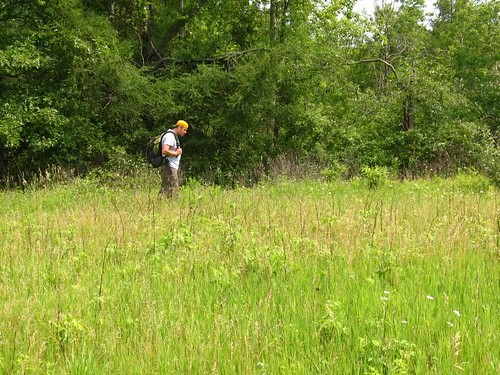
Jason Folt searches a field for basking Eastern Massasauga Rattlesnakes

I hope than the coming year will give me more opportunities to get into the field with some old friends and meet some new faces as well. Until then, happy herping!

Thursday, January 6, 2011

The Forgotten Few

Many of the more glamorous or rare species of reptiles and amphibians often get the most attention throughout the herpetofaunal community. Often, some of the more extremely common species are overlooked and discarded as "trash" snakes that are as common as dirt. In Michigan, there is no group of herps that is more over looked than the genus Thamnophis, the Garter Snakes. The Wolverine state is home to three species of Garter Snake which include the Eatern Garter, Butler's Garter, and the Northern Ribbon. I'll begin with the less known of the three, the Butler's Garter Snake.

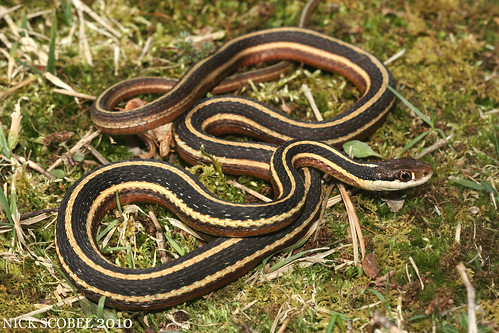
Butler's Garter Snake - Thamnophis butleri

This small snake species is less common than its other two counterparts in Michigan. It inhabits meadows, grasslands, marshlands, and vacant lots in the eastern half of the lower peninsula. Though it has a spotty distribution, they can be found in huge number at sites where populations exist. Butler's Garter Snakes are easily confused with Eastern Garter Snakes to the untrained eye, but there's a few practical ways to distinguish between the two species in the field. Butler's are usually smaller in general than Easterns, and they have a much smaller head in comparison to their body. A good field mark for a Butler's Garter Snake is a small, dark, bullet-shaped head which has little distinction from the neck. This species consumes mostly earthworms in the field, but it will also take slugs and small amphibians.

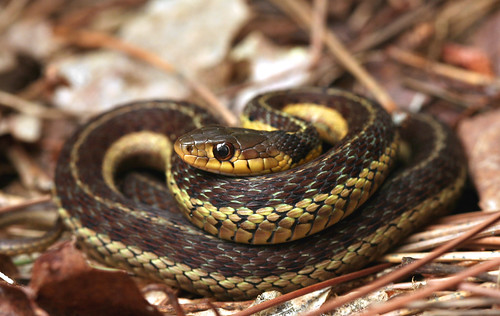
Eastern Garter Snake - Thamnophis sirtalis sirtalis

This is the "Gardener" snake that most Michigan residents are most accustomed to. It can be found in almost any habitat in Michigan including woodlands, grasslands, marshes, fens, city lots, and backyards. It is a medium sized snake that is usually characterized as a dark-ish snake with three bright stripes running down its body. This snake is highly variable in cover, some individuals can be black, brown, olive with yellow, white, or even orange-ish red striped. Some individuals may even be completely black, this is known as melanism. It is usually much larger than the Butler's Garter Snake and its head it usually larger than the body in comparison to the Butler's. Eastern Garter Snakes are not picky eaters as they are known to feed on earthworms, slugs, frogs, toads, rodents, and occasionally other snakes.

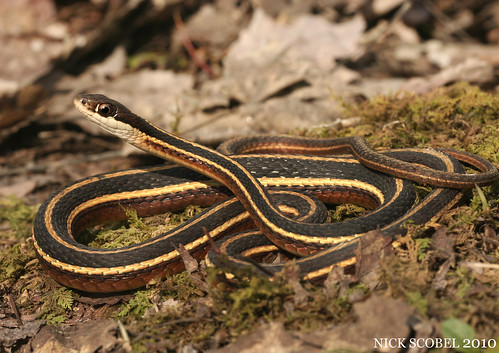
Northern Ribbon Snake - Thamnophis sauritus septentrionalis

This attractive species is the third and final species on the list. Unlike its other two cousins, the Northern Ribbon Snake is a long, thing snake with a whip-like tail. It is easily distinguished by its white cheeks, large eyes, and white spot right in front of each eye. This species is much more of a wetland species and is often found near fens, river, ponds, and other marsh-like habitats. It is an amphibian lover, and one of its favorite species is the Spring Peeper and other small Anurans. These three snakes may be common, but they all serve vital places in Michigan ecosystems and are an important part of Michigan's flora and fauna.

Give 'em a Brake

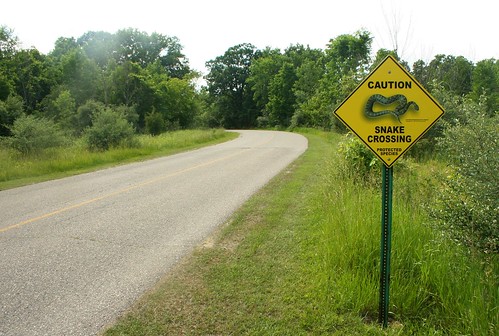
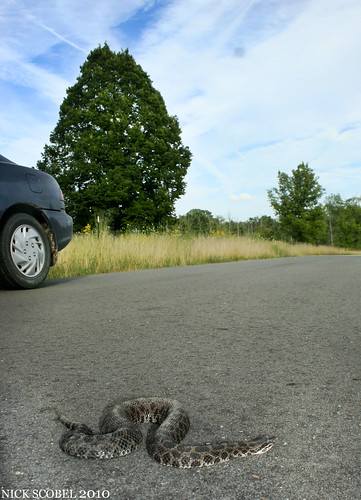
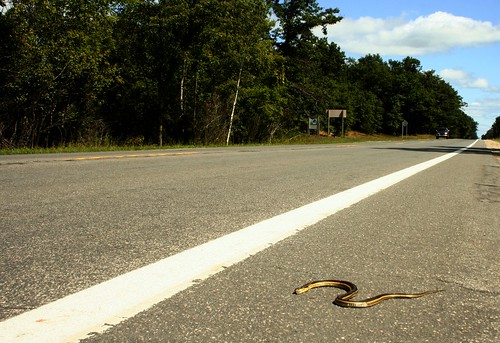
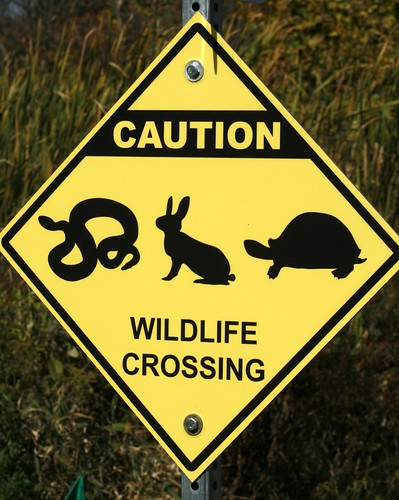
Although there are many threats to Michigan reptiles & amphibians, one of the greatest obstacles they face are roadways. Every year, thousands of herps lose their lives on roadways as they attempt to cross from one patch of habitat to another. This is a cruel reality as the human population continues to increase and expand our borders outward. More roads are necessary, and often these roadways cut right through ideal habitat for common and protected species alike. Even parks have this issue in the state, especially some of the parks in southeast Michigan which hold populations of Eastern Massasauga Rattlesnakes. Some parks have experienced such losses due to road mortality that they have posted snake crossing signs to warn motorists in the parks to be mindful of rattlesnakes crossing the road.


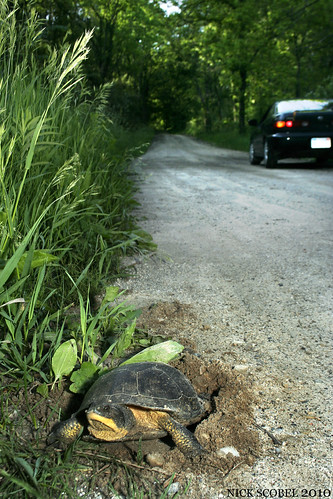
But snakes don't face nearly the same threat that roadways present in comparison to Michigan's turtle species. In the late spring and early summer, female turtles head for high ground in search of suitable nesting sites. Unlike a snake, turtles are not quick and often mozy their way across roads where motorists often hit them untinentionally or sometimes intentionally. In this case, large numbers of turtles are being lost, and whats worse is that it is the females which are carrying potential offspring that take a major hit. This coupled with nest predation has taken a major toll on Michigan turtle populations. Some side roads receive less traffic and these areas give some turtles a fighting chance, like this female Blanding's Turtle found nesting along a roadside in southeast Michigan.


Unfortunately, not all individuals are are lucky as this female. In another county, this poor girl was found on the side of the road alongside many other females of various species including Snapping Turtles, Musk Turtles, and Midland Painted Turtles.


Other turtle species also are at risk to road mortality. Of all of Michigan's turtles, it is the semi-aquatic Wood Turtle and terrestrial Eastern Box Turtle that tend to cross roads at particular tunes if the year. Both of these species are tough to miss on a road, and sadly get hit by oncoming traffic more than they should.


Although it is impossible to eliminate road mortality, it is possible to raise awareness to help combat it. In the spring, watch out for migrating salamanders on warm rainy nights in April. In May & June, watch out for turtles looking for nesting sites. And in the fall, be mindful of snakes that are heading back to their hibernation sites for the winter. If you see a herp attempting to cross a road, do it a favor by helping it across and then leaving it be, you may not make a huge difference in the large scheme of things, but it would help that individual get across without losing its life to passing traffic. So next time you're out there, give 'em a brake!


Thursday, December 9, 2010

Rounding out the Year with Rattlesnakes

One of the biggest ways conservation organizations protect species is by raising awareness. The general public really could care less to protect something they know nothing about. Every year, countless brochures, videos, and other forms of media are created for outreach programs for a particular endangered species. The problem being an imperiled rattlesnake is that, well it's a rattlesnake. To many rural residents of the Wolverine state, the only good snake is a dead snake. And even though the Eastern Massasauga is an extremely shy species, people in rural Washtenaw & Oakland counties want nothing to do with them and would just as soon kill them. So, how do you educate the public about a rattlesnake that can be locally common not far from human habitation? Well, some county and state parks have taken a few steps in order to try and raise awareness.


Road signs such as these two at two popular parks are a perfect example of raising awareness for the well being of the species. Both parks have roadways which cut through appropriate rattlesnake habitat and often these rattlesnakes are found smashed on the roadways, even when the speed limit is 25 mph. Although signs such as these do not eliminate road mortality completely, they at least alert motorists to be mindful when driving in the parks so that sights like this are avoided.


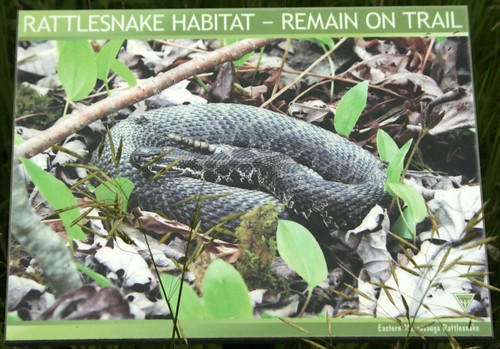
This young Eastern Massasauga was still writhing when I drove up on it and had been obviously hit shortly before. It twitched for a few minutes and eventually died.  I hate seeing any snake dead on the road, much less this species on a driveway to a nature preserve. Many of the trails at such parks and nature preserves cut through appropriate habitat where rattlesnakes are found. Some parks have taken the liberty to warn guests that they are passing through rattlesnake habitat and are required to stay on trails. This protects the snakes, the people, and the habitat the snakes inhabit.

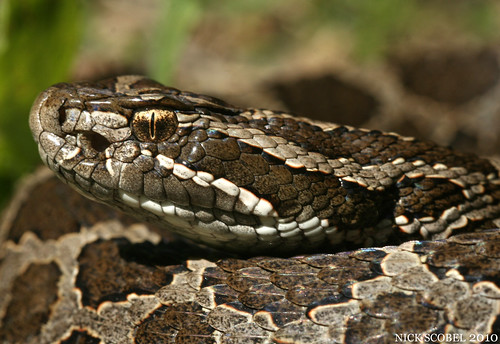
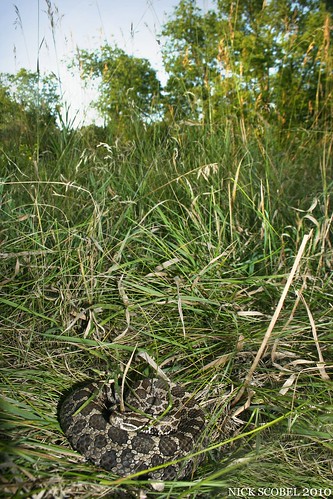
In some cases though, people don't need to go wandering through waist high grass and sedges in order to have an encounter with a rattlesnake. This beautiful individual was sunning itself right in the middle of the trail at a preserve in southeast Michigan in late July.


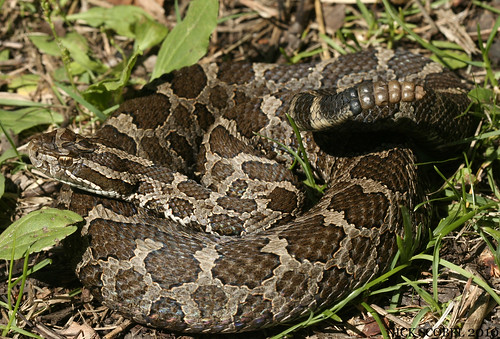
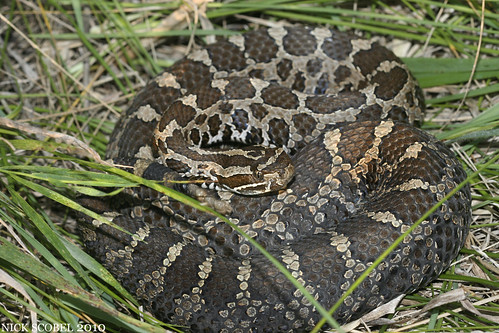
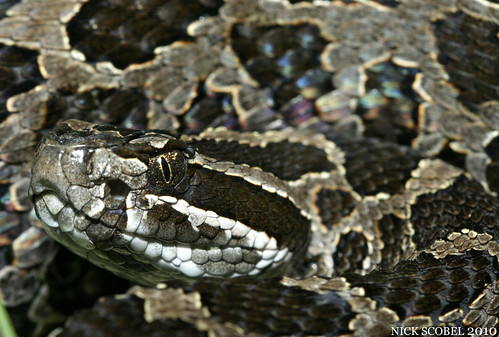
Later during the outing on the same morning, this monstrous adult male was found basking just off the edge of a trail on a grassy hillside in the morning sun. I've seen this particular snake  few years in a row and he is well within the 30" range and always puts on a great show.


As I mentioned earlier, most parks and preserves encourage visitors to stay on trails for their own safety and in order to protect vegetation and other wildlife. But on state land, there's nothing wrong with doing a little free roaming through appropriate habitat to look for snakes. On another particular evening in late July, my cousin and I ventured to a grassland which is adjacent to a tamarack swamp in hopes of bumping into a few snakes. We ended up running in to two individual snakes, a large gravid female and a freshly shed male.


As the summer turns to fall, my field time becomes much more limited as school takes over. But every now and then there's time to get out and do a bit of poking around. One a unseasonably warm October weekend, I met up with good friends Chris and Colin one morning at one of our favorite spots to have a look around. Before Chris and Colin arrived, I noticed a dark stick in the middle of trail which turned out to be much more than a broken branch.


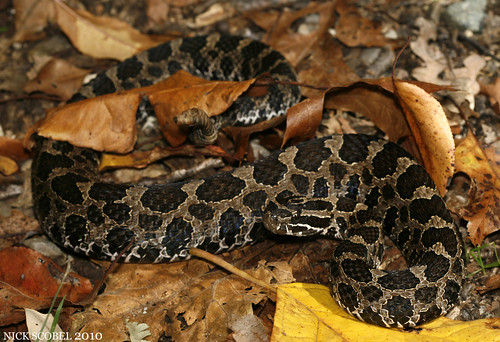
This adult female was calmly making her way across the trail towards a tamarack swamp area and was extremely sluggish. She is a snake that I had seen several times over the summer and she was obviously thin which indicated she has been gravid in the summer and dropped a clutch of babies. She was obviously a freshly shed snake as well, as indicated by her bold coloring.


As the morning progressed, more rattlesnakes made appearances on this unusually warm October day. We noticed two rattlesnakes that were basking side my side only a few feet apart. We snapped a few photos and then both of the snakes proceeded to dart down burrows that were right next to them, indicated these snakes were at their hibernation sites.


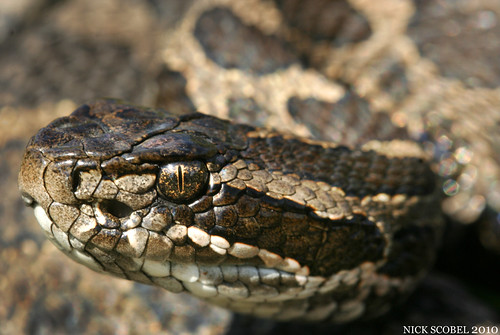
More than a month later, temps again soared in early Novemeber. So I decided to meet up with my friend Chris at one of our favorite sites to see if any snakes were out. Temperatures were in the low 60s and the string of days before had been around the same temperature. We walked a lot of trails and habitat and eventually we were fortunate enough to stumble across a lone rattlesake basking in the late afternoon.


So once again another field reason rolls to a close and I'll have to wait til April of next year before these awesome little rattlesnakes emerge once again. Until then, stay warm!

Wednesday, December 1, 2010

Swing to the Smokies

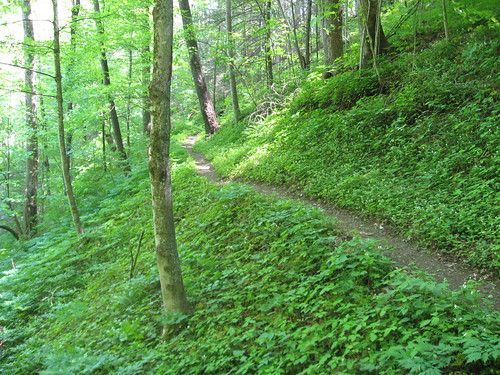
The Smoky Mountains are one of the most beautiful stretches of the Appalachian Mountains. It's one of the few areas in the eastern hills that is a perfect example of what an untouched landscape would've looked like in Tennessee when the settlers arrived. This appeal is what makes the Smokies the most visited national park in the country, with 9 million visitors annually. In May, I had the chance to venture to the Smokies and Blue Ridge Mountains with my sister and good friend Brian for a few days. Although I would be looking for herps, it was mainly to escape and have a stress free trip to an area I hadn't been to since I was 12. We arrived late at night ti the National Park following a large thunderstorm and settled in around two in the morning. The next day we headed out early to hike some of the nearby trails which lead to scenic vistas and waterfalls in the national park. I decided to head off trail a bit and check a nice steep hillside that looked good for snakes, I was elated when I walked across this guy laying out in the sun.

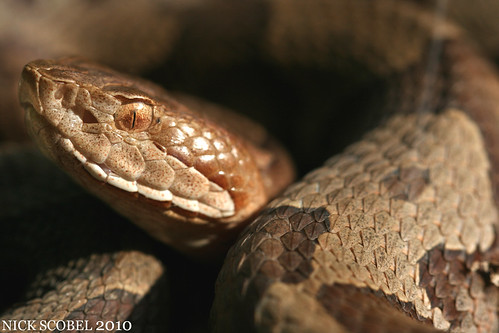
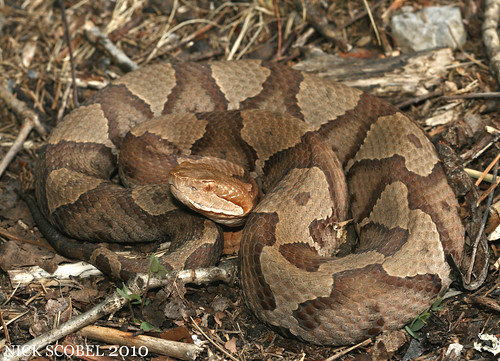
Northern Copperhead - Agkistrodon contortrix mokasen 

I was hoping that we would stumble across one of the two vipers in the area during the trip, and it turned out this snake was the only live one we would see, although several DORs were found. Because I live so far north, it's not too often that I get to encounter Copperheads in the wild and I'm always ecstatic when I do. They're one of my favorite snake species and in my opinion one of the most beautiful snakes in North America. 


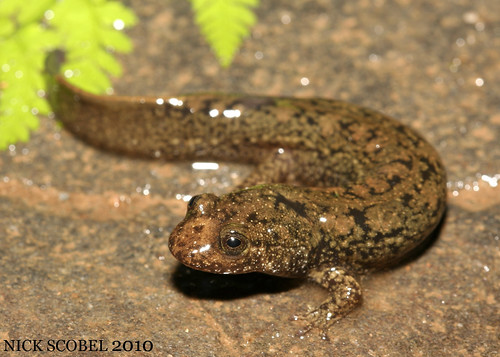
The trail we were hiking continued to ascend upward, often winding along edges of the ridgelines. It was beautiful country we were hiking through, and my eyes were always scanning for appropriate salamander habitat, or even bears. Every now and then along one of the switchbacks, there would be a seepage or small stream crossing the trail. We came across one particular spot that looked promising. I flipped a few rocks in the stream and came up with this salamander.

Shovel-nosed Salamander - Desmognathus marmoratus 

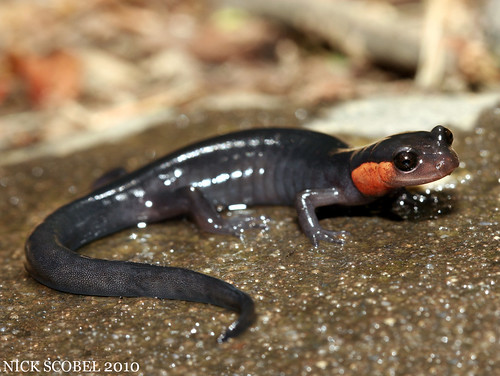
This is one of many Desmognathines that inhabit the Smoky Mountains & adjacent Blue Ridge Mountains. The sheer number of species makes it very difficult to distinguish between some species as they all can look quiet similar and sometimes even hybridize with one another. It is often confused with the Black-bellied Salamander which also occurs commonly throughout the National Park, but is distinguishable if looked at carefully and also what type of stream they occur in. Shovel-nosed Salamanders are more common in second & third order streams at lower elevations in the National Park while Black-bellied Salamanders can be found more commonly in first and second order streams. We continued on our hike and ascended higher and higher on our way to one of the more popular waterfalls in the park. I noticed a large flat rock just off the edge of the trail and decided to flip it. I was instantly greeted with two salamanders of the same species that I had been hoping to see on the trip, their bright reddish-orange cheeks were a delight to see.

Jordan's Salamander - Plethodon jordani

This handsome Plethodontid is one of the more recognizeable species that inhabits the Smokies. It is a high elevation species, and the Red-cheeked variant only occurs within the Great Smoky Mountain National Park. They are a terrestrial woodland species that often is found under logs, rocks, and other cover at high elevations and can be seen wandering at night along the forest floor. I was happy to come across them on our trip because I was worried we couldn't come across due to construction at Clingman's Dome, a popular haven for this species. We pushed forward once more and eventually came to Grotto Falls, a popular waterfall in the park. I searched around the perifery and flipped up another salamander species right at the edge of the pool the waterfall was thundering into.

Black-bellied Salamander - Desmognathus quadramaculatus
This large Desmognathine is one of the largest members of this genus, and is common throughout the National Park. As stated earlier, they are difficult to distinguish from Shovel-nosed Salamanders, but with a good field guide and attentiveness can be readily identified. This large juvenile is sporting the textbook "stardust" pattern that is characteristic of this species. Black-bellieds get their name from obviously, their dark colored ventral surface. They are considered to be a first and second order stream species and turn up under rocks near thundering stream edges. After a long rest at the falls, we headed back towards the trailhead and as we got back to the car, we noticed this American Black Bear crossing the road near our parket lot.


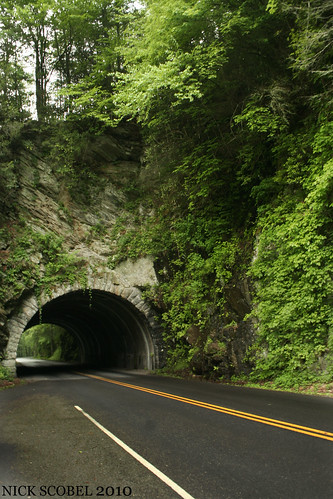
The Black Bear is the poster child of the Smokies and they always draw huge crowds of camera happy tourists along the roadways of the park. This is one of ten or more that we saw during out trip. We decided to go grab some lunch and then head back to camp to rest for a bit. Along the way, we came across this well known tunnel along on of the main park roads so I decided to snap a few photographs.


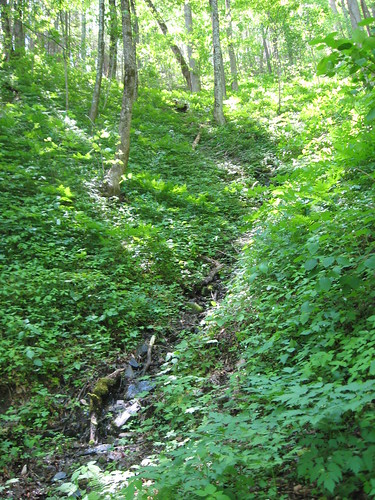
As I was photographing the tunnel along the roadway. I noticed a nice seepage along the edge of the road on a hillside and decided to check it out.


Low elevation seepages such as this one provide ideal habitat for a number of salamander species which include Black-chinned Red Salamanders, Blue-ridge Spring Salamanders, and others. I flipped a few pieces of cover in the seepage and was greeted by a bright red salamander, one of my favorite finds of the trip.

Black-chinned Red  Salamander - Pseudotriton ruber schenki

This brightly colored salamander is only found in the Great Smoky Mountains and is common at low elevations throughout the park. It prefers seepages and small streams where ample cover is available. They spend most of their time under logs and leaf litter in search of food. This handsome salamander was a nice bonus to our species total so far. That night, I decided to go do some road cruising to see if there were any snakes out on the move. I observed several DORs including a Northern Copperhead, Midland Water Snake, Ringneck Snake, and a Smooth Earth Snake. Luckily, I managed to turn up a live Smooth Earth Snake crossing the road.

Smooth Earth Snake - Virginia valeriae

These small, secretive snakes are rarely seen out in the open. They are a fossorial species, meaning they spend a lot of time burrowing underground in search of food and cover. I was extremely fortunate to see one of these out crossing a road at night. The next morning, I awoke extremely early to go for a drive in Cades Cove to see what kind of wildlife was out at sunrise while my companions slept it. I was greeted with a spectacular morning view of the mountains.


After spending some time in the cove. I checked back at camp and alas my companions were still fast asleep, so I decided to go drive a road I had been told was good for Timber Rattlesnakes & Copperheads. The sun was peaking out and the temps were muggy, so I liked my chances of seeing a snake on the road. After two passes on the road, I looked ahead and saw a large thin snake laid out in the road.


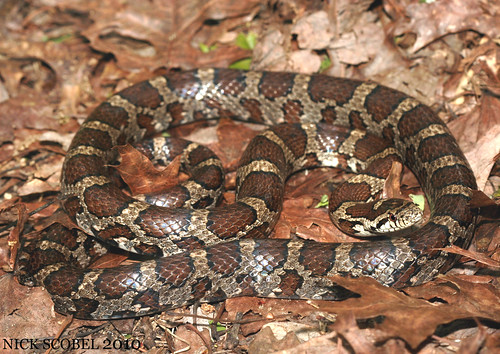
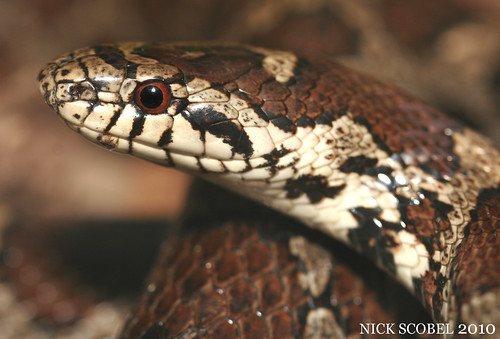
I pulled over and jumped out to grab this large Eastern Milk Snake off the road. This snake was in excess of three feet in length and dwarfed any other Milk Snakes I had ever seen. I ended up seeing one the next night as well while road cruising, but it got away. This snake was healthy and feisty, which made it a great candidate for a quick photo shoot.

Eastern Milk Snake - Lampropeltis triangulum

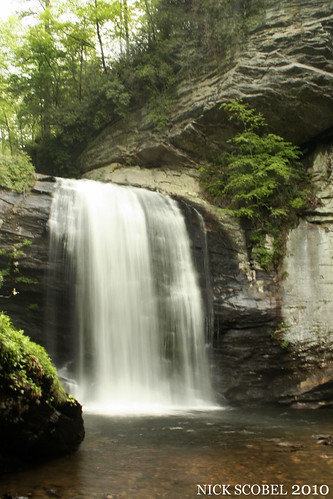
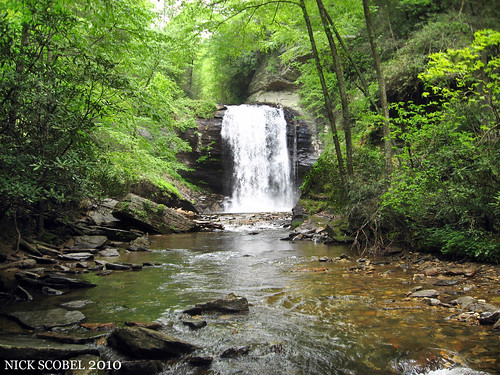
These snakes are constrictors and are excellent conrtollers of rodents. They're usually a feisty snake, and this one was no different as it left me with some nice bites to remember it by. The following day we headed over to North Carolina to check out some waterfalls and check out some mountain streams for a particular amphibian. We stopped first at a very popular waterfall called Looking Glass Falls. This large 90 foot waterfall is by far one of the most spectacular falls I've seen, and thats being compared to Niagara Falls & Tahquamenon Falls in Michigan's Upper Peninsula. We spent a good hour at the falls relaxing and taking some photos.


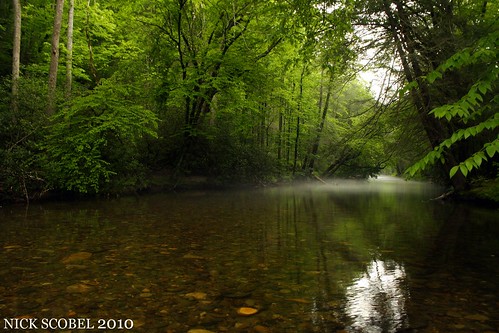
After marveling at the falls, we drove a few hours to a quiet mountain stream that is home to the largest amphibian in North America, the Eastern Hellbender. The stream was quiet, shallow, and crystal clear and was an amazing place to spend the afternoon. 


I decided to wade into the stream with a few friends that we rendezvoused with at the site and began a slow walk upstream, looking carefully for any movement. Before too long, I noticed a large dark shape moving about in the shallows and began to yell to everyone to come over. Sure enough, there was a Hellbender.


These large aquatic salamanders can grow to almost two feet in length and are the largest salamander in North America, and the third largest in the world. They do have lungs, but most of their breathing is done through gas exchange within the fleshy folds of skin along their sides. Their genus name Cryptobranchus, is a true and fitting name. Crypto meaning hidden, and branchus meaning lungs, literally means hidden lungs on the side of their body. We ended up seeing 7 Hellbenders in a matter of twenty minutes and decided to call it a day. These were the finds of the trip for me, I had always dreamed of seeing a hellbender in the wild, and on this day that dream came true.

Eastern Hellbender - Cryptobranchus alleganiensis

We ended up heading home the next day, but it was an amazing trip with two people who are extremely important to me. We all had the chance to see and do something we enjoyed, and I think in the end we all become closer because of it. Until next time, happy herping!