Thursday, October 27, 2011

The Shawnee Experience

As the weather cools and the fall colors begin to show in early October, I'm often reminded off the mass snake migrations which take place in the Shawnee National Forest of southern Illinois. The famous snake road and its surrounding areas is one of the most impressive displays of biological diversity anywhere, as large numbers of more than 35 species of snakes begin to migrate back to their winter dens. I try to make it down to the area every autumn to find as many species as possible and to partake in the camaraderie of a campfire with close friends. Every year it seems as though I see something new, two years ago I was able to find a photograph a western mudsnake and last year I was able to finally see my first shawnee kingsnakes. Going into this year's trip, I set a few goals. First and foremost was the pit viper trifecta, something I hadn't seen in Shawnee since 2008. The trifecta is consists of the three venomous snakes in the area; the cottonmouth, copperhead, and timber rattlesnake. Secondly, I wanted to be able to find a mole salamander. The mole salamander is an odd Ambystomatid which reaches its northern range limit in southern Illinois & Indiana, it looks like a bloated smallmouth salamander with a shortened tail. And finally, I wanted to be able to find the last water snake species in the area I had yet to see, a diamondback water snake. Diamondbacks are present at snake road, but are probably the least frequently encountered of the Nerodia species. I was joined by Dusty Jordan and Chris & Colin Boguslawski on the trip, after a long drive and late arrival we were on our way bright and early on friday morning. We hit a few spots in the surrounding areas first thing in hopes of finding a kingsnake or black rat snake, but did not hit paydirt. We did however, find our first snake of the trip under tin at our last stop, a barn dwelling Nerodia.

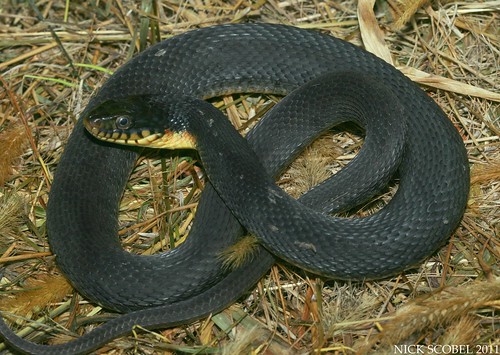
Yellowbelly Water Snake - Nerodia erythrogaster flavigaster

This snake is the most common of the Nerodia in the Shawnee National Forest, existing in almost every environment where there is water. This young individual had just finished shedding and was more than happy to cooperate for a few photos. A five-lined skink was also found on site, but nothing more. The sun had already risen quite a bit and temps were approaching the high 70s by late morning, so we decided to try out luck at snake road. We decided to start from the south end of the road but wanted to go check a salamander spot first, on our way to the spot we noticed this not far from the south parking lot.
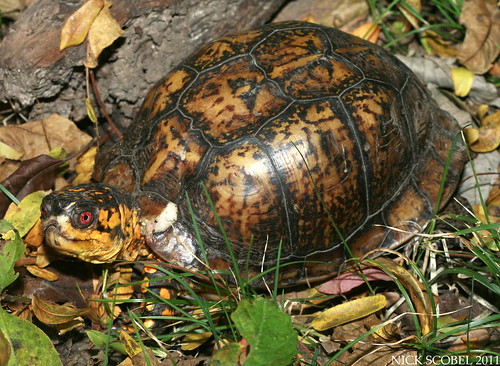
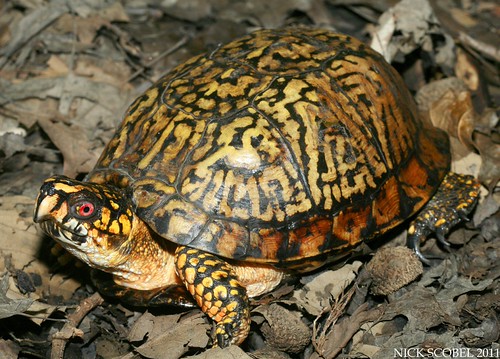
Eastern Box Turtle - Terrapene carolina carolina

An adult male Eastern Box Turtle AT snake road. I've seen plenty of box turtles in the surrounding areas of the Shawnee National Forest, but have heard of very few, if any being seen at the road itself. This old, beat up fella was basking in the morning sun right off of the trail. He appeared to have some significant injuries to his face, you can notice scar tissue and the absence of the beak which is characteristic to box turtles in the photo. It was also evident that he had sustained a pretty serious carapace injury in his lifetime as indicated by a large crack which had since healed quite well. It was pretty exciting to see one at the road itself, after a few photos we parted ways. A few minutes later, we noticed a small frog hopping off the trail and it ended up being our first of the three treefrog species that inhabit the area.
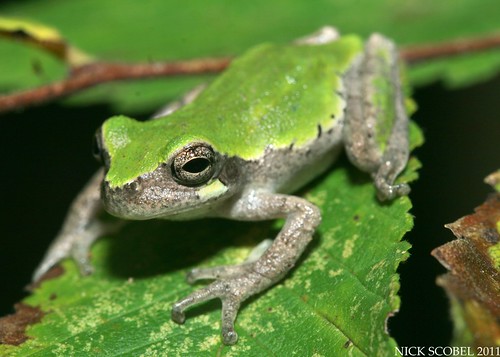
Bird-voiced Treefrog - Hyla avivoca

This small, brightly colored treefrog species reaches its northern range limit in the cypress swamps of southern Illinois. It can be almost identical to young H. versicolor but it lacks the bright yellow inner thighs characteristic of that species. While we were attempting to apprehend the frog, Dusty noticed a small snake between his legs and reached down to pick up this little gem.

Smooth Earth Snake - Virginia valeriae

A neonate, this is the first individual I've seen in southern Illinois in several years. The earth snake is a secretive fossorial species which is only sometime found active on the surface, it is most often found under rocks and other types of cover. This would be the first of several seen on the weekend, but was the only one that I photographed. It was getting warm and with the success we had experienced early on, we knew we needed to get moving up snake road. Several ribbon snakes were seen crossing the road, and a large Nerodia escaped off the side of the road into the swamp. Things were moving all over the place and that was encouraging. I walked along the bluff wall and found our first two cottonmouths of the trip; an adult & juvenile. The adult ducked into some thick cover, but the neonate hung out for a few photos.
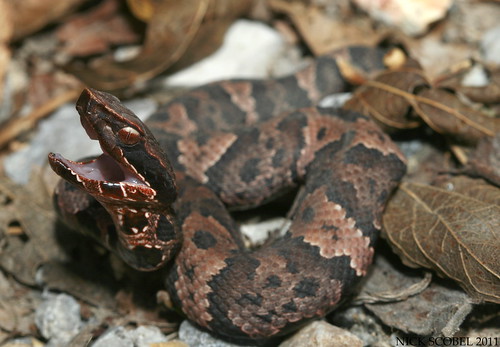
Western Cottonmouth - Agkistrodon piscivorus leucostoma

Several more cottonmouths were seen coming onto the road fresh out of the swamp and a large yellowbelly water snake was seen escaping into a thick stand of stinging nettle. Copperheads and timber rattlesnakes are around the area, but you often have to get off the beaten path to find them. We decided to head high in to the bluff slope to try out lock. Along the first area we climbed to we hit paydirt, with this unlikely pair basking side by side.
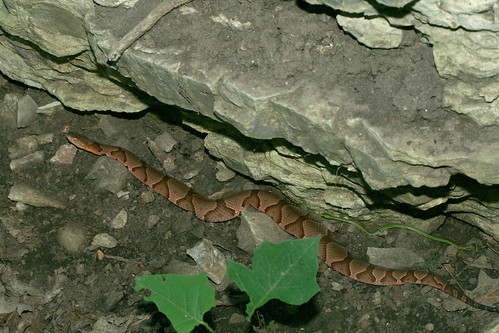


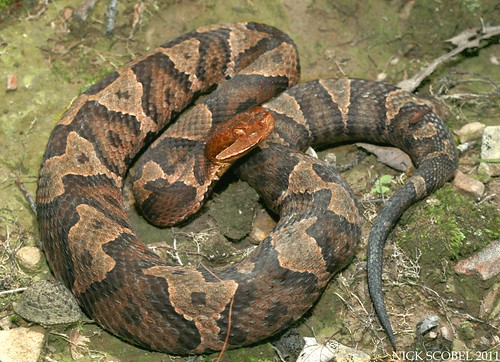
Copperhead - Agkistrodon contortrix

Copperheads from the Shawnee National Forest show some interesting characteristics from several different subspecies. This is due to the fact that the ranges of the northern (A. c. mokasen), southern (A. c. contortrix), and osage (A. c. phaeogaster) encroach on this region, giving genetic influence to the individuals from southern Illinois. The slight white bordering to the chevrons on this snake is no doubt the influence from phaeogaster. Copperheads are extremely outnumbered by their close cousins at snake road and can be tricky to find but are still numerous in the area. After a long photo session, we parted ways and realized we were one step closer to completing the trifecta. The group stayed along the road and I decided to climb up to an area where I had seen snakes at in the past, along a large crevice in the bluff wall I noticed a small banded snake heading towards the bluffs, I was unsure of its identity from a distance. 
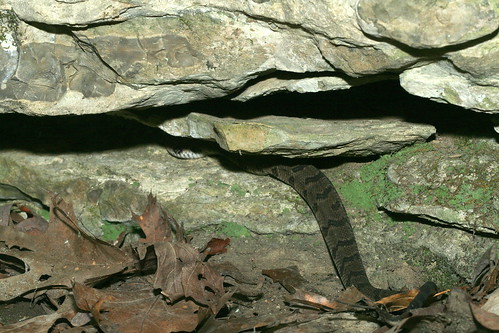

It was a juvenile timber rattlesnake, easily one of the smallest I've seen, with the exception being a neonate I found back in 2009 on a trip to Indiana, which you can read about in the blog post, The Hoosier State. I saw the boys heading further up the road so I yelled, "Timber!" I was able to scoop the snake onto a small stick to get it into the open for a few photos as I waited for the guys to climb the steep slope up to where I was. 
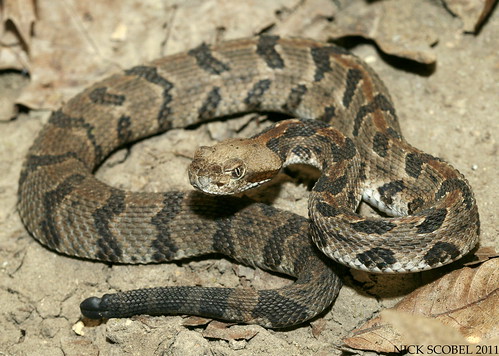
Timber Rattlesnake - Crotalus horridus

Based on the tiny button, this was a neonate born in the late summer. Timbers from the western part of their range can be similar in appearance to the "canebrake" form from the southeastern United States. The more jagged chevrons, gray coloration, and rusty stripe along the dorsum are unique among the two geographic variants, although the individuals from the southeast tend to obtain a pink coloration on a more frequent basis. It was right around noon on the first day of the trip and we had already knocked off the trifecta, I couldn't believe our luck. We parted ways with the youngster and continued on, not too much later Colin got his hands on this lovely snake.
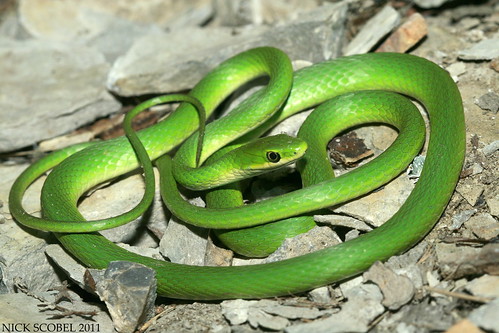
Rough Green Snake - Opheodrys aestivus

This would be the first of more than a dozen green snakes seen on the weekend and this one was in perfect condition. Rough greens are much more arboreal than their close cousins, the smooth green snake (Opheodrys vernalis). They are an active species with spends much of its time foraging for insects in vegetation. We observed them along the bluff walls, on the road, and in vegetation. We saw a few more common species over the course of the next few hours. We were joking that it would be nice to get a little bit larger timber, but we felt that we were being selfish. We checked out another spot that I know of that harbors rattlesnakes from time to time, there were several cottonmouths in the area but I noticed a larger snake layed out in the sun that looked different, sure enough we got out wish.

Timber Rattlesnake - Crotalus horridus

This snake was a bit more impressive than the neonate we saw earlier in the day. A large adult well over the three foot range, likely a postpartum female. This was the seventh timber of the year for me and was one of the nicest looking individuals I've seen in the field. This snake drew the attention of a small crowd and was more than content to buzz away for a photo session. We parted ways with this snake and continued in, a member of our group found another snake I hadn't seen in southern Illinois for a few years.
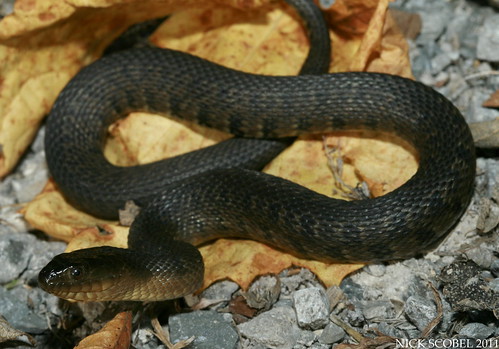
Mississippi Green Water Snake - Nerodia cyclopion

This species can be distinguished between other water snakes in the area by the presence of a subocular scale between the eye and supralabial scales. It is dark green, olive, or brown in coloration with faint narrow crossbands. It reaches its northern range limit in southern Illinois and is found in sloughs and cypress-tupelo swamps in the area, it is listed as a Threatened species in the state. As we were heading back to the car we flipped another interesting species, a first for me at snake road.
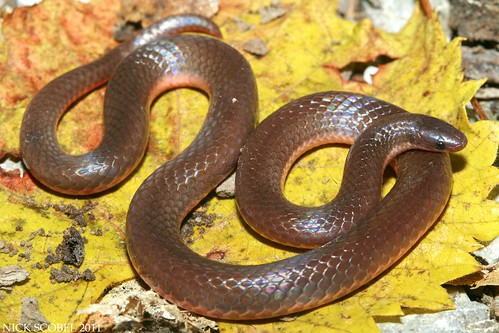

Midwest Worm Snake - Carphopis amoenus helenae
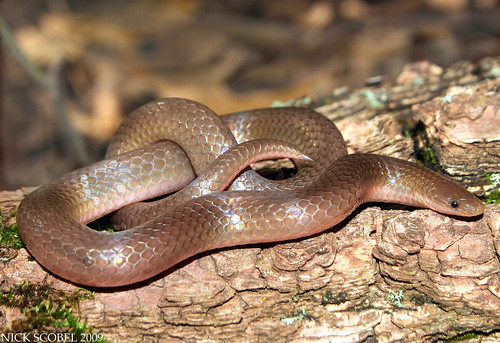
Eastern Worm Snake - Carphophis amoenus

The worm snake is a fossorial species which is almost never found on the surface, it is usually found under cover such as rocks, logs, or discarded trash. It is usually found in wooded areas with rocky soils. This gorgeous adult was found under an unsuspecting rock near the south end of the road. The midwest subspecies boasts intermediate characteristics between the eastern & western subspecies. It is considerably darker than the eastern (C. amoenus) but does not have as dark of coloration or the deep red ventrals of the western (C. vermis). It was an excellent find and a great way to end our first day in southern Illinois. Road cruising proved to be unproductive that night, but we were up early on saturday and headed to a new location to avoid the hoards of weekend traffic at snake road.
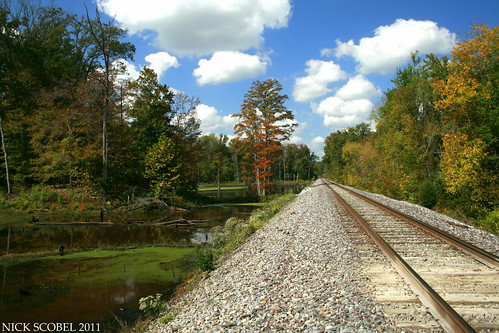

This area is familiar to many who visit southern Illinois and bisects a large cypress-tupelo swamp and is a home to a plethera of species. I saw a mudsnake at this site back in 2009 devouring a siren, the only example of each I've seen in the field. Not to far along the way, this beautiful neonate cottonmouth was found resting under a log near a known den site.

Western Cottonmouth - Agkistrodon piscivorus leucostoma

This may be the most attractive neonate cottonmouth I've ever seen, the picture really doesn't do it justice. Individuals in this area also seem to be much brighter in coloration in comparison to those at other places in southern Illinois. Further down the tracks I noticed a small snake basking on the ballast rock of the embankmet, turned out to be this sharp ringneck snake.
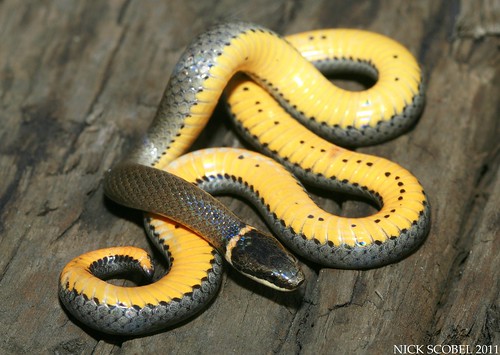
Ringneck Snake - Diadophis punctatus

Like many species in the region, Ringnecks from this area show a tremendous amount of variation. I've seen some individuals with a solid yellow belly, some with few spots like the one above, other with uniform spotting, and other with tons of scattered spotting. This is undoubtedly due to the influence of the southern, northern, and prairie subspecies which all encroach on this area of southern Illinois. Another green snake and several water snakes were seen along the railbed, but nothing more interesting than that. We decided to hit some of the lowlands in the area in hopes of finding some salamanders. We found one of that targets in large numbers very quickly.
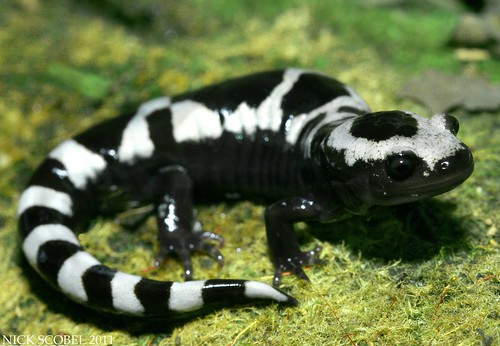
 Marbled Salamander - Ambystoma opacum

Marbled salamanders were once found in a few locations in Michigan, but haven't been seen since the 1960s and are likely extirpated from the state. They are a fall breeding Ambystomatid that is rivaled only by the Ringed Salamander (Ambystoma annulatum) for appearance in the group in my opinion. We found ten or more individuals under cover in a lowland area. As we were leaving, Dusty flipped a log to reveal a species I've wanted to see for a long time.
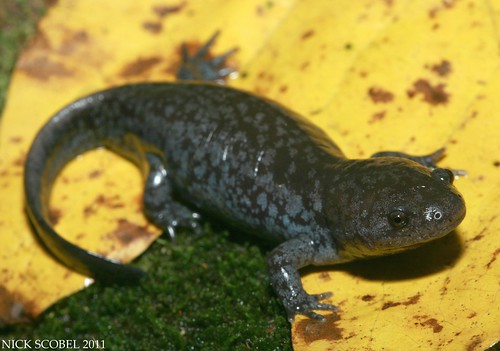
Mole Salamander - Ambystoma talpoideum

The Mole Salamander is uncommon in Illinois and only enters the southern tip of the state, reaching its northern range limit here and in southern Indiana. It is a denizen of cypress swamps and other lowland areas with where wet conditions are readily available. It is the odd member of the Ambystomatids, it has a short stocky body with a disproportionately large head and small tail. Like the marbled salamander, it is also a fall breeder and moves to lowland pools during autumn and winter rains. By this point it was mid-day, so we headed back to our campground after poking around a very crowded snake road for awhile. That night, we decided to head to Cape Girardeau, Missouri across the Mississippi River for some dinner. As we were driving, we swerved to miss a very large snake coming onto the road, I was elated when it was a species I hadn't seen before.

Diamondback Water Snake - Nerodia rhombifer

This was an extremely nasty snake. Upon picking it up I was bitten repeatedly, defecated on, and musked in a matter of a few seconds. A large, grumpy, stinky snake. I had not admire it though, as this species was a lifer for me. Diamondback water snakes are common near river bottoms and other lowland wetlands in southern Illinois, and this one was found crossing right by a river bottom. After a few quick photographs, we were off to enjoy a nice steak dinner and watch Michigan blow out Northwestern in the second half 42-24. We later returned to our campground and began gathering firewood, a log revealed this surprise.

Eastern Tiger Salamander - Ambystoma tigrinum

A young eastern tiger salamander right in the campground. I had never even heard of any tigers being found in this region of Illinois, it was a great find. We photographed the animal and then enjoyed one last campfire before heading home the next day. Once again, the long drive to this natural wonder had payed off. I'm sure this time next fall I will be back once again, that's all for now. Until next time, keep warm!

Wednesday, September 28, 2011

Hunt for the Bullsnake

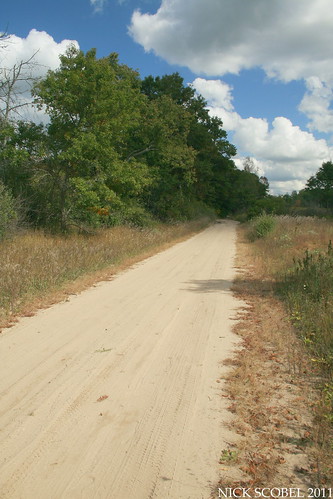
For many years, I've been meaning to head to Kankakee. The sand prairies at the border of Indiana and Illinois harbor some unique species to the Midwest. One species in particular had grabbed my interest, the Bullsnake. Like the Northern Pine Snakes I encountered in New Jersey this summer, the Bullsnake is a member of the genus Pituophis. These snakes are large constrictors which prefer sandy soils where they can burrow, namely in search of prey and to lay eggs. Members of this genus are also formidable to meet in the field, as the larynx has a characteristic epiglottal keel, which allows the snake to emit a very loud and raspy hiss. Though quite imtimidating, Bullsnakes are completely harmless and play a vital role in the ecology of the Indiana & Illinois sand prairies. I drove down one morning in May to meet Todd Pierson, his dad Jeff, and John B. to hit the prairies in hopes of turning up a few species.


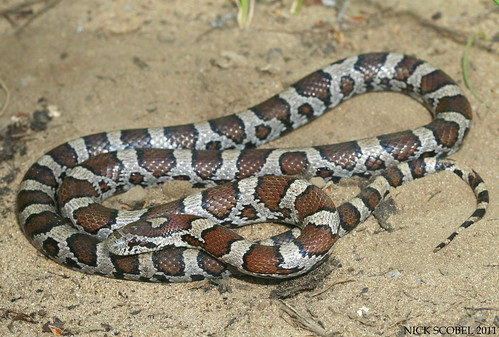
Artificial cover is the name of the game in the area, and we began to hit as much tin, boards, and junk as possible before temperatures got too hot. It didn't take us long to hit paydirt as Todd's dad found this nice looking milk underneath some siding at our first stop around quarter to nine.

Eastern Milk Snake - Lampropeltis triangulum

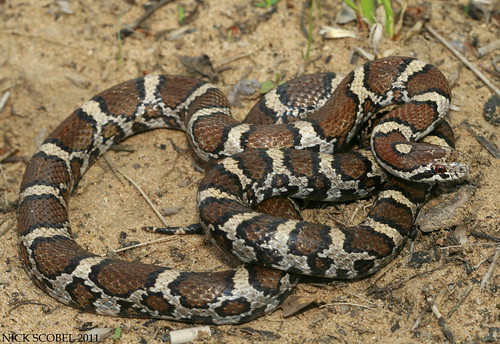
For an adult milk, this was a nice looking specimen as many individuals of this species get rather ugly as they age. We didn't spend too much time photographing this snake due to rising temps, so we quickly moved on to a few more sites. The ticks were really bad in this area, and I pulled more than two dozen off of me throughout the course of the day and even found a few stragglers hanging on after the four hour drive back to Michigan. The next few sites yielded some common species including a racer, juvenile milk snake, and a few garter snakes. A glass lizard was seen but got away before anyone could get their hands on it. We also drove past a monster DOR Bullsnake that had been hit the day before, easily in excess of six feet. After a few more stops and a lack of Bullsnakes, I was beginning to become a little bit discouraged as the temperatures had risen in to the low 80s with high humidity. We made one last stop at a heavily herped spot with tons of cover. I flipped this less attractive milk within a few minutes.

Eastern Milk Snake - Lampropeltis triangulum

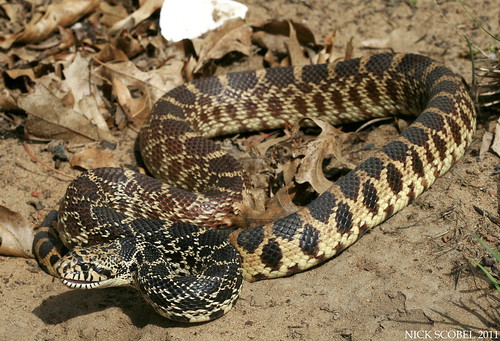
I snapped a few photos of this snake, and then handed it off to Todd and continued on flipping. Eventually I came to rather small and unassuming piece of cover in the open and decided to flip it anyway. I'm glad I did, as this was found underneath.
Bullsnake - Pituophis catenifer sayi

This was an exceptionally marked snake. Yellows, browns, blacks, oranges. I grabbed the snake and was greeted with a loud hiss and a few strikes, which made photographing this snake a real treat. I had wanted to see this species for quite some time, and being able to get one under cover with such hot temperatures was extremely lucky. I only had a day to spend in the area, but plan to head back next year in hopes of finding a few more bullsnakes, a glass lizard, and if I'm really lucky, an ornate box turtle. That's all for now. Until next time, happy herping.

Hunting Hogs

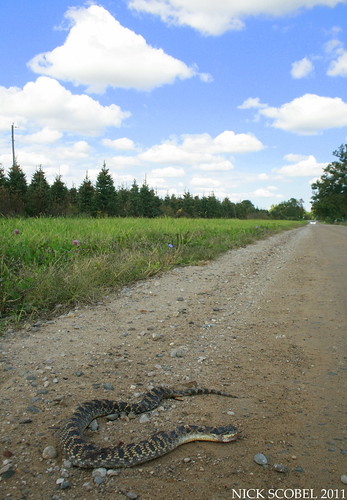
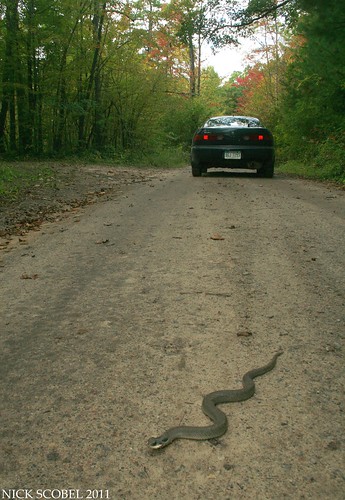
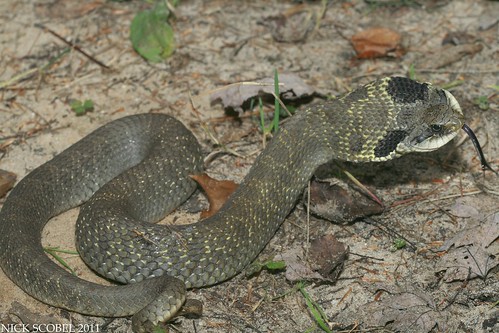
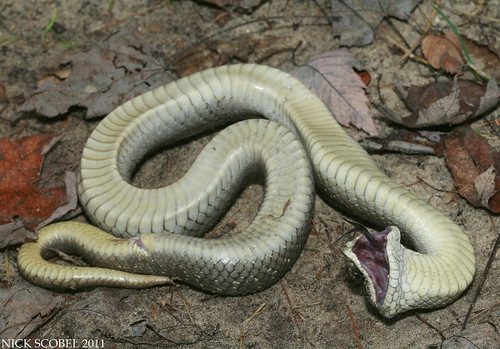
The Eastern Hognose Snake is a challenging species to find in the field, and is my personal nemesis. Before last October, I had only seen one in my lifetime. Then I cashed in on one at Snake Road last fall and then finally got one in Michigan earlier this spring. Hognose snakes are a tough species to figure out, as they are likely found throughout the lower peninsula where good habitat exists. I had always associated them to be in the western and northern reaches of the state, but recently I've found that they can be found even in suburban southeast Michigan as I found my first one in Michigan since I was a kid less than ten miles from my house earlier in the spring. Last Friday, I had an open afternoon and decided to head down to an area I frequent in hopes of finding some snakes on the move. I've seen quite a few species in the area including Blue Racers, Northern Ribbon Snakes, and Northern Red-bellied Snakes, so I was hoping I could score on of these species driving roads like this one.


After cruising a few Eastern Garter Snakes, I went past a snake on the edge of the road that had some wild patterning on it. I didn't get a great look at it, but had no idea what it was based on the brief glimpse I had gotten. So I backed up and looked over to see this flattened on the side of the road.


A DOR Hog, right there. I'd been herping this area for a few years now and have suspected that Hogs were in the area, but hadn't seen a clear sign of one until this day. It was a beautiful yellow/orange color and had likely been hit an hour or two before I arrived. The snake was in decent shape, so I bagged it up and brought it back to my place where it is now a part of the herp collection at CMU's Museum of Natural History. I was a little discouraged after finding the snake, but it was a bittersweet feeling to know that hogs were definitely in the area. I decided to keep driving roads in hopes of finding some more snakes on the road. A large Blue Racer crossed the road about 30 yards in front of me, but I wasn't able to get to it in time. Later on in the afternoon, I turned down a road I've been down many times and noticed a fat snake moving across the road.


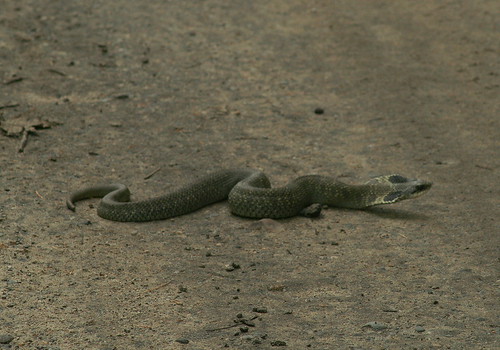
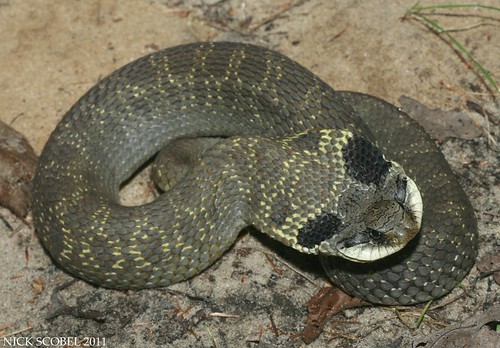
Sometimes it's better to be lucky than to be good at something. In this case, I just happened to be in the right place at the right time. I couldn't believe that right there in front of my car was a live hog, less than an hour after seeing a DOR. I jumped out as quickly as I could and ran over to begin snapping some shots, the snake lived up to its reputation and put on quite a show.

Eastern Hognose Snake - Heterodon platirhinos

pissed off...

dead...

This snake was an awesome surprise and one of my favorite finds of the year. Hognose snakes are an awesome species, and I wish I got to see them more often. But seeing two live and one dead in Michigan this year is pretty good in my book. It seems that this species is almost impossible to target, and they just sort of show up randomly from time to time. Perhaps I should take up birding in good areas without looking for them, then more would show up I'm sure. That's all of now. Until next time, happy herping!

Wednesday, September 21, 2011

Reptiles & Amphibians of the NJ Mountains

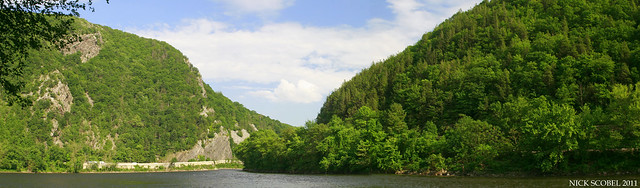
While most of my weekend field time in New Jersey was spent in the pine barrens, I also made it a point to explore where the Appalachians extend through the northern part of the state. The mountains of northern New Jersey are highest along the Delaware River, which divides New Jersey and Pennsylvania, this range is known as the Kittattinny Mountains or Kittattinny Ridge. Farther north, the mountains become more rolling and less jagged but still provide excellent habitat for a plethera of montane species. On my first weekend, I headed to the mountains and hit a popular area and snapped this picture from the New Jersey side of the Delaware River.


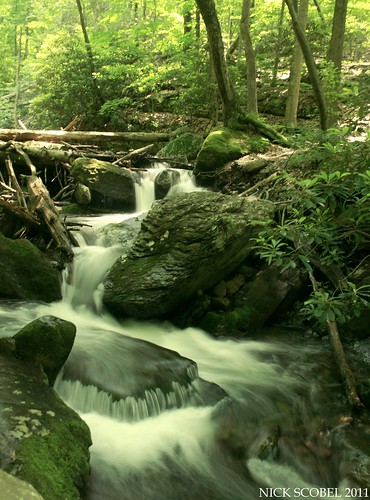
Many of the environments of the New Jersey mountains involve erosion from various mountain streams that have carved out the areas topography over thousands of years. These streams and seepages form habitat for various amphibian species, especially the salamanders. Though the diversity of the salamander species is nowhere near as great as in the southern Appalachians, the northern Appalachians still have some nice species of caudates.


A typical mountain stream from northern New Jersey, lined with thick stands of rhododendron. I spent my first day along this stream and similar streams nearby in search of some of the stream dwelling species in the area. Most species at these elevations are Plethodontids, or lungless salamanders, which capitalize on the amount of moisture in the area and breathe through their skin. Some of these species can be absolutely striking, like the Northern Red Salamander.

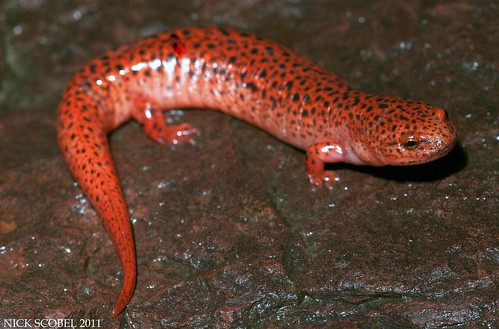
Northern Red Salamander - Pseudotriton ruber

This beautiful species is found throughout much of the eastern United States, especially in areas where seepages and streams abound. Though common in the mountains of New Jersey, they can also be found in seepage areas within the pine barrens. Red Salamanders can often be found wandering across roadways at night after a heavy rainstorm during the summer months, their bright red coloration is hard to miss on a roadway.

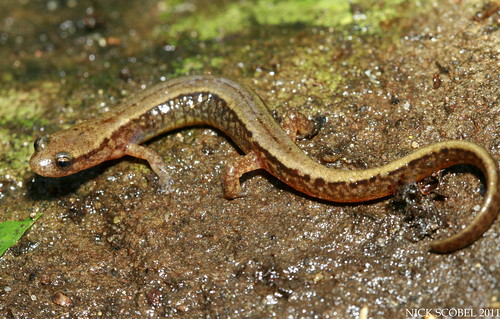
Northern Two-lined Salamander - Eurycea bislineata

Like the Northern Red Salamander, the Northern Two-lined Salamander can also be seen crossing roadways in the summer months after an evening shower, though this species tends to stick to streams more than the Red Salamander. This species is the common "yellow" salamander of the northeastern United States, and can be readily found under flat rocks and other cover along stream edges. But salamanders aren't just restricted to streams in the mountains, they can also be found on wooded slopes.

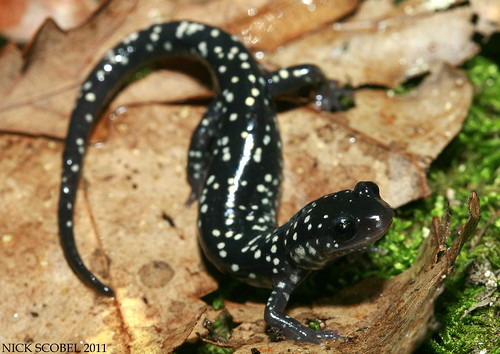
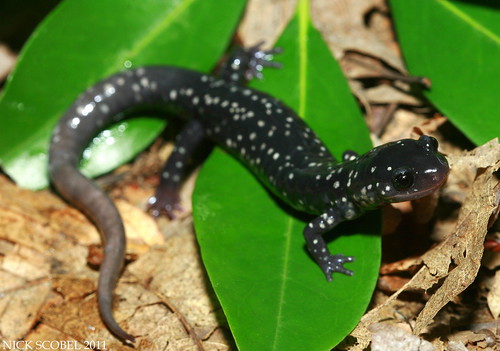
Northern Slimy Salamander - Plethodon glutinosus

The Northern Slimy Salamander is a striking species which inhabits wooded slopes in the eastern United States and can be extremely abundant in the right habitat. They get their name from the sticky substance which they secrete when handled, it can be extremely difficult to wash off the hands. Juveniles (top photo) are completely black with white spots, while adults (bottom photo) are black with white spots, but tend to have a more gray tail. The tail is extremely fat in this species, and that is because major fat reserves exist in the tail which this species uses up over the course of the winter to survive. Other common salamanders in these areas inlcude Northern Dusky Salamanders and Red-backed Salamanders. Many of the rocky streams in the mountains provide habitat for two protected turtle species, particularly this striking turtle.

Wood Turtle - Glyptemys insculpta

The Wood Turtle is a Threatened species in New Jersey, and is only found in suitable stream habitat with adjacent woodlands in the northern half of the state. This adult female was found walking along a stream bank in the mountains, likely in search of food. Wood Turtles have suffered severe declines in the northeast due to habitat loss, road mortality, and illegal collection for the pet trade. Preserving suitable stream habitat and educating the public is critical for this species long term survival in New Jersey and the rest of the northeast.

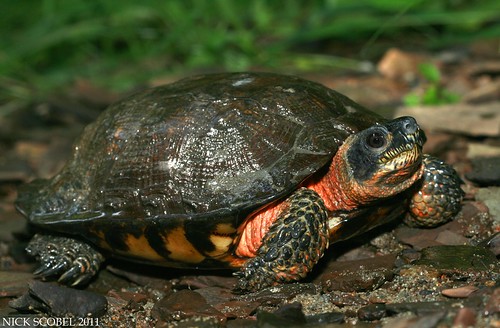
Eastern Box Turtle - Terrapene carolina carolina

This striking adult male that was found crossing a road after a heavy afternoon thunderstorm in northern New Jersey. Throughout their range, Eastern Box Turtles suffer from habitat loss and road mortality. And though this species seems to be extremely abundant in New Jersey, it still receives legal protection against collection and harassment and is listed as a Species of Special Concern by the NJ Department of Fish & Wildlife. The highlands of New Jersey are also a haven for several species of snakes.

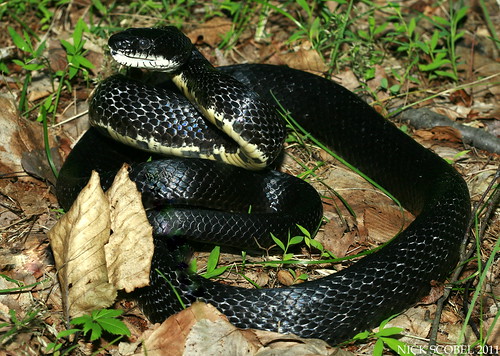
Black Rat Snake - Pantherophis obsoletus

The Black Rat Snake is a large constrictor which inhabits woodlands in the eastern United States, it is most common in New Jersey in the mountains. I found this monster crossing a mountain road just before dark on a warm evening in June. I also saw several individuals under cover such as tin, boards, and fallen roofing throughout the course of the summer. Seeing snakes on roads was a common occurance this summer, although sometimes you find them in a way that is upsetting.


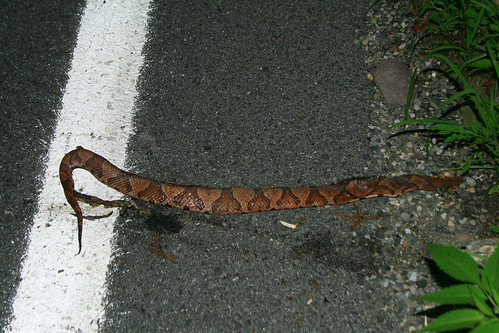
The copperhead is another snake species which historically had a small range in New Jersey to begin with, and with development and habitat loss has declined significantly. The Copperhead is listed as a Species of Special Concern by the NJ Department of Fish & Wildlife and is protected by law. Most of the individuals I saw this summer were DOR, but I did manage to find a few live specimens.

Northern Copperhead - Agkistrodon contortrix mokasen

The copperhead is a master of camouflage. Lying amongst leaf litter it can be almost impossible to spot even when you're looking for them. Like most North American pitvipers, Copperheads are ambush predators. They will lie motionless until a passing rodent gets too close, and then it's lights out. Because I don't get into their range terribly often, I'm always pleased when I can see one.


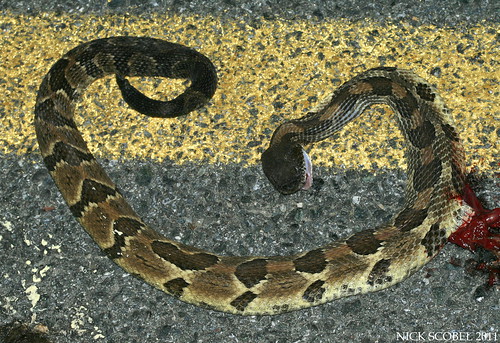
One of the toughest things to stomach during my summer in New Jersey were sights like this. The Timber Rattlesnake is an Endangered species in NJ, and two of the greatest threats to its future in the state are road mortality and persecution by humans. Like many venomous species, the Timber Rattlesnake is an extremely misunderstood animal. Most are quite shy, and just want to get away. Yet, many people still hold on to the ignorant belief that these snakes are extremely aggressive and dangerous. Unfortunately, ignorance leads to this sort of scene. This particular snake had been run over in an area where the speed limit is 15 mph. It's rattle had been cut off and it was likely run over intentionally, as these snakes are tough to miss on a road, especially when the speed limit is so low. 


As you can see, this was a common sight throughout the summer. The Timber Rattlesnake has an extremely fragmented range in NJ, with one population being restricted to the northern mountains and and even smaller population being isolated to the pine barrens. Though it is clear there is an abundance of Timber Rattlesnakes in the mountains of New Jersey, the fact that almost all of the snakes I observed had been killed on roadways is alarming. Continued monitoring and outreach to the public are essential if this snake is to continue to survive in the state.
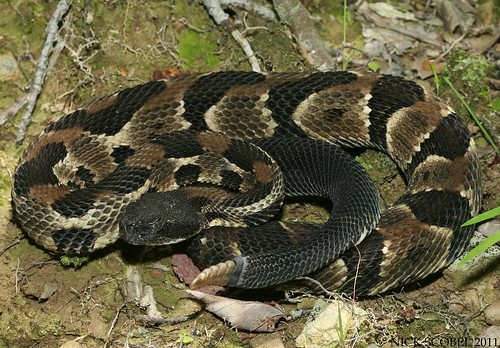
Timber Rattlesnake - Crotalus horridus

Timbers come in two distinct color phases in the northeast, yellow and dark. However, there is a lot of variation in the two phases. The snake pictured above is a classic dark phase, with a bit of a chestnut stripe running down its dorsum. The Timbers of the northeast are much different than those I had seen previously in the midwest (Ohio, Indiana, Illinois) and down south in Florida. Timber Rattlesnakes are an integral component of mountain ecosystems, and are a necessary presence for the control of small mammals such as squirrels and chipmunks. New Jersey's mountains gave me a lot of cool encounters and are a beautiful place to visit, I hope to return someday once more.

Wednesday, September 7, 2011

Passing the Torch

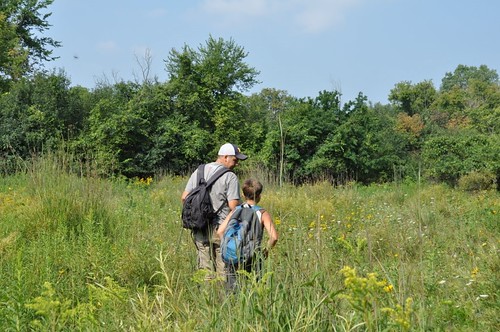
Every now and then an opportunity comes along and you decide  whether or not to partake in it. About a month ago, my dad had told me about a young boy who he had met at one of his astronomy club meetings. He mentioned that the kid was very bright, and seemed to have a pretty keen interest in herpetology and that he reads this blog and my website fairly frequently. I was intrigued, and decided to contact the young herper and gauge his interest. Justin is 12 years old, but is extremely knowledgable in the world of science and his interests include herpetology, astronomy, physics, rocketry, and paleontology. After coordinating with his family, he met me on a warm August morning in hopes of seeing his first Eastern Massasauga Rattlesnake in the wild. His mom and sister tagged along as well, and after some brief introductions we were off. We headed to an area where I knew several gravid females have been hanging out throughout the course of the summer. Not being huge fans of snakes, his mom & sister elected to stay out of the tall grass, but Justin and I headed in to try our luck.


After a few minutes of traversing the field slowly, I noticed a large female laid out in the morning sun. Justin came over slowly and was pretty astounded at the snake, this is a big female that I've seen several times and she always is noisy. 


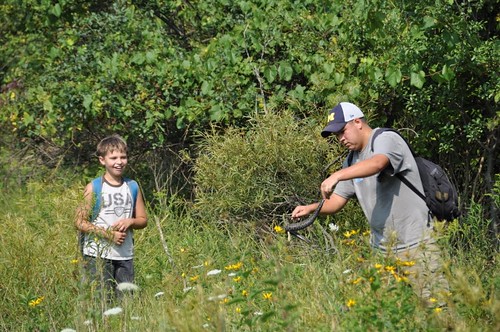
The look on Justin's face is worth a thousand words. His mom captured this photo as I lifted the snake to give Justin a better look, it reminds me of how I felt when I saw my first rattlesnake when I was right around his age. 

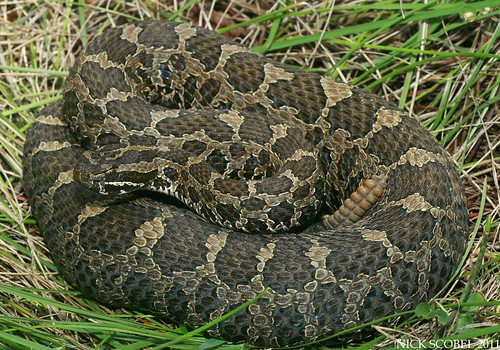
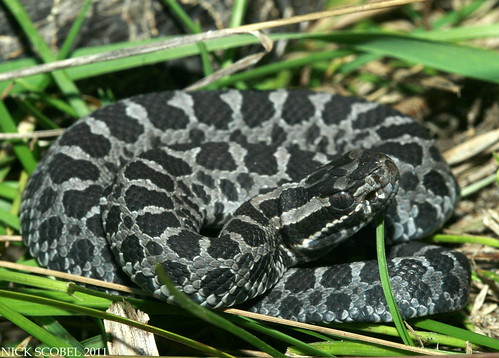
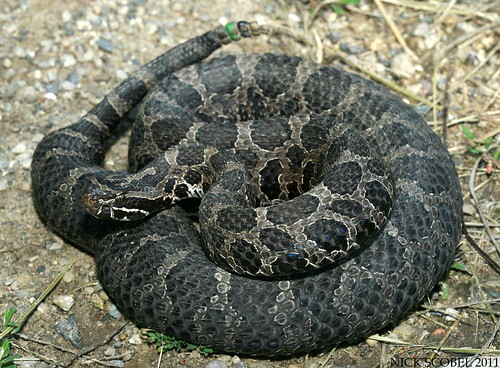
Eastern Massasauga Rattlesnake - Sistrurus catenatus catenatus
This large gravid female harbors right around the 30" range, a very healthy & large specimen for this species. Although she was a bit noisy, she was very relunctant to hold her ground and sit still for photos. Justin's mom and sister decided to come have a look, and were surprised by how docile these snakes are. We hung out with the snake for a little while before parting ways. Shortly after, we headed to another area where I've seen Massasaugas in the past as well. After only a few minutes, I heard a faint buzz and noticed a female coiled in the tall grass nearby. As I was getting my camera gear out, Justin pointed out a pile of 7 or 8 freshly dropped neonates less than a few feet from the female.

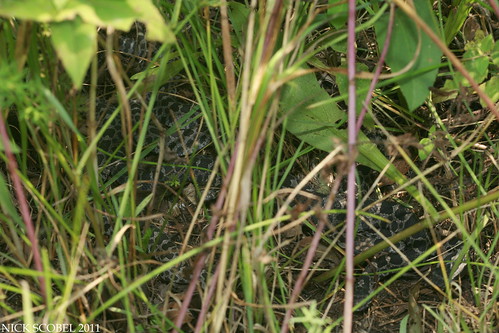
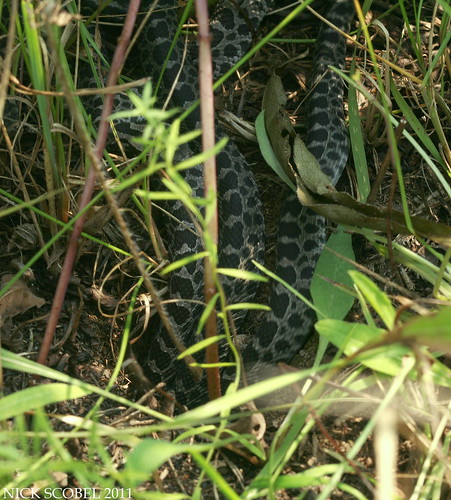
Eastern Massasauga Rattlesnakes - Sistrurus catenatus catenatus

This was something I had never seen before until a few days earlier when I saw a very similar scene at a different site, seeing something like this twice in the span of a few days was incredible. Justin was so excited, and I told him how lucky he was to see something that some people who have researched this species haven't even seen. After getting a good look at the mother, it turned out to be a female I saw a few days earlier nearby. Here she is, pre-birthing.


It was quite a morning, and something I won't soon forget. I can imagine that Justin felt the same way. He has way more knowledge than I ever did when I was his age and has an outstanding future ahead of him. These are the type of kids we need to encourage to continue to grow and follow their passions, as they will be our researchers in the future. If you know someone who is interest in wildlife, don't hesitate to expose them to it. People won't want to conserve something of they don't admire it. That's all for now. Until next time, happy herping.