The sound of a loud, warning buzz is something that strikes fear into most people. For me, there isn't a more welcome sound to hear in the field. Rattlesnakes are a highly evolved group of pitvipers which have taken defensive adaptation to a whole new level in the form of their rattle. This group is one that has fascinated me since I was very young, and I've been fortunate enough to encounter most of the species which inhabit the eastern United States. Rattlesnakes inhabit a complex mosaic of habitats in the eastern United States, with some species being found coastal plain pine forests, others in the rocky ridges of the Appalachians, and others inhabiting the bogs and fens of the Midwest. The eastern half of the country is home to two of the largest and two of the smallest rattlesnake species endemic to North America. As I'm likely heading to Florida within a week or two and have a chance of seeing two of the species, I thought it would be fun to chronicle the rattlesnakes which inhabit the eastern United States and the specific habitats in which they inhabit. In lieu of a likely trip to Florida, I'll begin with the southeastern United States and the largest and smallest rattlesnake species found in the world.
The Southeast
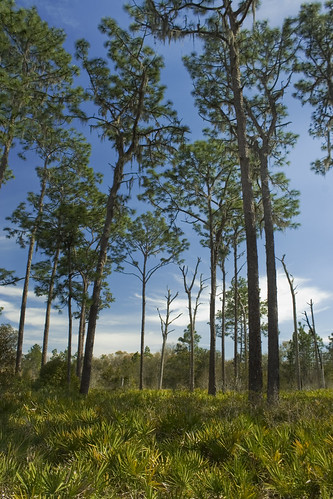
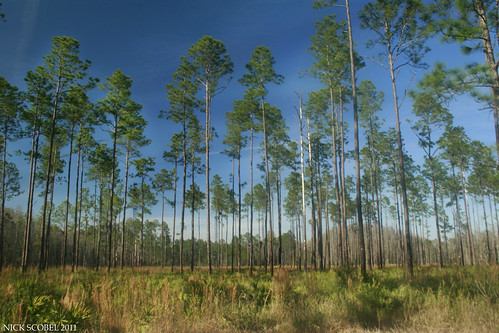
The southeastern United States is comprised of a mosaic of xeric habitats which include pine flatwoods, maritime forest, oak hammock, sandhills, and lowland habitats such as sloughs and cypress and tupelo swamps. The coastal plain is home to three rattlesnake species; one which is the the smallest species in the the world, and the other two species are two of the largest. Fire is an important ecological component of these ecosystems, and historically it is responsible for the rebirth and overall ecological health of coastal plain forests. Sadly, much of this once extensive landscape has been cleared due to human development. As the habitat has disappeared, so have the rattlesnakes.

Although much of the formal coastal plain forest has been lost, there is still large pockets of it that remain. One species has weathered the storm of urban development better than the others, and that species is the Pigmy Rattlesnake. The Pigmy Rattlesnake is comprised of three subspecies, the Dusky Pigmy (Sistrurus miliarius barbouri), the Carolina Pigmy (Sistrurus m. miliarius), and the Western Pigmy (Sistrurus miliarius streckeri). Pigmies are generally associated with pine flatwoods near a water source, but they may be found in just about any habitat. They are by far the most abundant rattlesnake species in the southeast and because of this come into contact with humans on a regular basis.
Dusky Pigmy Rattlesnake - Sistrurus miliarius barbouri
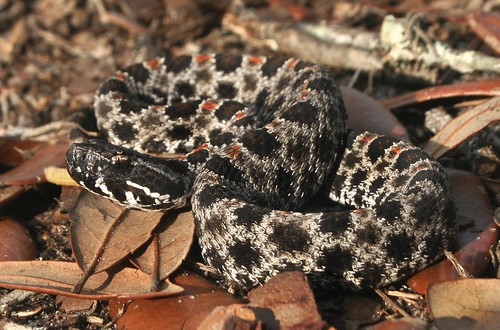
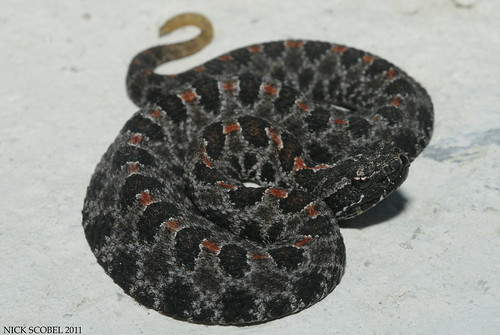
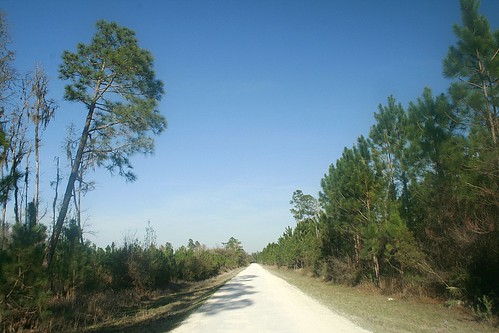
The Dusky Pigmy is found throughout peninsular Florida and into southern Georgia and is characterized as a very dark, mottled rattlesnake which a tiny rattle. Adults are quite small, usually less than a foot in length. Most individuals like the one in the photo above display a rusty or orange stripe down the dorsum. It is a diurnal species which often can be found crossing rural roads with good surrounding habitat. I've seen a good number of pigmies on this road in the late afternoon on a number of occasions in Sumter County, Florida.


Habitat loss, road mortality, and persecution by humans are the largest threats facing this species, though it is extremely abundant in the southeastern United States and does not appear to be in any immediate danger of declining. Unfortunately, another species of rattlesnake in the southeast has not been so fortunate to withstand the onslaught of human expansion. The Eastern Diamondback Rattlesnake used to be extremely common across the southeastern coastal plain and is now a rare sight for many residents of the region. Diamondbacks are the largest rattlesnake species in the world, with adults attaining lengths well over six feet. The Eastern Diamondback inhabits large stands of pine flatwood, pine/wiregrass communities, and hammocks in the region. Many of these areas are still fragmented by roadways, and unfortunately many Eastern Diamondbacks lose their lives on roadways by both unintentional and intentional means.
Photo © Dave Scopaz
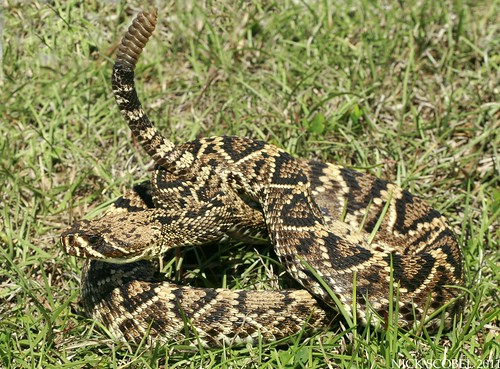
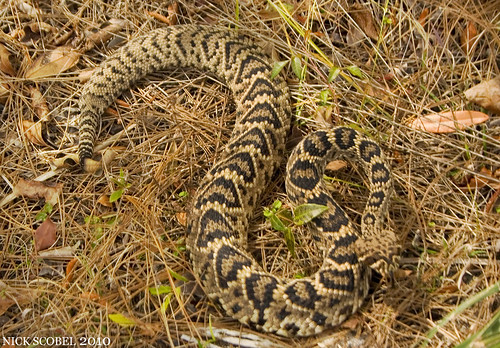
Its large size, diamond pattern, and dark stripe bordered by lighter stripes across the eyes are distinguishing characteristics for this species. Diamondbacks are an formidable snake to meet in the field, their large size and tendency to stand their ground in a tall defensive coil with a loud buzzing rattle demands respect.
Eastern Diamondback Rattlesnake - Crotalus adamanteus
Diamondbacks have a potent venom, this coupled with their sheer size makes them the most dangerous snake which inhabits North America. Adults can deliver copious amounts of venom during a bite, and if medical treatment is not sought rapidly, the results are almost certainly fatal. Unfortunately, the reputation of this snake is ill deserved and many are killed out of ignorance. Like any rattlesnake species, the Eastern Diamondback would rather retreat or give a warning than deliver a bite to a human. In fact, both of the individuals I've encountered in the field tried to flee instead of holding their ground. It was until a snake hook was used to corral them for photos that they became defensive.


Not only is killing an Eastern Diamondback ignorant, its harmful to the local ecosystem. The Eastern Diamondback plays an important ecological role in controlling rodents and other pests in Florida ecosystems. In fact in many places where the species was once abundant, rabbit populations have boomed due to the loss of rattlesnakes in the area. The Eastern Diamondback is an integral part of the southeastern coastal plain's ecology. Another species of rattlesnake inhabits the pinelands and lowlands of the southeastern United States an is just as important as the Eastern Diamondback.
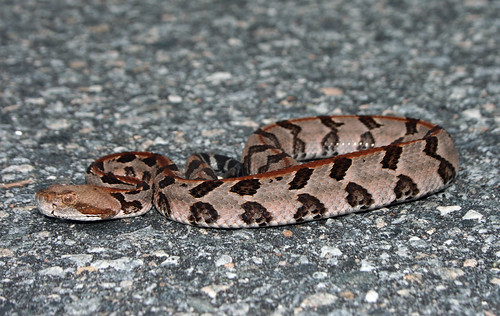
Timber (Canebrake) Rattlesnake - Crotalus horridus
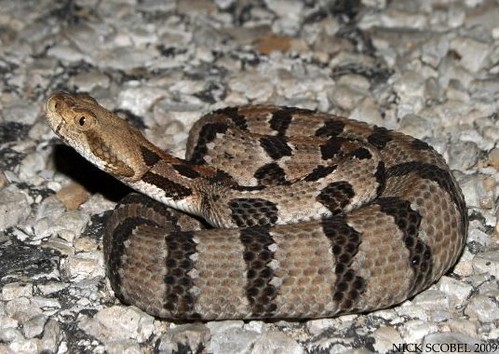
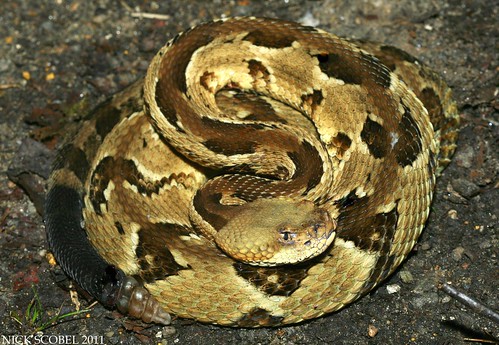
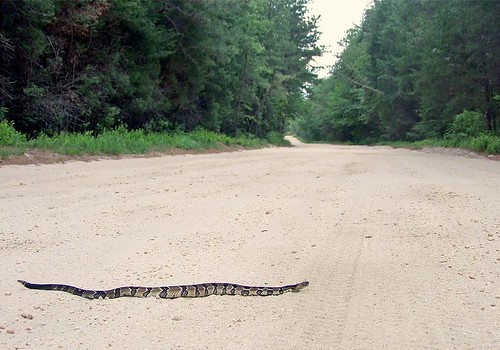
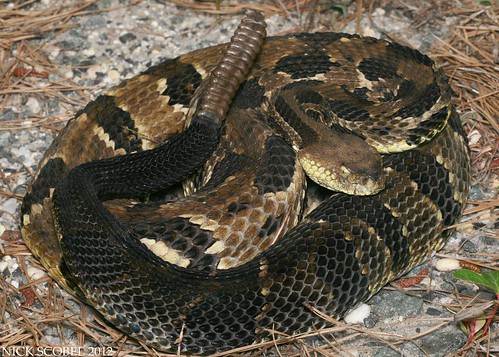
The southern phase of the Timber Rattlesnake is often referred to as the Canebrake. Though it is no longer recognized as a valid subspecies, the Canebrake is a distinguishable variant of the Timber. Canebrakes inhabit much of the southeastern coastal plain and extend as far south as northern Florida. The individual above was found crossing a rural road in Columbia County, Florida. Canebrakes from this region of Florida are extremely toxic and can be excessively dangerous. Just like the other snakes aforementioned, Canebrakes are shy and would rather get away than hold their ground.

Individuals can be gray, brown, or even pink-ish in coloration like the individual photoed above. Canebrakes seek out rodents in the pinelands of the southeast, and may even be found close to human habitation such as farms or abandoned properties where their prey abounds. Like the Eastern Diamondback, the Canebrake is an essential ecological component of southeastern ecosystems. Sadly, it also is killed out of ignorance and much of its habitat is being converted for human purposes. The long term survival of these three rattlesnake species is important for the ecology of the southeastern coastal plain. Maintaining large tracts of pine forest and other ecosystems is essential for their persistence in the southeastern United States.
The Midwest
The midwestern United States is a variable hodgepodge of communities. The Great Lakes basin is flat and scattered with wetlands which harbor one of the most critically imperiled rattlesnake species in the United States. The southern reaches of Indiana, Ohio, and Illinois lie on the northern edge of the Cumberland Plateau and the resulting ridges harbor another imperiled species in the region, which also extends north along the bluffs of the Mississippi River into Wisconsin and Minnesota. We'll begin with the wetland denizen which is rarely seen by many residents of the Midwest.

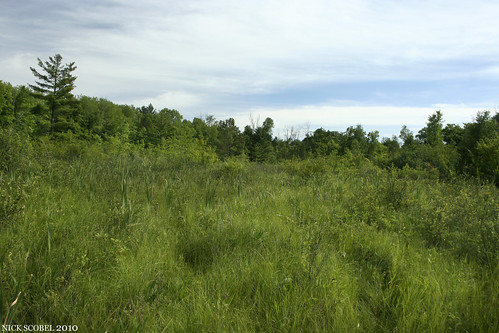
Wetlands such as this prairie fen in southeast Michigan are home to the Eastern Massasauga Rattlesnake, a larger cousin of the Pigmy Rattlesnake. Massasaugas are endemic to the Midwest, and occur in highest densities in Michigan and Ontario. The Massasauga has declined drastically across its range due to the development and loss of its wetland habitats for agricultural and commercial purposes. With the exception of Michigan, this species is listed as Threatened or Endangered in every state or province in which occurs. In many instances, these states have only a handful of confirmed populations and many of these are still declining due to low genetic diversity and other environmental factors.
Eastern Massasauga Rattlesnake - Sistrurus catenatus catenatus
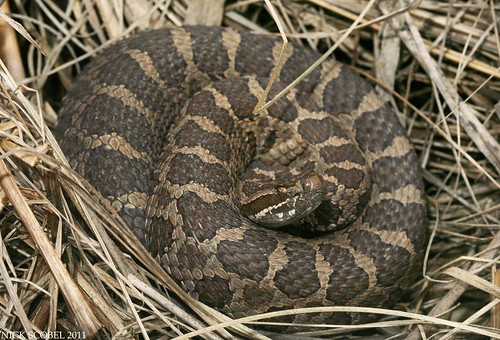
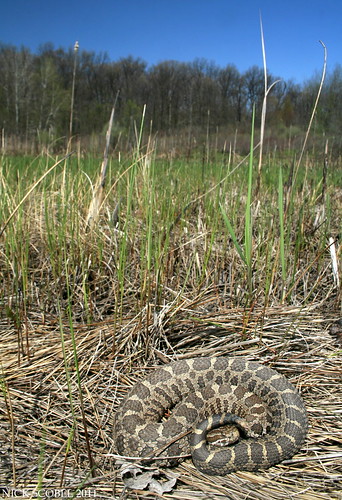
The Eastern Massasauga is a medium-sized rattlesnake species, with adults averaging around 18-24 inches in length. A brown or gray background, a row of dark saddle-like blotches, and two to three rows of additional spots are diagnostic characters. Some individuals exhibit melanism and are almost completely jet black with very little traces of patterning. Massasaugas spend much of their time in wetlands such as prairie fens, bogs, tamarack swamps, and wet prairies in the spring and fall months. They are often observed basking near crayfish burrows in these habitats early in the season on a warm morning like the individual below.

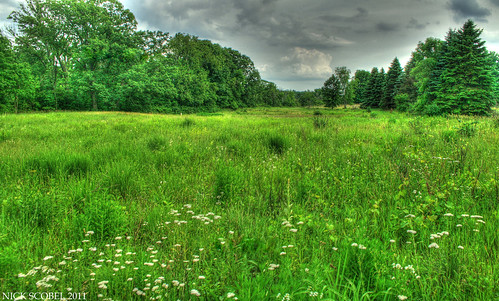
In the summer months, gravid females often move to adjacent upland sites such as dry woodlands and grassy fields or prairies where they spend much of their time basking to help gestate their young. They also seek out rodents such as meadow voles as a primary prey source in these areas. Upland sites such as the prairie pictured below are generally favorable to female Massasaugas. Females will hang out in these areas from mid May to late August or early September when they drop their young.


Upland sites such as these are extremely important for Massasaugas, and maintaining them is essential for populations to persist. This species is currently a candidate species for federal protection by the U.S. Fish & Wildlife Service under the Endangered Species Act. Massasaugas are dwindling in Indiana, Ohio, Illinois, New York, Pennsylvania, and Wisconsin. Continued conservation efforts are trying to preserve the few remaining populations in the Midwest. Another rattlesnake species dwindles in a few locations across the midwestern states in the foothills of the Cumberland Plateau.

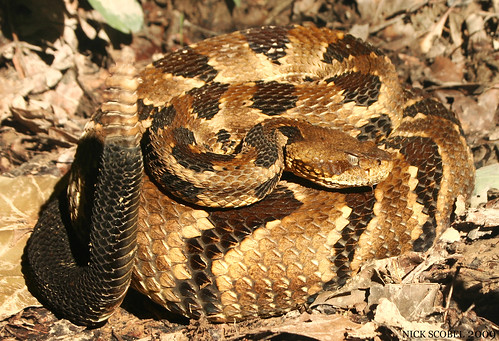
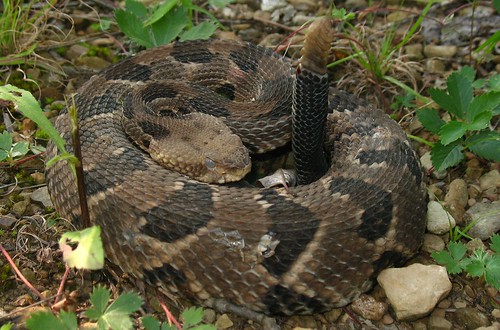
The foothills of the Cumberland & Appalachian Plateaus extend into the southern reaches of Ohio, Indiana, and Illinois. The resulting foothills, hollows, and ridges are home to the Timber Rattlesnake. Though it makes its stronghold in the northeastern United States, the Timber Rattlesnake extends as far west as Kansas and as far south as Louisiana and Florida. Because the ridges barely reach into the southern reaches of these states, the available habitat for this species is extremely limited in these states. Coupled with loss of habitat, road mortality, and persecution by humans the Timber Rattlesnake is Threatened or Endangered across its midwestern distribution.
Timber Rattlesnake, Crotalus horridus, Indiana
Timber Rattlesnake, Crotalus horridus, Illinois
Timber Rattlesnake, Crotalus horridus, Ohio
Timbers from this region are extremely variable in coloration, as the individuals pictured above show. Unlike the northeastern United States, individuals do not come in two distinct color phases. Also, snakes do not den in such large numbers as northeast dens. Midwestern dens may consist of just a few individuals, while northeast dens may include several dozen animals. These small, scattered den sites make the Midwestern individuals all the more subsceptible to mortality. State and national forests in these states are the only places in Ohio, Indiana, and Illinois where Timbers are still found. The maintenance and protection of these remaining places is crucial for the species to persist in these states.


In the northeastern United States, female Timber Rattlesnakes often gather in large numbers at maternity dens which may harbor several dozen females at a time. Because of the smaller densities of snakes in the Midwest, these maternity dens to not occur. Females from the Midwest often situate themselves on ridgetops and within hollow logs and other cover in the summer months where they gestate their young. Young are born live in late summer and then disperse to find their own den sites. This time of the year can be quite productive for finding young individuals crossing roads or one the move.
The Northeast
The northeastern United States is comprised of the northern half of the Appalachian Mountains. This provides a considerable amount of forested, rocky slopes along the backbone of the northern Appalachians. Timber Rattlesnakes are found in some of their highest densities rangewide in the the northeast. However, they were once much more abundant. The past of the Timber Rattlesnake in the northeast is a dark on. At the turn of the last century, the government had a bounty which would pay anyone who would kill timber rattlesnakes or blow up their den sites. This caused drastic declines in states like New York, Pennsylvania, New Jersey, and along the New England coast. Yet this species still persists in the northeast, sometimes in tremendous numbers.

Timbers in the region come in two distinct color phases, yellow and dark. However, this is a lot of variation from individual to individual. Some individuals with dark heads may have very dark coloration or may be extremely bright with a stripe running down the dorsum. With the exception of the the Eastern Massasauga which only exists in the extreme western parts of New York and Pennsylvania in very few locations, the Timber Rattlesnake is the only rattlesnake species which occurs in the northeastern United States.
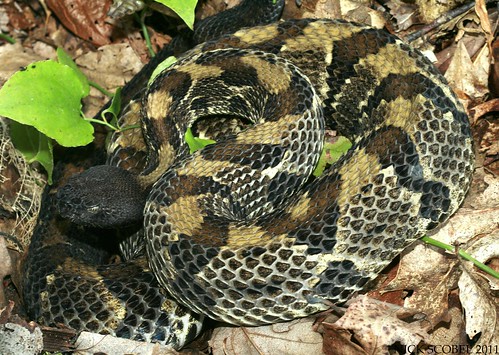
Timber Rattlesnake, Crotalus horridus, West Virginia
Timber Rattlesnake, Crotalus horridus, North Carolina
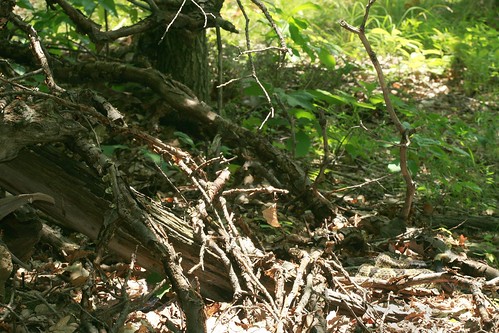
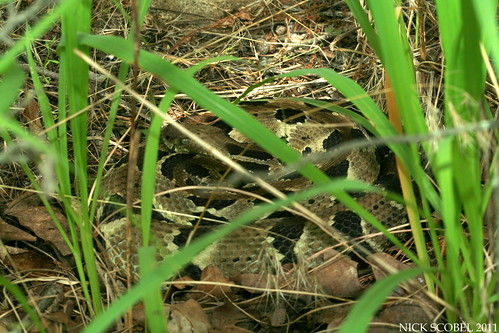
The beautiful individual pictured above was found basking in a green brier patch on a steep wooded slope in West Virginia. Over the course of the year Timber Rattlesnakes disperse across the montane landscape in search of food and mates. They are particularly fond of rodents such as chipmunks, squirrels, and mice. Because of the habits of these prey items, Timbers are often found in or near cover where they wait for a passing rodent. This habit and the snake's coloration can make them difficult to spot to the untrained eye, as this large individual was found along a fallen tree.

I've mentioned in previous posts that this species is notorious for its ambush position in which it coils next to log and rests its head on the edge of the log in wait for a passing rodent. This is an efficient method which often yields a meal. Unfortunately, these wooded slopes in the mountains are prime real estate for homes in northeast. Besides clearing areas for housing, roads must be put in to reach houses and other areas in the mountains, fragmenting habitat. This causes the necessity for rattlesnakes to cross roads in this region, often with fatal results.

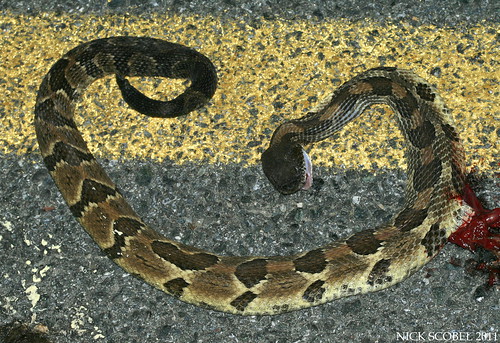
Road mortality is one of the greatest threat facing Timber Rattlesnakes in the northeast and across its range. Some motorists even intentionally run them over out of fear and ignorance, while others are hit by accident by unassuming drivers. Although most of the rattlesnakes in the northeast inhabit the wooded slopes of the Appalachians, there is one population in the northeast which is unique. That population is the one which exists in the Pine Barrens of New Jersey.
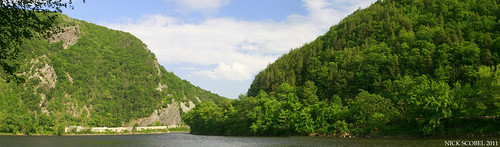
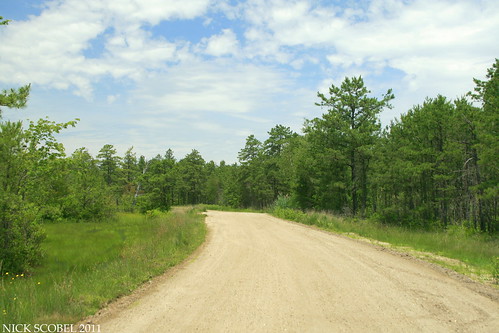
The New Jersey pine barrens encompass 1.1 million acres and account for almost a quarter of the state's total land mass. This vast expanse of coastal plain forest is very similar to the southeastern coastal plain and houses a very unique population of rattlesnakes. The pine barrens Timbers are scarce and rarely seen, occupying only a few areas within the one million acres of pine forest. They can be sometimes be found crossing the many sand roads which cross through the pinelands.
Photo © Eitan Grunwald
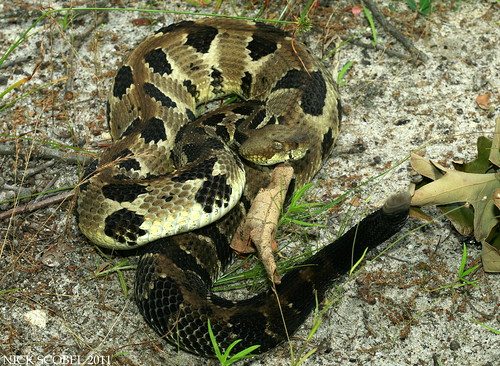
The habitat is not only unique to the northeast, but also the ecology of rattlesnakes within the pinelands is also unique. Timbers in the pine barrens hibernate in lowland cedar swamps and in old root systems in these areas and then disperse across the landscape in the summer. Males wander in search of food and females, while gravid females seek out upland, sandy ridges where they spend most of their time basking. This large female was found basking on a sandy ridge in the pines adjacent to a cedar swamp in July.
Timber Rattlesnake, Crotalus horridus, New Jersey
These ridges and other elevated areas in the pine barrens are crucial birthing sites for female Timber Rattlesnakes. They may also be found in these areas of the pine near old human habitations, such as this large individual found by an abandoned home site in a remote area of the pine barrens.
Females may also utilize these sites, but it is more likely for individuals to be in these areas for prey sources. The Timber Rattlesnakes of the New Jersey pinelands are unique in other ways as well.

Many herp enthusiasts believe the pine barrens Timbers are extremely similar to the Canebrakes of the southeastern United States. Canebrakes are characterized as gray, brown, or pink in color with serrated cross bands or chevrons bordered by white, a rusty stripe down the the dorsum, and the presence of a post-ocular stripe (stripe behind the eye). Though some pine barrens Timbers share some of these characteristics, they are often quite different from the Canebrakes of the southeast. But this doesn't mean that these animals are not unique. A study done in 2003 by Clark et al. found that the pine barrens Timbers are one of five unique genetic haplotypes (races) which occur in the United States. Some people have given the New Jersey animals the nickname, "Pinebrakes." Though they are isolated in pockets of the pine barrens, Timbers are hanging on in the region. Continued monitoring and study of these animals is crucial for their survival in the future.