Monday, March 29, 2010

Spring Salamanders!

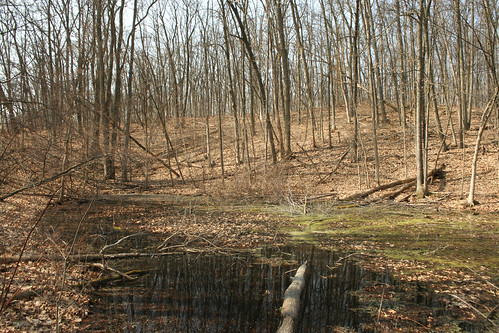
It's nearing the end of March and usually I'm still awaiting the arrival of the spring rains to bring out the waves of amphibians in the Michigan woodlands. However, this spring things have been a bit different. I arrived back from my spring break trip to Florida on Saturday, March 14th. As my plane landed at 6:30PM, I was greeted with temperatures in the 40s and heavy rain. Before I knew it I was heading out to a new site with a herpetologist to search for a rare Michigan amphibian. The pool we surveyed that night and the following morning was not in the typical upand deciduous forest I'm used to. This pool was located in a lowland flatwood forest dominated by Oaks and the ice hadn't completely thawed in the pool just yet.


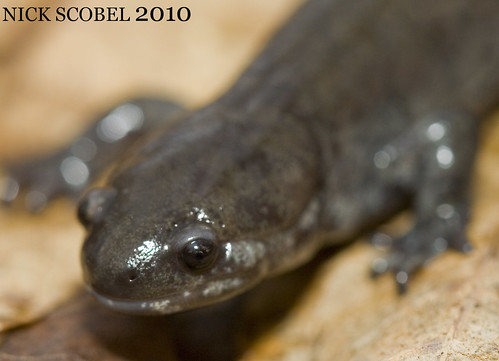
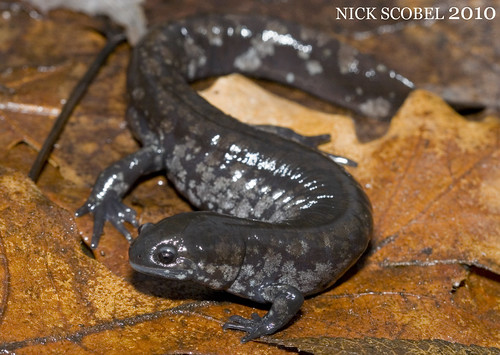
The one species in particular we were interested in was the Smallmouth Salamander. This is a very common species throughout its range, but Michigan lies at its northern range limit. This fact coupled with pollution, development, and other factors has left only a handful of breeding populations left in the state. In fact, the Smallmouth Salamander is listed as Endangered by the Michigan Department of Natural Resources. We were lucky enough to find more than a dozen individuals during the night and the next morning, these were my first Smallmouths in Michigan, a real treat.


Smallmouth Salamander - Ambystoma texanum

Smallmouths and Tigers are amongst the earliest of the salamanders to emerge in Michigan every spring, often moving while most of the pools are still iced over except for the edges. A week or two later as the ponds thaw and the rains come again, a few more species also emerge on rainy nights. This vernal pool is a site I've visited for several years now and it amazes me the amount of amphibian this pool holds in the spring despite being nestled in an extremely developed area.


On a few night outings and trapping sessions at this site, I was able to encounter quite a few of the different salamander species found here. It's a place that I just have to visit each and every spring. So without further adeu, here's the animals.

Red-spotted Newt - Notopthalmus viridescens

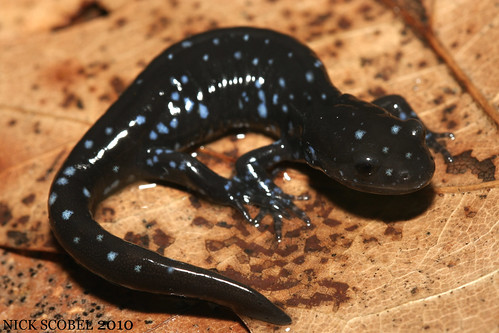
Blue-spotted Salamander - Ambystoma laterale


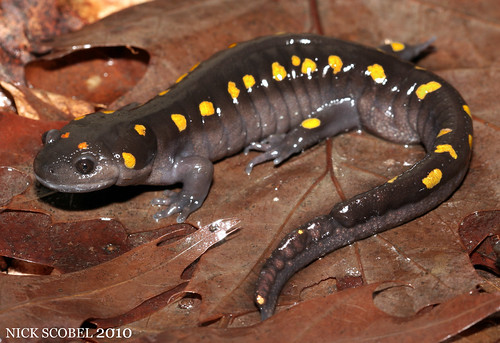
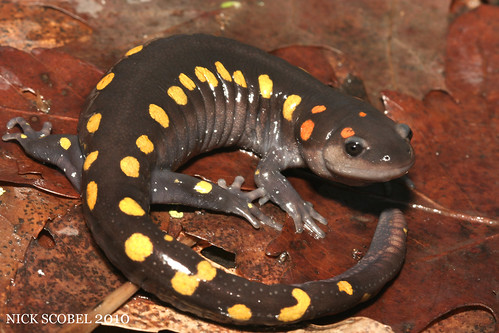
Spotted Salamander - Ambystoma maculatum

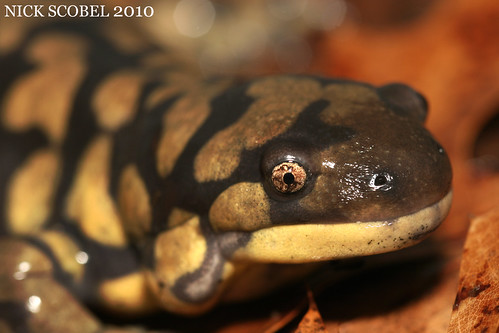
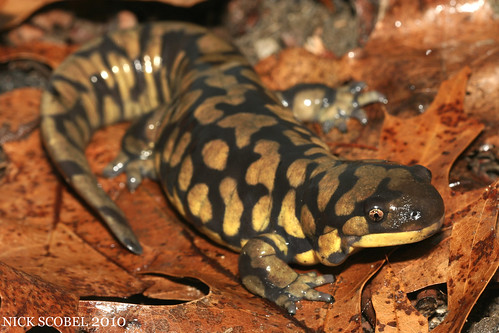
As I sit here in my room up at CMU and stare out into the dry evening, I envy the rain that sweeps across the southern half of the state and once again avoids mid-Michigan. However, finding this beast today was well worth trudging through the rain in southeast Michigan.


Eastern Tiger Salamander - Ambystoma tigrinum

Sunday, March 21, 2010

The King of the Southeastern Pinelands

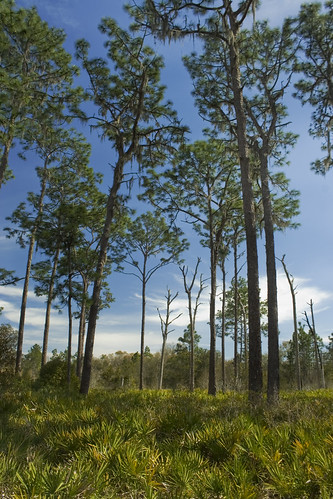
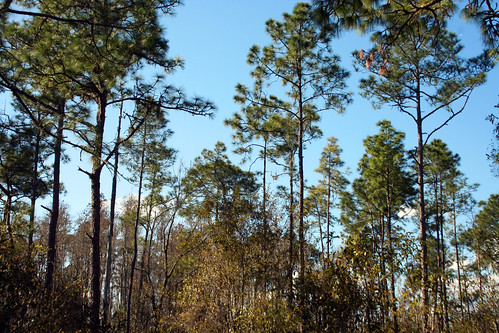
I recently had my spring break trip to the great state of Florida. My first destination of the trip was a tract of pine flatwoods in Polk County. In the past I've seen a great number of species in the area and it has proven to be a productive area. The main target of my trip as always was the king of the southeastern pinelands, the Eastern Diamondback Rattlesnake.


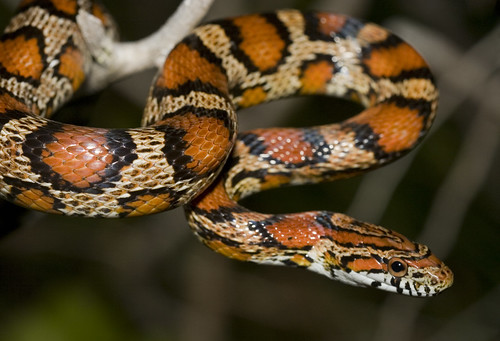
Things during the first half of the week were quite slow in central Florida, as temperatures held in the low 60s and got into the low 40s and high 30s at night. On Wednesday, my cousin Robbie and I headed out for a three day trip to southern Florida. Temps were much more favorable and it proved to be productive right away as we found this beauty out and about just after dark.

Corn Snake - Pantherophis guttatus

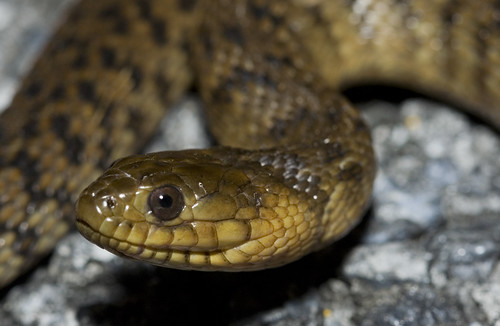
There were also several species of Nerodia out and about on the roads, the coolest of which we saw was this small Florida Green.

Florida Green Water Snake - Nerodia floridana

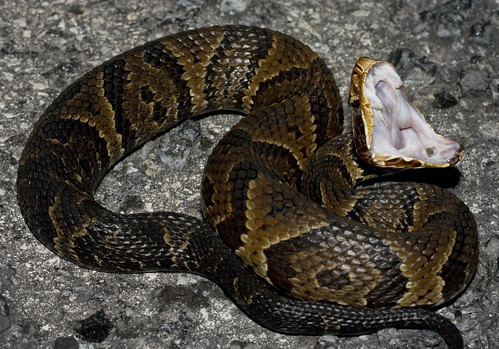
There's never a shortage of these pit vipers in Florida, this one was particularly set in showing its namesake.


Florida Cottonmouth - Agkistrodon piscivorus conanti

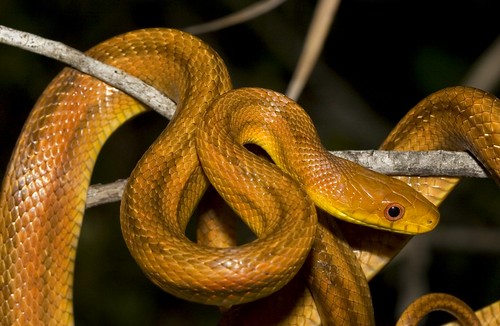
Later on in the night, I finally broke on a curse of a snake that I had only seen in the form of a DOR. This beautiful rat was found 200 yards up the road from a huge corn snake at around 12:30 AM.

Yellow Rat Snake - Pantherophis quadrivittatus

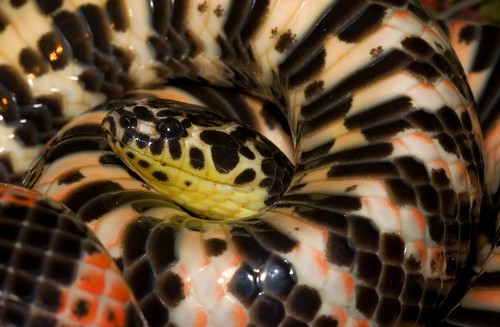
Things eventually began to slow down on the roads, and seeing snakes every five minutes turns into a snake once every half hour. At 2:30 AM, we noticed a large shape on the edge of a roadway and U-turned to find this beautiful serpent out and about on a dry night, which is odd for the species.

Eastern Mud Snake - Farancia abacura abacura

The next morning we arose around 10 AM and headed out to get some breakfast. At around 11 AM the sun broke out from behind the clouds and the temps climbes into the low 80s. As we rounded a corner my cousin questioned, "Whats that ahead in the road?" I looked up to see a dark shape several hundred yards ahead in the road, the closer we got the more it looked serpentine. And once we realized what it was, we both couldn't believe our eyes.


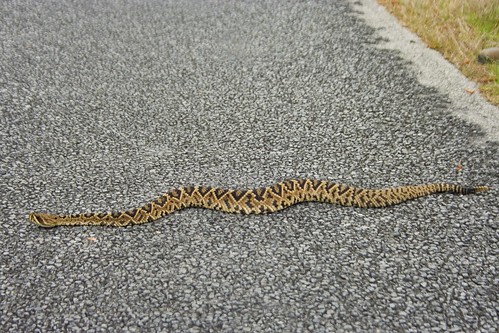
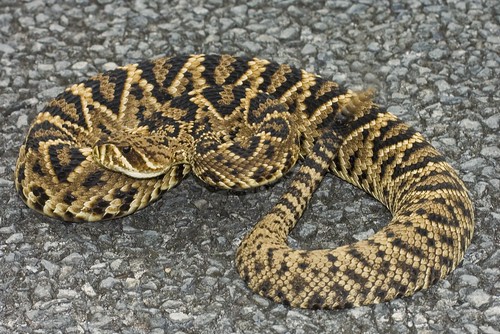
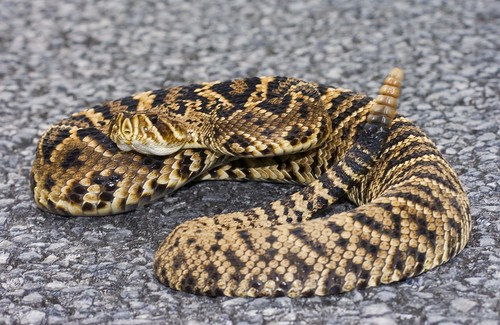
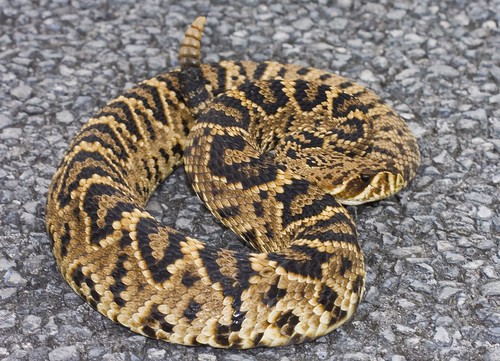
A three foot Eastern Diamondback Rattlesnake layed out in the road right ahead of us. We jumped out and began a long anticipated photography session with this beast, words can't describe how excited I was to see this species of snake.


Eastern Diamondback Rattlesnake - Crotalus adamanteus

An amazing species of snake that finally made an appearance...

Thursday, February 11, 2010

A nice May outing

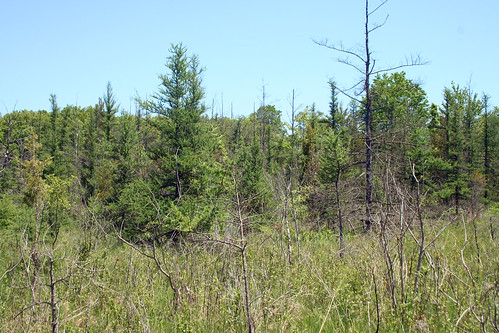
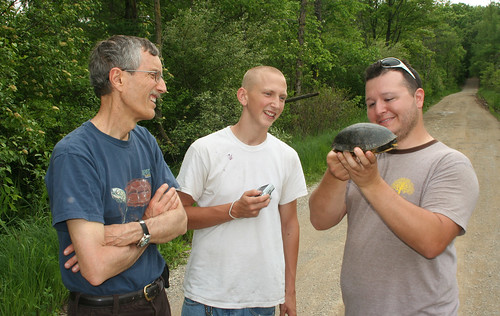
In May of 2009, I spent a day with herpetologist Dave Mifsud and his intern Max surveying a critical habitat type known as prairie fen. This fen exists on a lake margin and is home to several protected herp species in Michigan. Targets on this beautiful May day were the Eastern Massasauga Rattlesnake, Spotted Turtle, and Blanding's Turtle. Today was a real treat, as Jim Harding also joined us for the day. Jim is considered to be the "go-to" guy on Michigan herpetofauna. After brief introductions and conversation, we headed into the field.


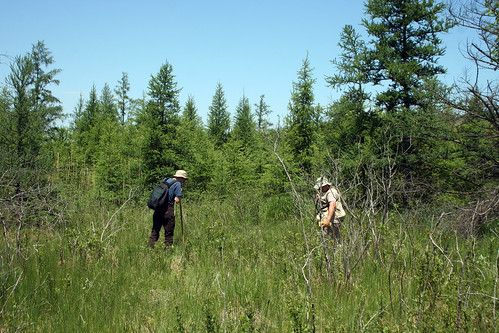
Fen habitats that are intact as this one, are critically fragile and important in Michgan. Fens are considered to be a peatland, meaning that they are composed of tons of decaying plant matter. This decaying plant matter is very old and can be dated back thousands of years from when the glaciers receded, meaning nutrient recycling in these habitats is very slow, and therefore makes them very fragile to human disturbance (development, pollution, etc.) Late May is a tough time of year to survey these sites for species as the cover becomes very thick and makes it difficult to spot snakes and turtles, here's Jim and Dave traversing the area.


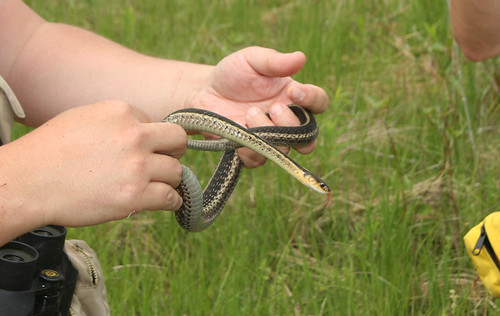
It took us awhile, but eventually we scored our first find of the day, a large gravid female Eastern Garter Snake. Dave is currently involved with some major projects in re-evaluating the distribution of Michigan herpetofauna and so even common species need to be documented at sites, we processed the snake and continued on our way.

Eastern Garter Snake - Thamnophis sirtalis

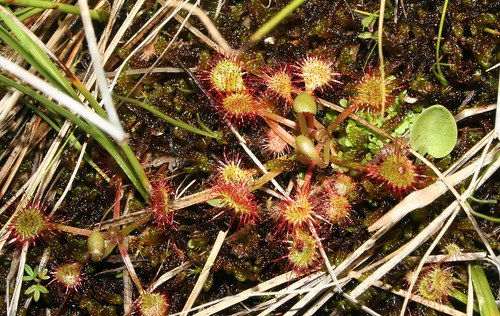
Another cool faunal component of peatlands such as this are species of carnivorous plants. The more common being the pitcher plant, and the less common being the sundew. We were able to come across a few sundew plants during the day, the biggest concentrations of them I've ever seen in the wild.


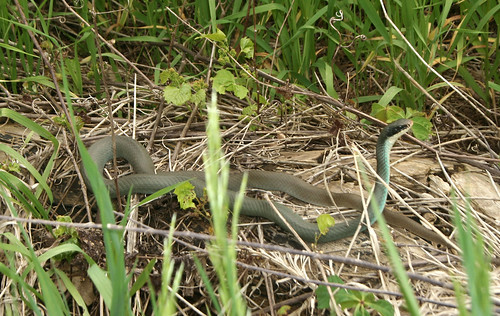
One of the highlights of the day came around mid-day as we were traversing the fen. Max and I were out near the edges of the property when Max called out, "Blue Racer!" Immediately I ran over to see a beautiful adult Blue Racer basking in the hazy sunlight. Blue Racers are a snake I don't often get to see in the field and it was a great sight indeed. Unfortunately, we only managed a few shots of the snake before in darted away into the thick cover.

Blue Racer - Coluber constrictor foxii

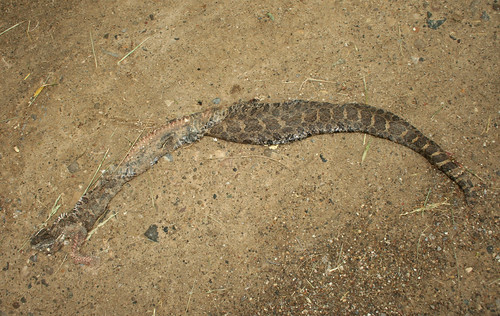
Finding the racer was a huge lift for morale, and we headed off site to check some side roads to see if anything was about. Unfortunately, the road bordering the site we had just been surveying produced this sad sight.


This large adult Eastern Massasuaga had clearly been hit earlier that morning or the afternoon before. However, we noticed that the rattle had been cut clean off with a knife or other sharp tool. It sickens me that some Michigan residents feel the need to hill this species of snake, as it poses no real harm to anyone if they leave it alone. Oh well, I guess whoever killed this snake has a cool souvenir for his trailer...Rednecks....

Anyway, we continued up the road and came across a much more encouraging sight!


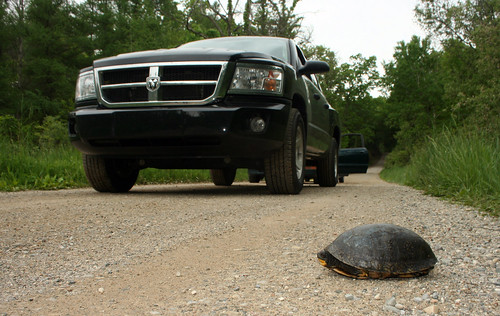
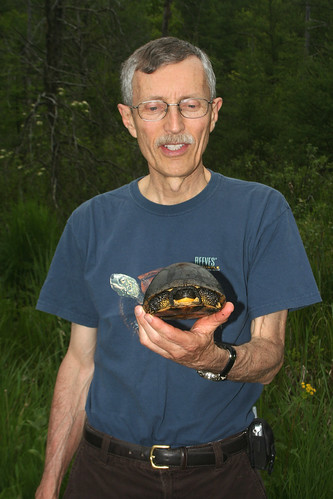
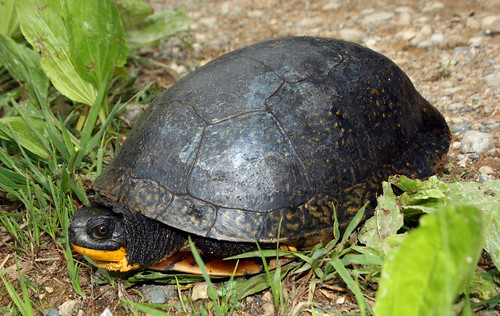
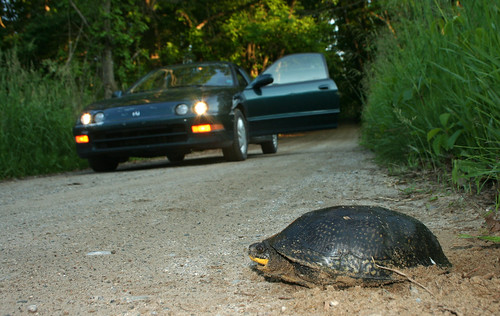
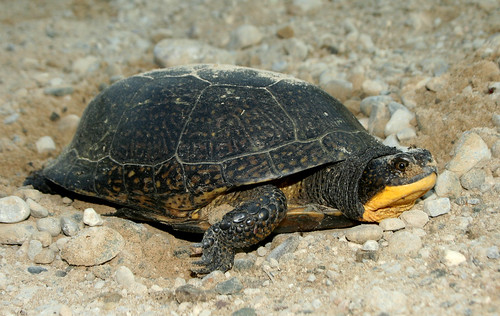
This adult female Blanding's Turtle had been excavating right on the edge of the road. Blanding's Turtles and other Michigan turtle species have a bad knack of crossing roadways to nest or even nesting right on road enbankments. Jim picked up this girl and gently palpated her to find that she was still full of eggs. I had never palpated a turtle before, so it was cool to learn a lesson from Jim.


Blanding's Turtle - Emydoidea blandingii

It was a fantastic day despite the DOR massasauga, but overall we were able to document some cool species and enjoy each other's company. The Blanding's we found on the road warranted a few return trips from me which yielded more turtles excavating on the roadside, a reminder for Michigan residents to drive carefully during May and June.


Thursday, January 7, 2010

Florida Rattlesnakes!

Back in June of 2009, I made a short weekend visit to Florida for a cousin's graduation party. Although the trip was not a herping trip, one can always find time to get a little field time regardless. Our flight arrived mid Thursday morning and by later that evening my cousin Robbie and I were out in a local state forest in central Florida. The temperatures were hot, but it didn't deter us from getting a little herping in. There's something about the Florida pinelands that I love, just a unique habitat.


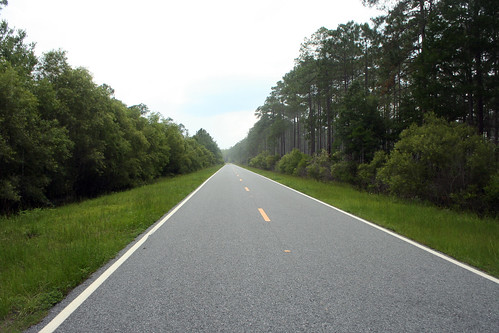
Although the heat was manageable, the bugs were just dowright awful. As the sun began to get low in the late afternoon we decided to hit some roads that crossed through the forest to hopefully catch some snakes moving on the roads. As we were leaving from our pull off, I noticed something on the right side of the sand road and immediately stopped the car. Rob looked at me and asked, "What?" I looked back at him and tried to explain the small shape I had seen, "This is going to sound crazy, but I think I just saw a pigmy rattlesnake coming onto the road." Rob immediately jumped out of the car and ran back about 10 yards and began yellled for me. Sure enough...


Dusky Pigmy Rattlesnake - Sistrurus miliarius barbouri

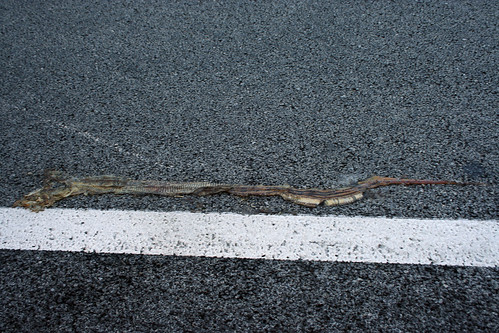
I absolutely love these little rattlesnakes, and this was only the third I've ever seen, and the first in 2-3 years. his little guy was pretty jumpy and was filled with a little attitude, these cousins of the Massasauga have a much more agressive streak than their big cousins. We spent a few minutes with this cool rattler, and then headed out to hit a few more roads. We were excited to have found a pigmy on our first outing and the rest of the evening looked good. Not too much later on, we came across this massive DOR Yellow Rat Snake, a snake that has eluded me in Florida, the only ones I've ever seen have been DOR.


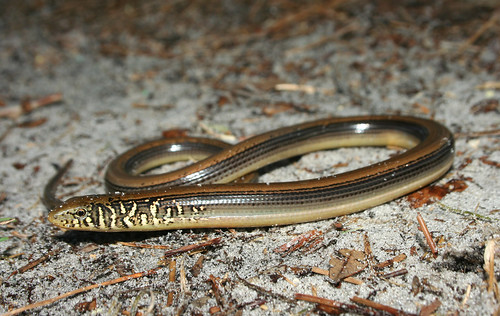
A little discouraged by the Yellow Rat, we pressed on. Our persistence paid off when we hit another sad road right at sundown. We looked ahead and saw what appeared to be a snake. However, when we jumped out of the car, it turned out to be my second ever Eastern Glass Lizard, love these guys.


Eastern Glass Lizard - Ophisaurus ventralis

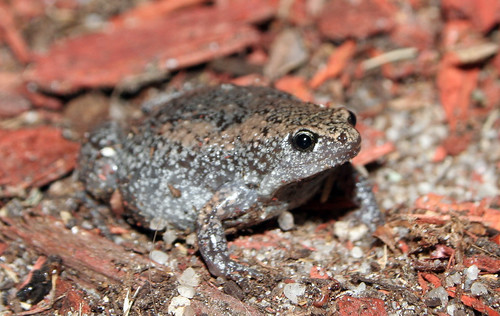
As we left the forest heavy rains set in. Within a few hours, the Florida roads were littered with these guys. One of my favorite Anurans due to their funny looks and call.


Eastern Narrowmouth Toad - Gastrophryne carolinensis

The following day was filled with graduation festivities and left Saturday open for a day trip somewhere. We ended up heading north to one of the three National Forests in Florida. We arrived mid-morning and found ourselves in-between periods of rain and sunshine throughout the day. Our initial reaction to the Osceola National Forest was that its a place of natural beauty.


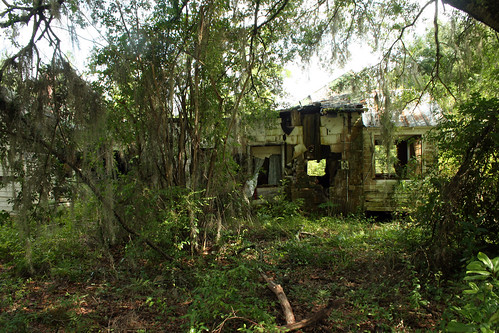
We spent the first hour or two driving around to explore the forest a little and get a feel for the environments found in the forest. We came across several DORs which included cottonmouths, racers, and a corn snake. On the outskirts of the forest, we stumbled across this abandoned property that looked particularly snaky.


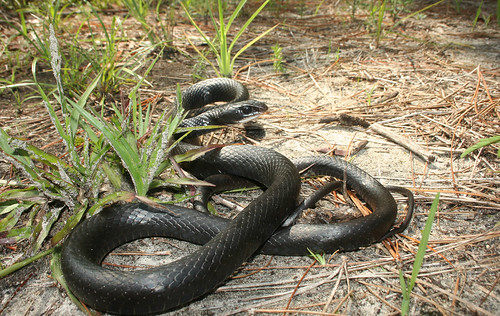
Several discarded boards lay around the property and so we decided to flip around a little bit. Aside from a few skinks we turned up a few of these, no doubt Florida's most common snake.


Southern Black Racer - Coluber constrictor priapus

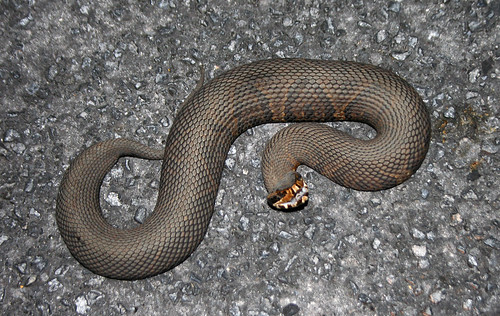
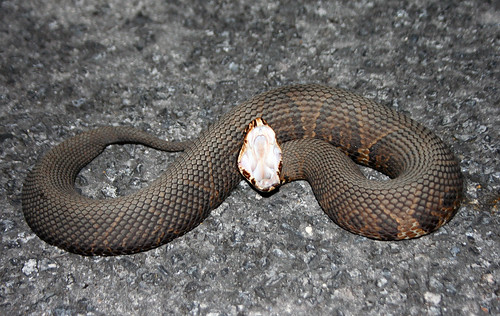
Later in the afternoon, some heavy rains moved through the forest. Fiften minutes of rain, half hour of sunshine, repeat. Thats the way the cycle went until the late evening. After a period of rain, these guys began to show up on the roads and even after dark. No trip to Florida would be complete without a few of these guys.


Florida Cottonmouths - Agkistrodon piscivorus conanti

The sole reason for us to venture to the northern section of Florida was the hopes of encountering a rattlesnake that neither of us had seen. Canebrake Rattlesnakes reach their southern range limit in northern Florida. After a few tips from Floridian Daniel Dye, we focused our driving on a few particular areas of the forest. Around 5:00 PM we rounded a large bend in the forest road, and looked ahead in the road and noticed a very serpentine shape coming on to the road. As we got closer we both yelled, "Canekbrake!"


Canebrake Rattlesnake - Crotalus horridus atricaudatus

It was one of the most beautiful snakes I've ever seen, and one of my favorite moments in the field I've ever had. We snapped photos for a few minutes, and let this gorgeous Crotalid on its way, a wonderful way to close another great trip to the great state of Florida.


Foxy

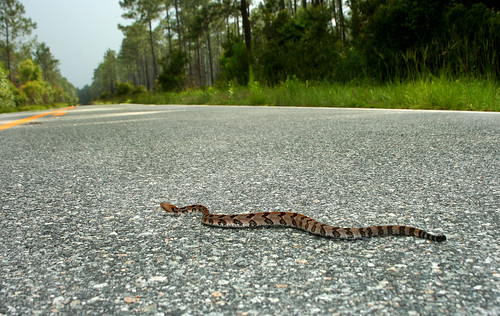
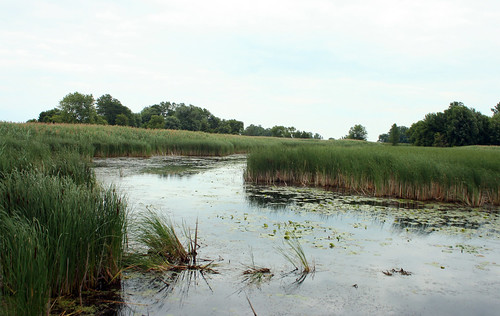
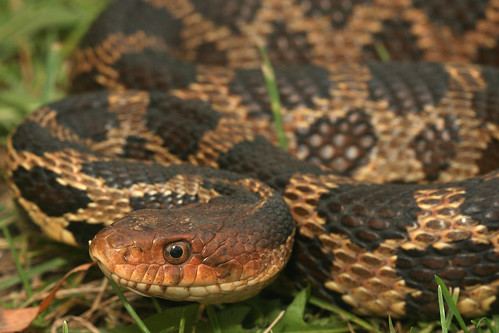
Before the beginning of the 2008 field season, I promised myself I would spend a little time looking for one of Michigan's largest snake species. The state is home to two subspecies of Fox snake; the Western Fox Snake inhabits the pine barrens of the western Upper Peninsula while the Eastern Fox Snake is found in the coastal marshes of the southeast Lower Peninsula. Not only is the Eastern Fox Snake a threatened species in Michigan, but its habitat is also one that is in need of constant management and protection. An invasive cattail known as Phragmites has choked much of these coastal marshes and outcompetes native cattails. However, some areas of coastal marsh are still in good shape and have native species still in control.


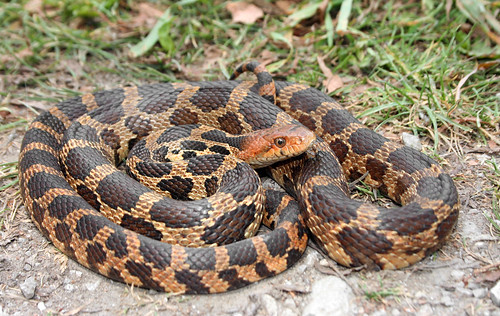
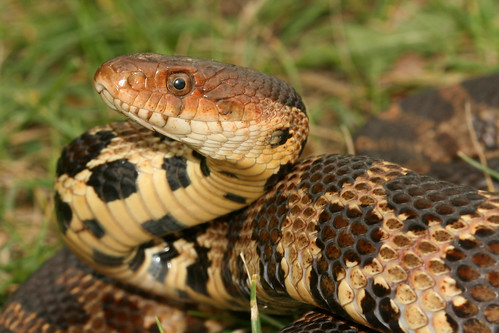
Fox snakes are one of the more attractive species in the state and their size makes them equally impressive. Several trips to the coastal marshes this summer produced severals snakes ranging from 2.5-5 feet. It was a privilege to be able to help a local herpetologist with his work on these snakes during the summer and is something I hope to do in the future.


Eastern Fox Snakes - Elaphe vulpina gloydi