Saturday, July 16, 2011

Around the House

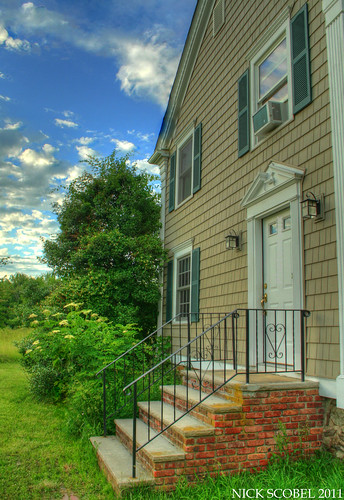
I'm midway through my summer job with the U.S. Fish & Wildlife Service and I thought it would be appropriate to throw a quick catch up post together. Outside of my work schedule, I've made an effort to explore the area and see what it has to offer. The surrounding area in this part of New Jersey can be characterized as foothills, with the mountains being an hour to the north. It's a beautiful place to be sure, as was this evening scene in front my my living quarters for the summer.


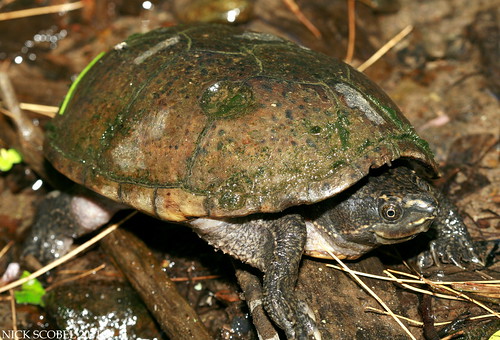
One of the most astounding things about the area is the turtle diversity. With the exception of the two rare species I'm working with, turtles are extremely abundant in basically every habitat. We see turtles in fields, ponds, streams, and on roads. Here's a look at some of the most frequently encountered species I've seen within five miles of the house.

Spotted Turtle - Clemmys guttata

Musk Turtle - Sternotherus odoratus

Eastern Box Turtles - Terrapene carolina

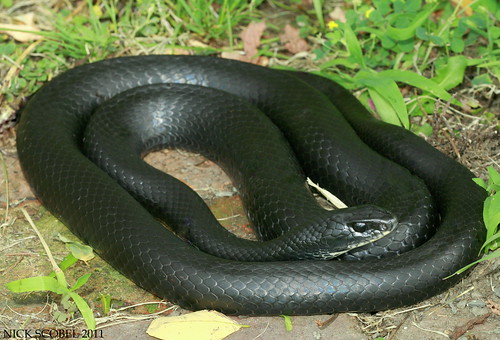
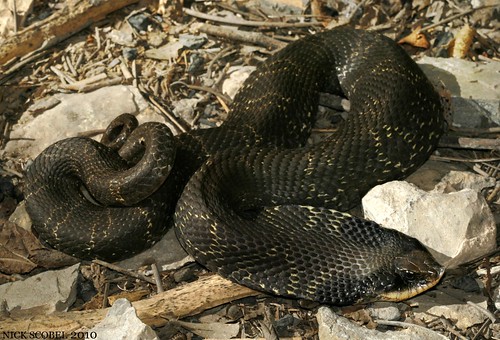
Spotted Turtles & Eastern Box Turtles are both listed by the NJDEP Division of Fish & Wildlife as species of special concern, but both seem to be faring well in the state. Though turtles seem to be fairly common in the area, snakes have been way less abundant. There are a few species that are fairly common, including our resident Northern Black Racer that we see frequently around the house.

Northern Black Racer - Coluber constrictor constrictor

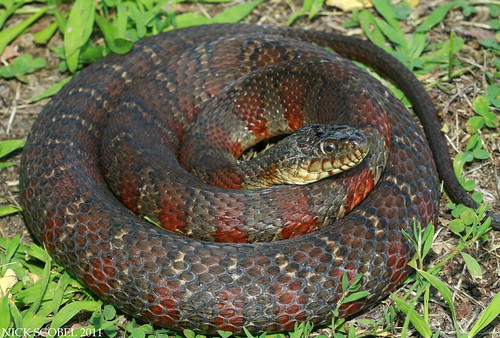
Northern Water Snake - Nerodia sipedon

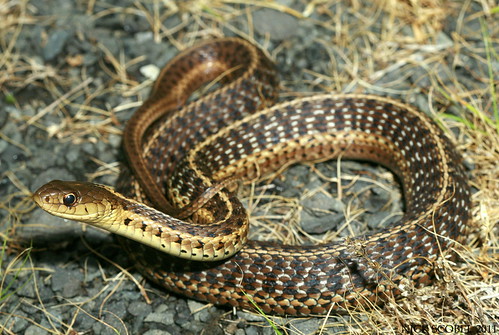
Eastern Garter Snake - Thamnophis sirtalis

Eastern Milk Snake - Lampropeltis triangulum

It's been a busy summer so far. And I'm in the process of writing blogs on the herpetofauna on the Mountains of northern New Jersey and the Pine Barrens of southern New Jersey. Stay tuned for those, that's all for now. Until next time, happy herping!

Tuesday, July 5, 2011

Muhlenberg's Turtle

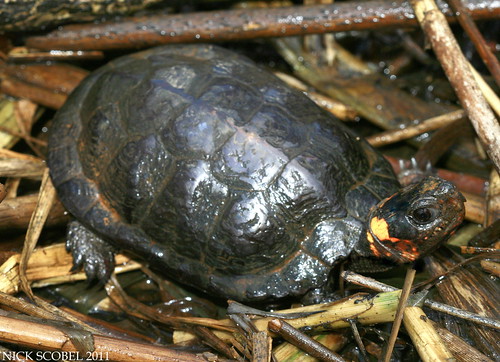
One of the rarest reptile & amphibian species in North America, the Bog Turtle receives both state & federal protection throughout its range. This summer, I've had the opportunity to work for the U.S. Fish & Wildlife Service on several conservation projects with rare & endangered turtle species including this species. Bog Turtles are small, secretive turtles that easily rival and surpass Eastern Massasauga Rattlesnakes in terms of how cryptic & difficult to find they are.

Bog Turtle - Glyptemys muhlenbergii

Their small size and bright orange markings on the neck make this turtle a highly coveted animal in the black market. In fact, illegal collection is one of the greatest threats that the Bog Turtle faces in the future. Many collectors will pay top dollar for a wild caught individual, sometimes exceeding a thousand dollars or more. In addition to illegal collection, Bog Turtles face threats from the development and draining of the wetland habitats they inhabit. In fact, more than 80% of the populations that were known to have existed fifty years ago have been lost due to development. This warranted the Bog Turtle to be placed on the Endangered Species list as a Threatened species, where it receives full protection by the USFWS.

Bog Turtle - Glyptemys muhlenbergii

It's not all bad news for the Bog Turtle though. Extant populations seem to be doing just fine and as long as their habitats are managed properly, they've got a fighting chance. Here in New Jersey, there are scattered populations throughout the state that are managed and protected by the USFWS and the New Jersey Department of Fish & Wildlife. Most of my work here involves radio telemetry with a population of Bog Turtles, as well as habitat restoration at both extant and historic populations to ensure suitable habitat remains for the species. It seems to be working, as several little gems like the animal below have been found.


Cute is a suitable scientific term to describe a hatchling Bog Turtle, they are incredibly tiny. Females lay their clutch of eggs in early summer in sedge tussocks or in hummocks of sphagnum moss. The hatchlings emerge in August or September and must quickly try to find a hibernation site. Bog Turtle nests probably face a lesser threat of predation than that of Wood Turtles of other turtle species because of the nature of their habitat. It's been great to have the opportunity to work with such an awesome species of turtle for the summer, I can only hope the remainder of the summer will be as enjoyable as the first half. That's all for now. Until next time, happy herping!


Friday, June 10, 2011

Pine Barrens Treefrogs

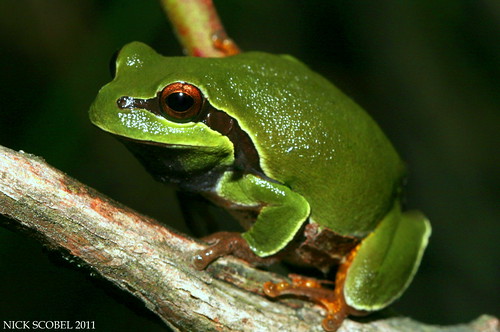
Since being in New Jersey, actual free time has been limited to the weekends. A few weekends back, I had the opportunity to travel south in New Jersey to the pines to search for ones of my targets for the summer, the Pine Barrens Treefrog. This species is arguably the most attractive treefrog found in North American, inhabiting acidic bogs & marshes in the pinelands of New Jersey, Florida, and the Carolinas. During the breeding season, males can be heard calling in large concentrations but this species is rarely seen outside of breeding time.

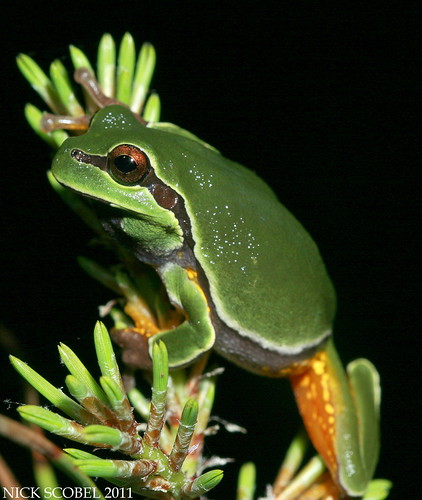
 Pine Barrens Treefrog - Hyla andersonii

After heading down the coast for Diamondback Terrapins, we headed back north through the pine barrens and stopped at an area I was directed to by a friend. There are many acidic marshes & bogs throughout the pine barrens which serve as breeding sites for pine barrens treefrogs. We arrived at dusk and wandered out to the edges of the bog hoping to hear the sounds of males calling. It was quiet, so I followed the directions of my friend to honk like a goose to entice the males to call. I did my best and before long we were surrounded by a chorus of kwonk-kwonk-kwonk. We dispersed and followed the calls of males to try and get on in hand for photos. It took me twenty minutes or so, but eventually I found my first calling from a small Atlantic White Cedar.

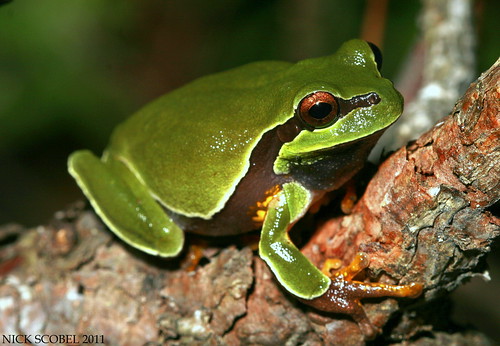
Pine Barrens Treefrogs - Hyla andersonii

I was expected PBTs to be around the size of a Gray Treefrog but was surprised by how small they were. Their small size coupled with the thick habitat made locating calling males difficult, but we managed to get three of them in hand. This species is easily the most attractive treefrog species I've seen in North America. It was a fun night that I won't soon forget, that's all for now. Until then, happy herping.

Thursday, May 19, 2011

Hog Wild

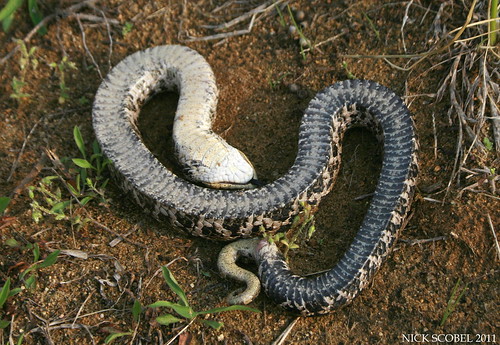
Of all the unlisted species of snake that inhabit Michigan, there is one that has been my nemesis for many years. It is a snake that is supposed to be found statewide where sandy soil and toads are found. The species I'm referring to is the Eastern Hognose Snake, a robust Colubrid that puts on quite a show when encountered. Though it is said to be found statewide, it is mostly likely isolated to spotty locations in the thumb & southeast Michigan, and is more widespread on the western side of the state. I saw one up near Sleeping Bear Dunes when I was a kid, but since that time I have been unable to track down a live on here in the Wolverine state, but I did get lucky and find this one in Illinois last fall.

Eastern Hognose Snake - Heterodon platirhinos

Recently I was told about a pocket of habitat on private property in southeast Michigan where a family sees hogs frequently. I was perplexed, as the area is less than ten miles from my house and has literally been under my nose all this time. They agreed to let me visit the property several times if I would agree to take their kids out once or twice to see some stuff. On a warm, muggy morning I decided to swing by their place and check it out for the second time. My first visit yielded Wood Frogs and a quick glimpse of a Blue Racer.


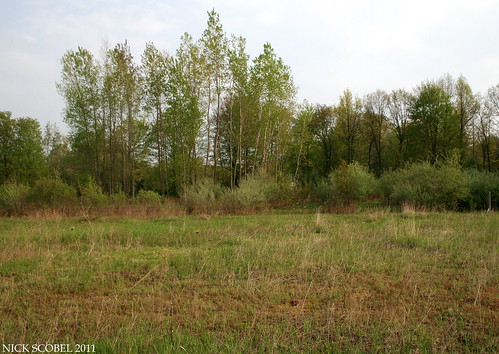
The majority of the property and surrounding areas is similar to the photo above, basically relict oak savannah that has been developed. The soil here is extremely sandy, with scattered grasses and shrubs, and a small creek and wetland nearby. After walking for about fifteen minutes, a splash of color caught my eye.


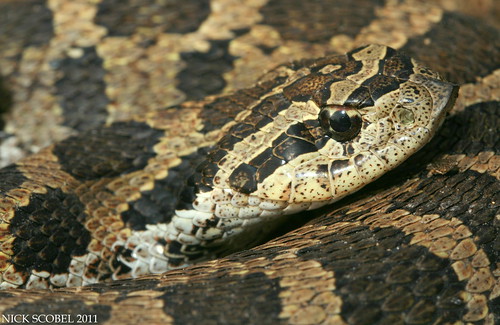
The splash of color was accompanied by a short, high-pitched hiss that brought my eyes to this awesome snake. It immediately flattened its neck out like a cobra and continued to hiss in textbook form, its easy to see why some rural folk refer to these snakes as puff adders.

Eastern Hognose Snake - Heterodon platirhinos

The Eastern Hognose Snake gets its name from the upturned rostral scale on the end of the snout which is uses to help burrow into loose, sandy soil. Hognose snakes are also known for their incredible defensive strategy, if the animal is touched it will flip on its back, writhe about, open its mouth and play dead. This snake was kind enough to put on a show for me as well.


I was elated to finally find one of these snakes in Michigan after such a long hiatus. And it was a great way to close my spring here in Michigan in the final weeks before I move to New Jersey for the summer. That's all for now. Until next time, happy herping!

Monday, May 9, 2011

Spring Serpents

Its hard to believe its already a few days into the month of May. With school, work, and getting ready for my summer job in New Jersey, the past month or so has been an absolute whirlwind. Michigan has had an extremely wet spring, with many rivers flooding and others reaching their breaking point. It hasn't seemed to affect the snakes too much, as I've seen many species so far this spring. I figured I'd do a quick recap of some of the species I've managed to encounter so far this spring.
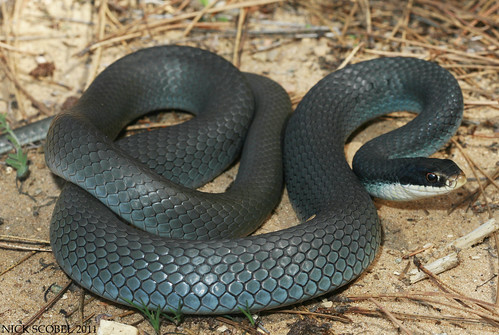
Blue Racer - Coluber constrictor foxii

It's been a wonderful spring for Blue Racers, as I've seen more than a dozen individuals at a handful of sites in Montcalm, Oakland, and Washtenaw counties. This absolutely gorgeous individual was found in a sandy field bordered by pines up in Montcalm County, and had obviously recently shed as indicated by its bold colors. Most of the Blue Racers that I've seen are not as blue has the one pictured above, but every now and then you can find real nice ones. 


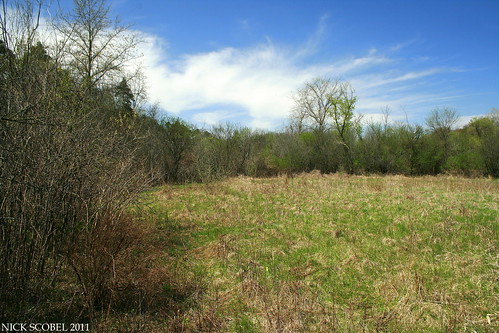
Open fields and meadows with sparse vegetation like the area in the photo above are ideal for Blue Racers. This species is found in the southern and western lower peninsula, though they have declined considerably in southeast Michigan over the years as urban sprawl has claimed much of their former habitat. But there are still pockets of them where the right habitat exists, particularly in preserves and on state land. Here's two more representatives from southeast Michigan.

Blue Racers - Coluber constrictor foxii

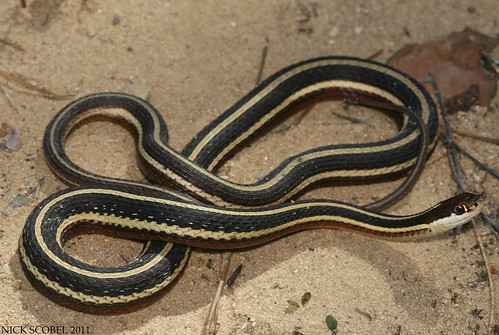
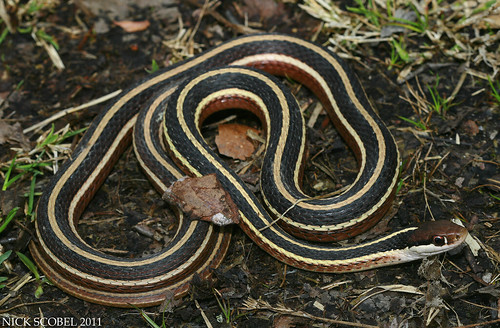
Besides blue racers, there's also been a few species of interest that I've been able to see quite a bit this spring. Northern Ribbon Snakes have been extremely common this spring, I always enjoy seeing them.
Northern Ribbon Snakes - Thamnophis sauritus septentrionalis

Ribbon Snakes seem to be pretty common in some areas of Michigan, and oddly absent in others. The second individual pictured above was found at a location that I've been visited since I was a kid and is only the second ribbon snake I've ever seen there. So it was quite an exciting find for that place to say the least. One snake species I've had quite a bit of luck with so far this spring is the Eastern Massasauga, seeing well over two dozen individuals all across Michigan. This past weekend, I visited this nice little meadow.


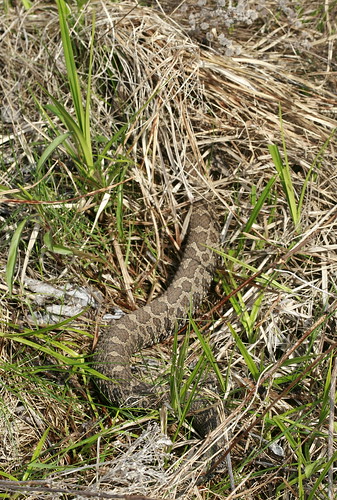
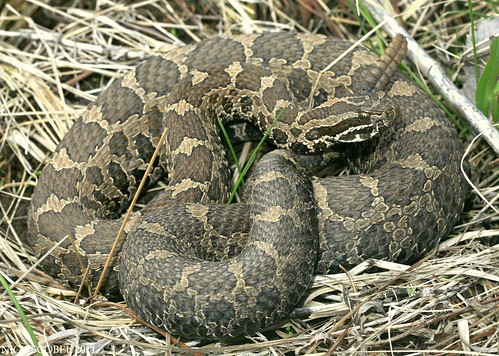
This small meadow is bordered by a fairly large wetland complex and serves as ideal summer habitat for rattlesnakes. Last year I managed to see several large gravid females and lots of juveniles utilizing this field from May through September, it would appear that this is a major birthing area for this population. On this particular morning, it didn't take long to turn up this big bruiser.
Eastern Massasauga Rattlesnake - Sistrurus catenatus catenatus

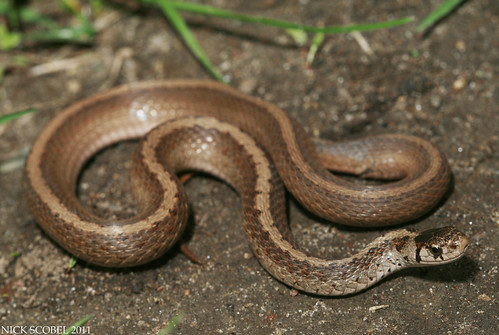
I've also seen a smattering of the real common snakes such as Browns & Garters, but I'll share a few photos of each species. 

Northern Brown Snake - Storeria dekayi

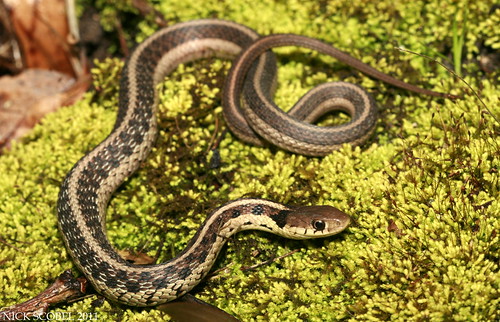
Eastern Garter Snake - Thamnophis sirtalis

I've seen browns in fairly large concentrations and garters are nothing to get excited about, but this little snake had some nice black blotches on the neck on each side, similar to a Checkered Garter Snake. That's all for now. Until then, happy herping.