Friday, June 21, 2013

A Memorable Trip Up North

Memorial Day weekend always seems to be one of most productive times of the year here in Michigan, and this year I was able to take a trip to northern Michigan over the holiday weekend with my good friends, Chris and Matt Boguslawski. The guys have a cabin up in the Manistee National Forest, probably the most beautiful natural area in Michigan's lower peninsula. This huge expanse of forest is also home to some of the state's more elusive herpetofauna. I met Chris early on Sunday morning, and we headed northward. Along the way, we decided to pit stop along the west side of the state to look for Black Rat Snakes (Pantherophis obsoletus), arguably one of the toughest snakes to find in the state, but we struck out. By the late afternoon, we arrived at our destination for the next few days.


After dropping our things off at the cabin, we picked up Matt, loaded our gear, and set out for the evening to a few spots Chris new of. Our first stop was a small meadow amid a jack pine forest which had several boards and other cover scattered throughout it. After a few minutes of flipping with no luck, we decided to move one. But as we were leaving, Matt spotted this large snake coming out of a large leaf pile.
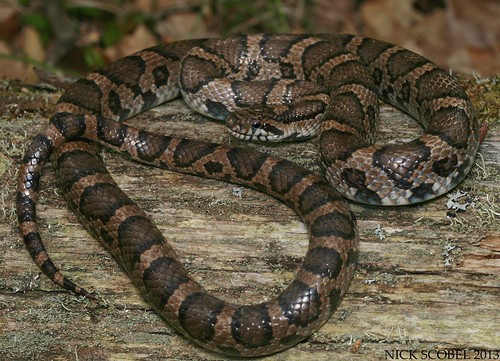
Eastern Milk Snake - Lampropeltis triangulum triangulum

Not the prettiest milk I've ever seen, but large and impressive to be sure. This adult was in shed and had a rather nasty looking sore on the tip of its snout. We snapped a few photos and moved on. While driving towards our next stop, we cruised a large DOR blue racer which had been hit earlier in the day, this would be the only way we would see racers the entire weekend. Our next spot was a small bridge crossing near a river. While traversing the area, we found this snake out on the move in the late evening, a welcomed surprise that all of us were excited to see.
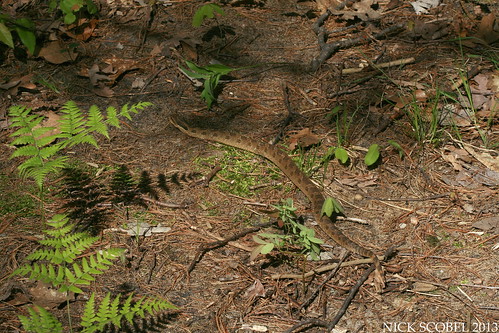
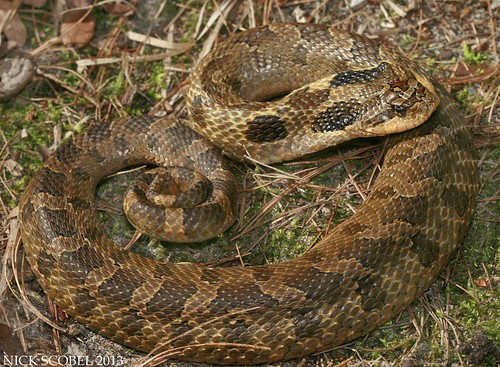
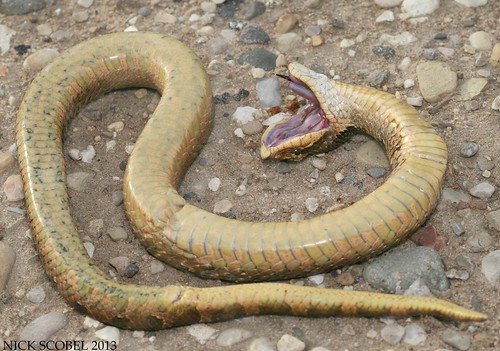
Eastern Hognose Snake - Heterodon platirhinos

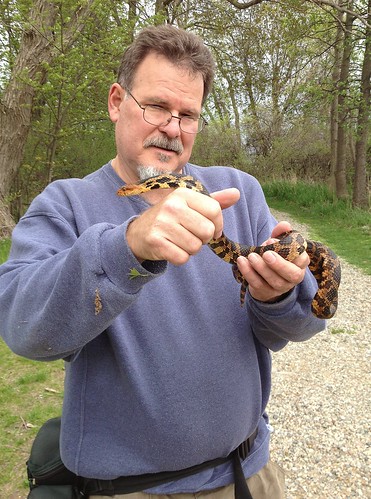
This was Matt's first Michigan hognose, and Chris's first hognose in Michigan since we was in his teens. Even for me, this was the furthest north I've ever seen one in Michigan. It had a wonderful sandy brown coloration that you don't often see in individuals from the southern lower peninsula. 
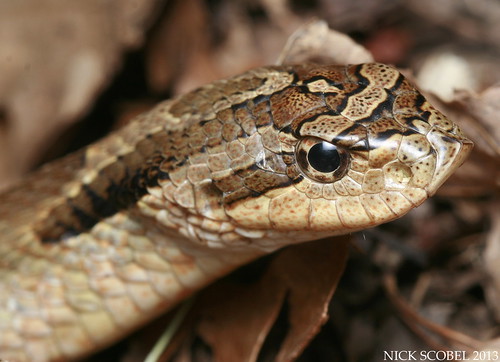

We got to see the full show, which is a typical display for this species. You can even notice some of the blood being discharged from its mouth, hognose snakes make every effort to make their death feigning as realistic as possible. We parted ways with the snake and headed back to the cabin for a well cooked meal. We arose early the next morning and headed further north to some boggy wetlands. Around noon, we arrived at this location.
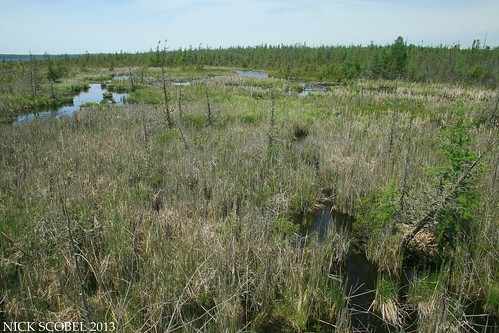

This large conifer swamp is home to Michigan's only venomous snake, the eastern massasauga. Temperatures were warm and the skies were hazy, perfect weather conditions for basking rattlesnakes. We spread out into the area, carefully stepping through the spongy terrain. While I was curling around the base of a tamarack tree, a dark shape managed to catch my attention.
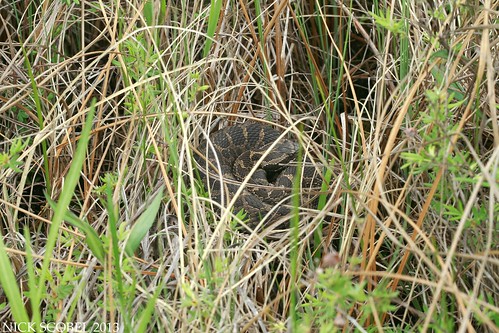
Eastern Massasauga Rattlesnake - Sistrurus catenatus catenatus

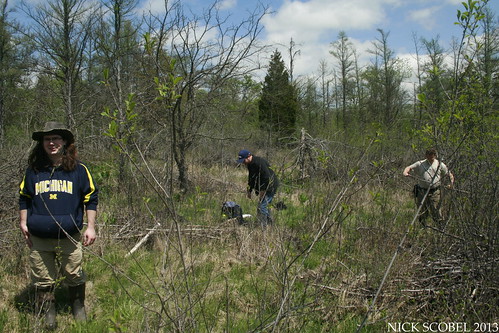
A sharp looking rattlesnake, this small adult was coiled right out in the open attempting to warm up in the hazy sunlight. We didn't bother it much, other than for a few quick photos. Massasaugas are always a treat, especially when you find them further north in the state. We walked around a bit more and flipped an in-shed juvenile milk snake. I also managed to catch Chris and Matt at a rather inopportune moment, well for Chris anyways.


Our next location took us about thirty miles from where we had been to an isolated two-track in the middle of nowhere on state land. Eventually, we found ourselves at a crossroads between the two-track and an ORV trail. A short distance away, we entered this gorgeous site.
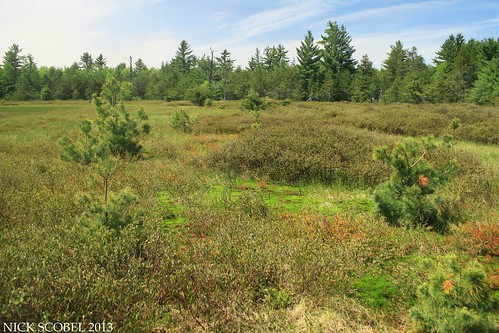

As soon as we entered this bog, I looked at the guys and exclaimed, "we're going to find a green snake here." The ground was damp and carpeted with bright green moss. Scattered patches of leatherleaf and sedges looked like ideal cover. We spread and and scanned the area slowly. Within a few minutes, I spotted this pretty ribbon snake moving around in a small seepage.

Northern Ribbon Snake - Thamnophis sauritus septentrionalis

We ended up seeing a few more ribbon snakes and the lone garter snake we would see the entire trip. We continued to walk carefully through the area looking for a moving piece of grass. Suddenly, Chris called out, "Green Snake!" Matt and I ran over to see Chris staring at a thick patch of sedges, he had lost the snake. We spent a minute carefully looking through the sedges and Chris managed to make a quick grab on this yearling green snake, my first on the Michigan mainland.
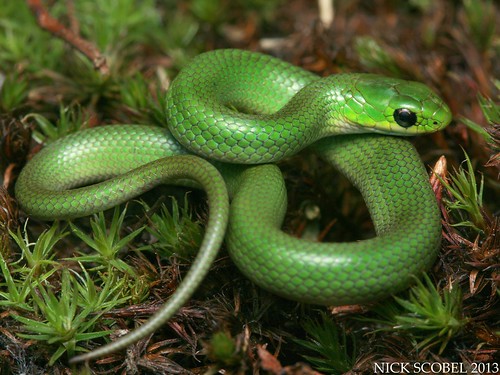
Smooth Green Snake - Opheodrys vernalis

There was some rejoicing between the group, this is a snake that had been on the guys list for quite some time. We spent a few minutes photographing this little guy, and then moved on. As nice as the juvenile was, I wanted to see a nice adult. As I was traversing one patch of the bog, a slight movement in the grass drew my eye to this gem. If it hadn't moved, I would have walked right past it, the camouflage on this species is amazing.

Smooth Green Snake - Opheodrys vernalis

This was a healthy adult, and is easily one of my favorite snakes which is found in the Great Lakes region. Sadly, this species seems to still be declining in the state. It was once common throughout much of the lower peninsula, but has since become rare or absent from much of its former haunts. It does remain locally common in the Upper Peninsula, but is only found in a few scattered locations in the northern lower. Likely the large reason for its decline is the conversion of meadows and wetlands to agricultural lands. Green snakes are strictly insectivorious, and because many agricultural operations spray pesticides, it seems as though green snakes have been affected just as much as the pests. Places like this are few and far between in the lower peninsula, and to see that this species is still hanging on in some areas is encouraging. We made the drive back towards the cabin and stopped at Jamesport Brewing Company in Ludington, where I enjoyed a guacamole burger and two of their Scottish Strong Ales. If you're a beer lover, a highly recommend a visit to the place if you're near Ludington. The next morning brought rainy weather, but we endured and headed out into the field. Flipping cover was the name of the game on this day, and we managed to find two five-lined skinks under cover, including one gorgeous juvenile.
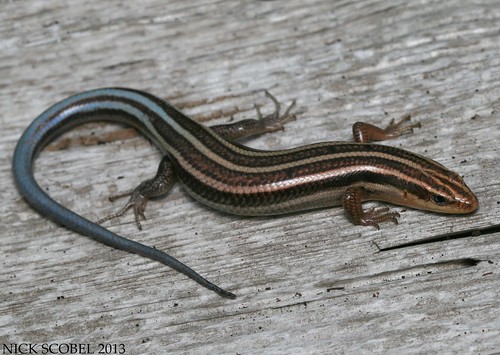
Five-lined Skink - Plestiodon fasciatus

As the day went on, several heavy thunderstorms passed through the area. So to kill time, we drove many roads across the area in hope of seeing a box or wood turtle out enjoying the weather, unfortunately we struck out. By the late afternoon, the rain finally quit and the land began to dry out. We pit stopped along a stream corridor and flipped a few rocks and managed to find a few snakes, including a queen snake, my first from this far north in the state.
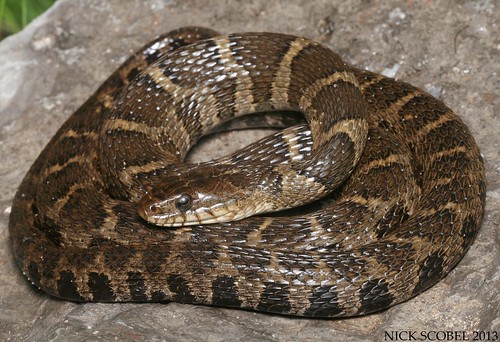
Northern Water Snake - Nerodia sipedon sipedon

Queen Snake - Regina septemvittata

The queen was definitely an exciting find, it seemed as though each day of the trip had provided a great find. And the day wasn't over yet, so we decided to go walk a clearing that Chris had checked before and thought it looked good for blue racers and hogs. We flipped a small log in the middle of the clearing and found our fourth milk snake on the trip, and the third county we had seen one in.
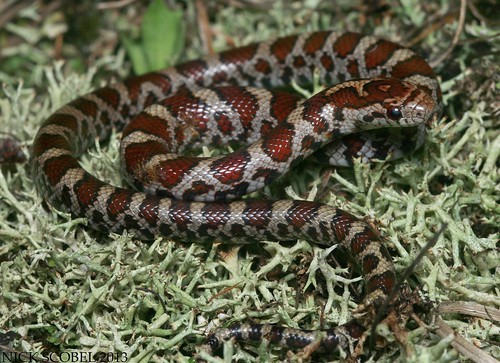
Eastern Milk Snake - Lampropeltis triangulum triangulum

We continued to traverse the clearing. While moving through a small area of shrubs in the center of the area, Chris called out, "Box turtle!" Matt and I quickly ran over to see this sight, a typical fashion to find a box turtle indeed.

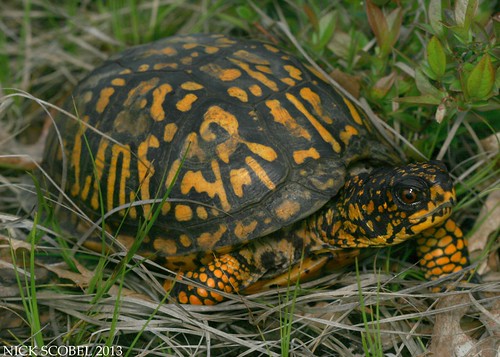
Eastern Box Turtle - Terrapene carolina carolina

I hadn't seen a box turtle in Michigan for a few years, so this was an encouraging find. Northern Michigan is the northern limit of this species' range in the United States, they are scarce and uncommon in the state. This was also a gravid female, likely utilizing this open clearing as a staging area for nesting in the coming weeks. It capped off our third fantastic day in a row. The next morning, we packed up and began the lock trek home to southeast Michigan but decided to make one last pit stop along the way. We headed out to a small wet meadow in hopes of seeing some turtles. The weather was warm, and the skies were overcast, perfect conditions for the species we were hoping to see. Our first find was this juvenile Blanding's Turtle, an uncommon sight these days it seems.
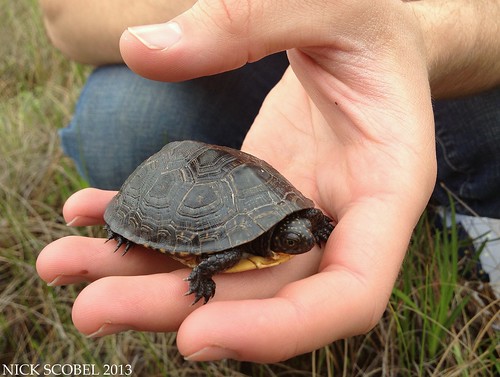
Blanding's Turtle - Emydoidea blandingii

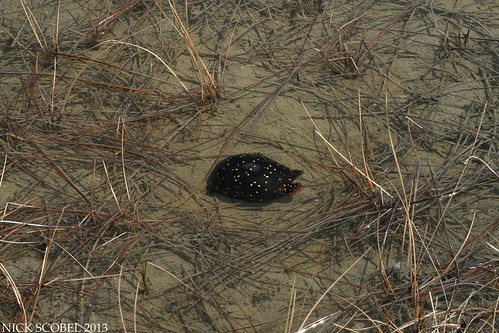
Like many imperiled turtle species, Blanding's Turtles face a major threat from raccoons due to high nest predation. Adult members of this species seem to be in no short supply, but many are upwards of 40-50 years in age. Juveniles like this seem to be scarce, indicating there is low recruitment. So, finding one in this age class is always a good sign. We let the little fella on his way and continued to scan the area, within a few minutes I spotted this gorgeous turtle basking in some sedges.

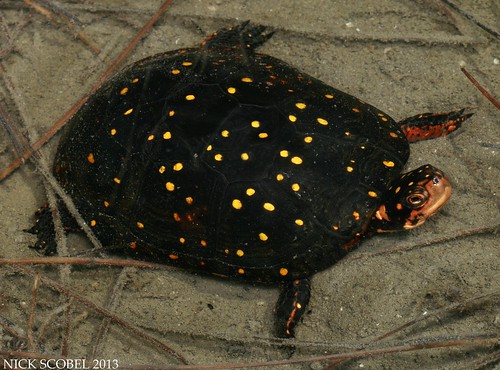
Spotted Turtle - Clemmys guttata

This gorgeous female was one of the nicest individuals of this species I've seen. We snapped a few photos and then continued the drive home, it was a great way to close an amazing trip. I'd like to thank Chris and Matt for their hospitality, and for probably the best few days in the field I've ever had in Michigan. I hope to do it again sometime. Until next time, happy herping.

Saturday, June 1, 2013

A Quick Spring Summary

Hello, everyone! It's been quite an absence since my last blog entry. It's been another odd spring here in Michigan, while it came a month early in 2012, the spring has arrived about a month late in 2013. Things have been out, but not in big numbers like I've seen in years past. Near the end of April, I jaunted down to the southwest corner of the state to explore some new areas. I pit stopped at an area along the way to take a quick look for a few species. It didn't take long, as I found this pretty girl out and about.

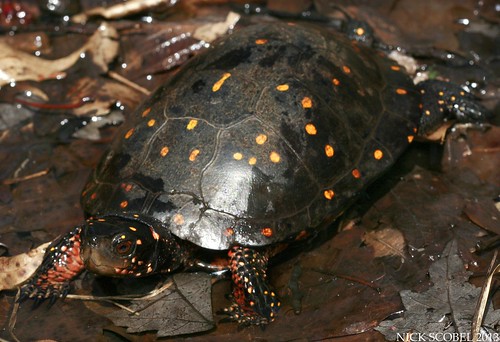
Spotted Turtle - Clemmys guttata

Female spotted turtles feature a bright orange chin which makes them easily distinguishable from males. This turtle was cooperative enough to let me shoot a few quick photos. A few more turtles were seen moving about the wetland during my short visit, but I also managed to stumble across a few snakes.

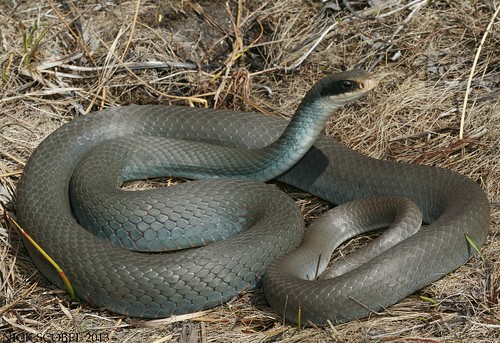
Blue Racer - Coluber constrictor foxii

Blue racers are always a treat. This large individual was found basking in the open, and after a quick chase I was able to apprehend it for a few quick photos. Temperatures continued to climb into the low 70s, perfect weather for massasaugas to be out. For whatever reason none made an appearance on this day, much to my chagrin. A good friend of mine was out on the east side of the state on this day and had temperatures that were considerably cooler, and he saw three massasaugas out basking. Needless to say, I was a little bit frustrated. My field time was limited in the following weeks, but I did manage to get out on a cool weekend afternoon. While walking along a river corridor towards a tin site, I stumbled onto this large male wood turtle.

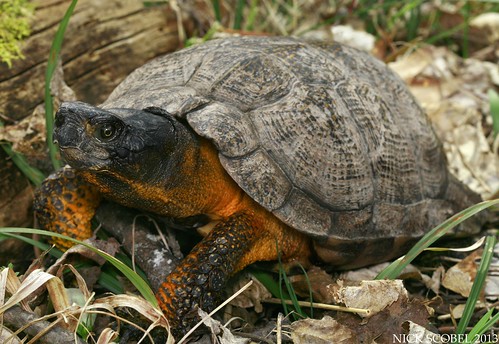
Wood Turtle - Glyptemys insculpta

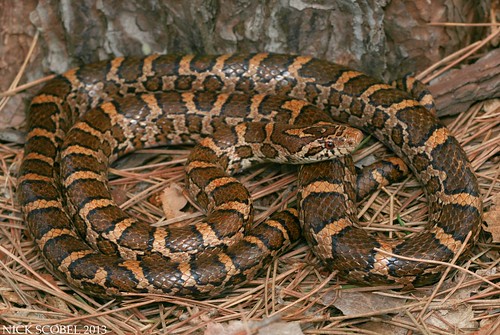
After snapping photos, I continued upriver to a small clearing I've been to many times to flip some tin. The habitat in this area looks promising for hogs and green snakes, though neither have shown up as of yet. But I did manage to flip this large milk snake under a sheet of tin, a large female I've seen before.

 Eastern Milk Snake - Lampropeltis triangulum triangulum

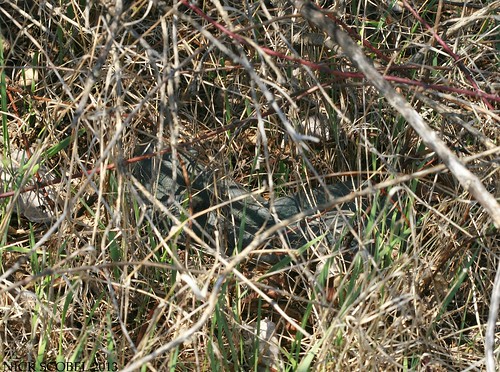
A week or so later I went out with a CMU graduate student who's doing research on blue racers to a spot not too far from campus to hopefully take some blood samples for genetic analysis. Temperatures were scorching for this time of the year and we arrived at high noon. Luckily, I was able to spot this adult taking shelter in the shade of a briar patch.

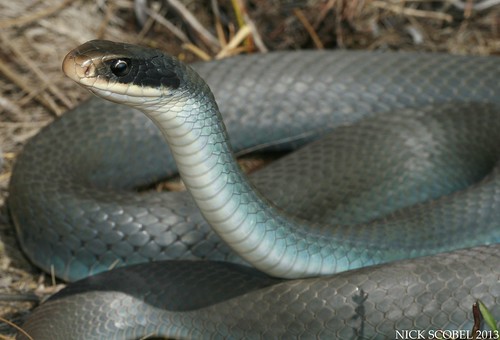
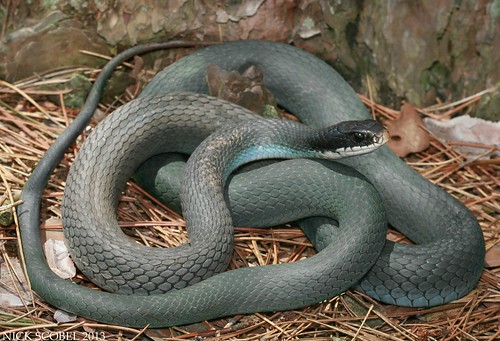
Blue Racer - Coluber constrictor foxii

Racers from this population seem to be more blue than any others I've seen in the state and feature a jet black head, truly gorgeous. We ended up seeing a grand total of three, not too bad considering the temperatures were in the mid 80s. A few weeks later, Tim Warfel and Mike Pingleton came up for a short weekend trip to see a few different species. Michigan weather can be described as temperamental at this time of the year, and despite warm temperatures earlier in the week, the Saturday forecast was for partly cloudy skies and temps only reaching the high 50s. When we met early in the morning, it was overcast and in the high 40s. We made a jaunt to an open meadow and managed to score a blue racer basking in the cool weather. After getting on the board, we headed over to another location and quickly scored a Butler's Garter Snake (Thamnophis butleri). As we were photographing the snake, the clouds parted and the temps quickly rose into the low 60s. We quickly moved to this fantastic prairie fen.


We spread out and walked carefully through the fen, checking around the edges of small shrubs, sedge tussocks, and tamarack trees. After a few minutes, Chris called out that he had found the snake we were looking for, a snake that Tim had traveled 2,600 miles to see.

Eastern Massasauga Rattlesnake - Sistrurus catenatus catenatus 

A healthy adult male, this snake was warmed up and jumpy. We were able to get him to coil for a minute or two to snap some photos and then let him on his way. It was exciting for Tim and Mike to be able to see one of these guys after a long trip, and also for me as this was my first massasauga of the 2013 field season. 


We packed up our gear and moved on. It was the middle of the afternoon and because we had crossed off a massasauga on the list, I asked Tim and Mike what else they would like to look for since we had the afternoon to kill. They asked how likely it would be to find an Eastern Fox Snake (Pantherophis gloydi) at this time of the year. I told them that it was hit and miss, but we would have a chance if we decided to go for it. We jumped in the car and booked it down to extreme southeast Michigan. After walking some coastal marsh for some time, Chris flipped a large rock which revealed this beauty.

Eastern Fox Snake - Pantherophis gloydi

Mike Pingleton examines his first adult gloydi

Tim enthralled with his first Eastern Fox

We finished a day of cool weather with a rattlesnake, fox snake, butler's garter, and a blue racer. Given the weather conditions, we were all quite satisfied. We closed the evening with a few beers, great food, and a lot of laughs at the Brown Jug in Ann Arbor. I want to thank Tim and Mike for a great time in the field, I hope to see them again this year down in Croatan.

Thursday, April 25, 2013

Spotties in SE Michigan

The plight of the Spotted Turtle (Clemmys guttata) across its range has been well documented, particularly in the midwest where it reaches it's western range limit. Here, it still occurs in small pockets of habitat in a fragmented and developed landscape. This is particularly true of Michigan, especially in the southeast part of the lower peninsula where the population center occurs. There are historic records for virtually every county in this region of the state, but because of urban sprawl most of these isolated populations have since become extirpated. Some property owners that I know in southeast Michigan had mentioned some peculiar looking turtles in the past and on a warm spring day, Jason Folt and I were given the opportunity to go check out the area. We were led to a large ephemeral wetland which was connected to a larger ditch. We split up and carefully checked the edges of the wetland for basking turtles.


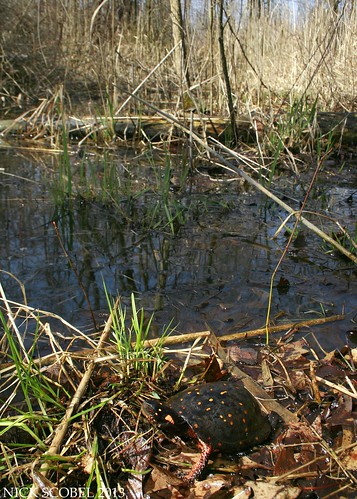
Although spotties usually inhabit high quality fens and other wetlands in Michigan, they can also be found in temporary wetlands such as ditches and vernal pools. Usually these temporary sites which they utilize in the spring are close to a larger patch of habitat with a more permanent water source, but this was not the case with this particular area. This area is highly fragmented with lots of houses and agricultural fields, the only good source of water was the deeper ditch that this wetland connected to. It's likely that the turtles at this location stay active until the main ditch becomes dry and then simply estivate for the hottest parts of the year. As we were walking the edge of the wetland, I noticed the glare of a dark carapace basking near the edge of the wetland.


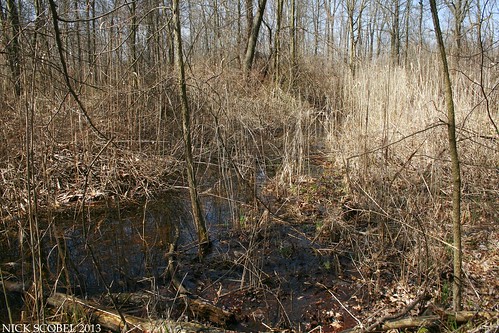
I gave Jason a shout and he made his way over to observe the turtle. It was an adult male, and probably a fairly old fella based on this completely smooth carapace. We took a quick look at him and then set up shop for a brief photo session. As you can see from the photo below, the majority of this area is a forest wetland with scattered logs and cattails.

Spotted Turtle - Clemmys guttata

A good looking turtle no doubt, but a more exciting find due to the area we were in. This was the third turtle that the property owners have seen this spring, all have been males. Earlier in the week, they had found a much younger looking animal in comparison to the one we found, which gives the hope that there could be some reproduction going on at this site.


A female or juvenile turtle would be an even more exciting find, but the fact that a state Threatened species exists in this fragmented area of southeast Michigan at all is exciting as well. It's also comforting that this small relict population exists a on property where the landowners are not only conscious about this species being here, but also passionate about preserving it. As always, I'd like to thank the property owners for their hospitality and allowing us to come out to see these animals, it was a real treat.

Sunday, April 14, 2013

Spring Gummy Lizards

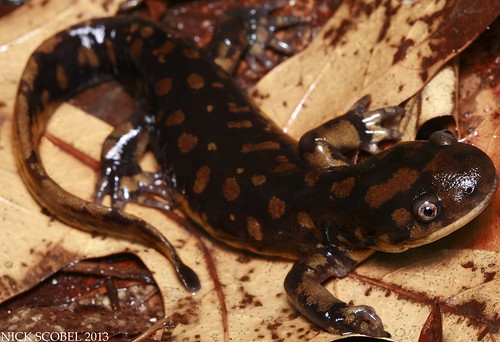
For the second year in a row, spring has been peculiar here in Michigan. In 2012, warm temperatures in the 80s arrived in mid March and were followed by a long, cold April which not only threw the herps for a loop, but also devastated crop yield for farmers. If that wasn't enough, the summer brought record high temperatures and one of the worst droughts the midwest has seen in more than fifty years. This year, it has been the exact opposite. Midway through the month of April, temperatures continue to be considerably lower than average and snow fell late this past week. The long term forecast shows cool, cloudy weather for the foreseeable future as well. It may be late April or early May until most of our snakes begin to wake up. But the cool, rainy weather we've had over the past few weeks has finally brought out the amphibians. We haven't had any huge migration nights, but sporadic movements of smaller numbers. On the last day of March, we had some light rain throughout the late afternoon which tapered off just before evening. I met up with a few friends to check a few locations in hopes of seeing tigers out and about. Although we didn't see any moving on roads, we did find a handful in a few breeding pools including this gorgeous gravid female.

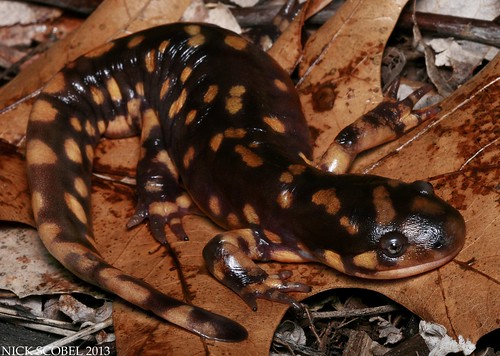
Eastern Tiger Salamander - Ambystoma tigrinum tigrinum

This was a large individual, approaching ten inches in length and fat with eggs. She was sharing a decent sized pool with one or two other tigers and a handful of blue-spots. Cold weather returned over the next week or so, but last Monday a massive system began to move through the midwest and dropped heavy rain during the day. The rain tailed off during the day and turned to a light drizzle in the central part of the state after dark. After watching Michigan come up a little short in the NCAA national title game, I decided to go clear my head for a half hour or so. Temperatures were steady around 40 degrees with a light drizzle and I was suprised to find this male spotted salamander crossing a road.


Spotted Salamander - Ambystoma maculatum

It was nice to a salamander active this far north despite the reports of slow activity downstate. I ended up calling it quits shortly after because class in the morning. Tuesday brought more heavy rain to the northern reaches of the state, and it again tailed off right around sunset. My friend Joe, a geology major at Central, had been asking if he could get out with me one night so we met up and cruised for a little bit. We saw big numbers of Wood Frogs (Rana sylvatica) on the roads and managed to cruise up two salamanders, including this large gravid female.

Spotted Salamander - Ambystoma maculatum

A nice looking salamander for this part of the state, but still not as nice as some I've seen downstate. I had been keeping an eye on a large storm that had moved across the plains and was forecasted to bring heavy rains to Michigan. Thunderstorms pounded the southern reaches of the state for the majority of the day, so I ended up driving to meet Jason Folt right around dusk. I decided to check out a vernal pool while I was waiting for him to arrive and managed to dipnet this adult male newt.

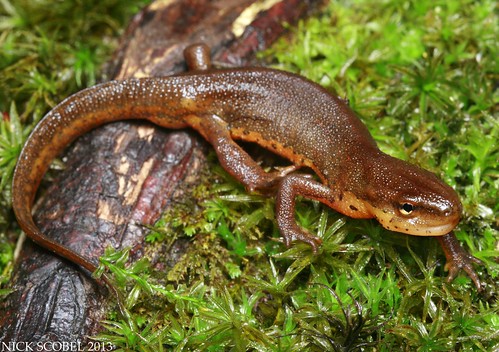
Eastern Newt - Notophthalmus viridescens

The jaw of this newt seemed a little odd in appearance, perhaps an old injury that just happened to heal in an odd position to give it a bulldog mug. Jason arrived a short time later and we spent a few minutes shining the edges of the pool for salamanders. We saw a handful of salamanders, including this stunner which I decided to grab for a few quick photos.

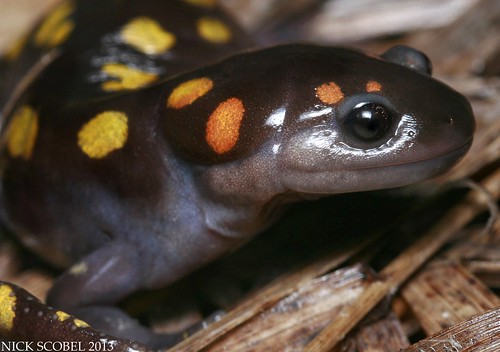
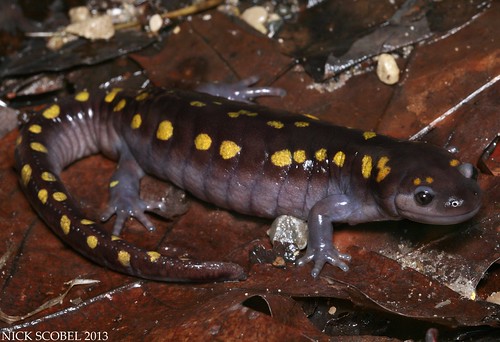
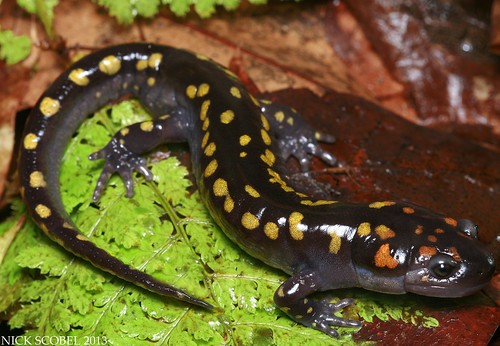
Spotted Salamander - Ambystoma maculatum

Many individuals from southern Michigan exhibit the orange head spots seen on this specimen, this was a really classic looking maculatum in my opinion. The spots were large and nicely arranged in two rows, sometimes you see this species with scattered small spots and they're not as nice looking. After shooting a few shots of this guy, we left to meet up with John Clare, a salamander enthusiast from Ohio to look for tiger salamanders. John is a fantastic photographer, check out his photostream. We drove west to some state land to check some pools there. Our first stop was at a large vernal pool that one of John's friends had told us about. We walked a short distance from the road and arrived at the pool, we ended up finding a few salamanders migrating towards the pond in the leaf litter during the light drizzle.

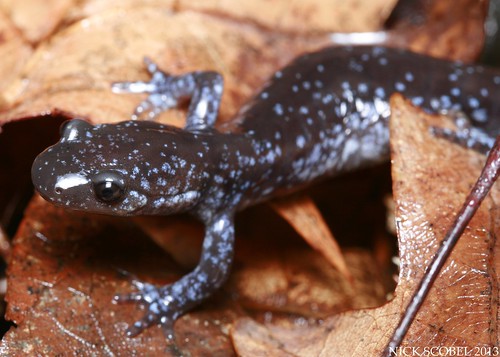
Spotted Salamander - Ambystoma maculatum

 Unisexual Ambystoma - Ambystoma sp.

The spotted salamander was a unique find for Jason and I, as we spend a lot of time in this particular state recreation area and despite fantastic woodland habitat, had not seen a maculatum here until this night. We snapped a few photos and then moved on to a large wetland that Jason had been told about. Unfortunately, we only found two dead tiger salamanders. One had appeared to have been stepped on, while the other had minimal physical damage but had definitely been dead for a day or two. We decided to move on and check a small pool which we've seen tigers in the past and quickly turned up a few tigers and a handful of egg masses.

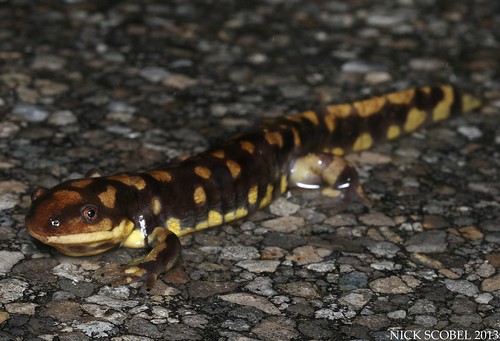
Eastern Tiger Salamander - Ambystoma tigrinum tigrinum

Despite being incredibly uncooperative, I managed to get this young male to sit still just long enough to fire this shot. It was late and we decided to part ways with John and his guys. As we were leaving, the rain began to pick up. Jason and I checked the radar and were elated to see a large thunderstorm system moving into the area. We decided to suck up the late hours and drive some new roads in hopes of seeing stuff on the move. The storm hit with force. Heavy rain and wild lightning dominated the rest of the night, and despite the temperature only being in the high 30s, we managed to find gummy lizards on the roads.


Eastern Tiger Salamander - Ambystoma tigrinum tigrinum


It was a late night that produced good numbers of these guys out and could be the last big hurrah of the salamander season in Michigan. We do have more rain in the forecast, but I'm holding out for a warm sunny day to get out for snakes. We shall see, this April has felt more like early March than anything else and the long term forecast doesn't look good. Stay tuned, hopefully winter will finally let go of the wolverine state for good.