Wednesday, July 10, 2013

The Garden State Pinelands

After working in New Jersey from 2011-2012, I had the opportunity to return to the Garden State for a four day weekend.. I arrived just as tropical storm Andrea did, and she dropped more than four and a half inches of rain locally in northern Jersey. The first day of my rendezvous with former coworkers was spent inside going over data that had been collected earlier in the spring, and I wasn't able to go out in the field to see the two turtle species I had spent so much time with the previous two summers. The weather forecast for the weekend was more pleasant, and so I arose early on Saturday morning and drove to one of my favorite places to be in the field, the pine barrens. This large tract of coastal plain pine forest makes up almost a quarter of New Jersey's total land mass and is home to many unique species of reptiles & amphibians. When I reached the northern part of the barrens, I made a pit stop at one of the best things about Jersey.


What is Wawa? Well, it's like 7/11, but on steroids. It is a chain of convenience stores which can be found in New Jersey, Pennsylvania, and other scattered locations along the east coast. Most are combination food stores and gas stations, which make them a great place to stop at fill up on food and fuel. They offer freshly made hoagies, salads, wraps, juices, and just about anything else you can think of. After grabbing a chicken caesar wrap and some juice, I was on my way. 


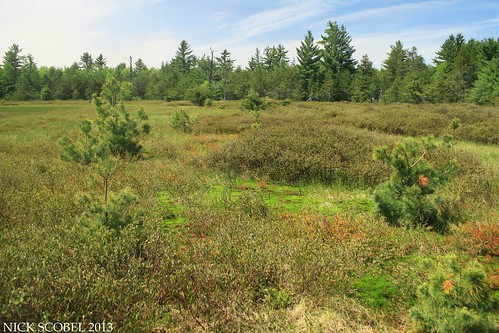
Much of the pines barrens looks very similar to this, white sugar sand with scattered pitch pine and an understory of scrub oak and highbush blueberry. Though many unique species exist here, it is a foreboding place to herp which requires long hours in the field with little yield. The high humidity from the storm the day before had brought the biting flies out in force, the ticks were also noticeably bad. While driving between sites, I found my first snake of the trip. Unfortunately, it was in the fashion that I hate seeing snakes.

Black Rat Snake - Pantherophis obsoletus

This is the only way I've seen black rats in the pine barrens, whacked on the road. The odd thing is that this snake has no visible trauma to its body, so I'm unsure as to what happened to it. It was still limp, and had clearly not been dead for very long. I stopped and flipped some cover at a few different sites and struck out so I moved on. The weather was warm and muggy and the skies were overcast, it was perfect weather conditions for snakes to be out basking. So I decided to go walk a sandy ridge that in hopes of seeing one of the more impressive species which inhabits the pine barrens. After an hour or so, I spotted this big girl.

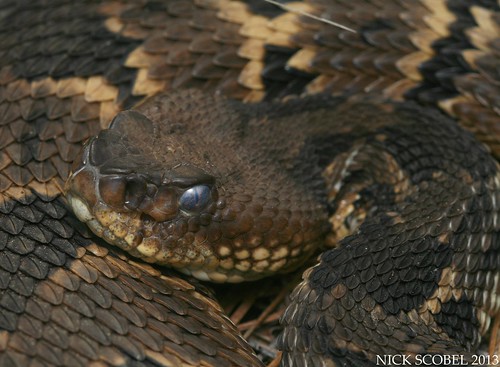
Timber Rattlesnake - Crotalus horridus

This large gravid female was only the third rattlesnake I've seen in the pines, I saw one each of the past two years. She was coiled at the base of a large pitch pine and did not move a muscle. Pinebrakes are the ghosts of this region. They are scarce and restricted, and most rarely encounter humans throughout their lifetime in the pine barrens. After admiring her for a few minutes I moved on to another site. After flipping through some cover, I flipped a large board and found this little gem underneath.
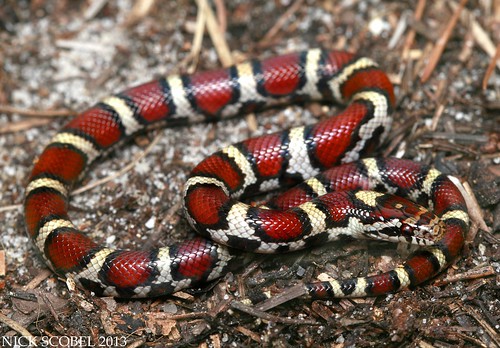
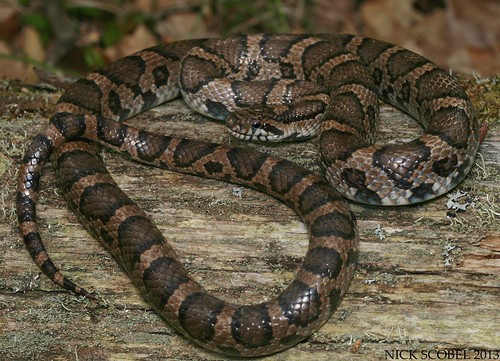
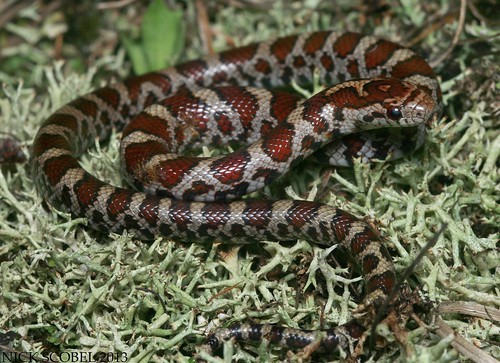
Coastal Plains Milk Snake - Lampropeltis triangulum "temporalis"

Coastals are always an exciting find and it was a great way to cap off my first day back in the pines. I had to take off early due to a recognition dinner back up north at the national wildlife refuge. After a good night's sleep, I arose early once again and headed back to the pinelands. I met up with a friend and walked some habitat and after a short while spotted this beautiful snake basking in the morning sun.

Timber Rattlesnake - Crotalus horridus

I fired a few photos of this snake from a good distance to ensure she wasn't disturbed. Research has shown harassment of gravid female timber rattlesnakes can cause them to abandon their gestation sites. Females select locations which are optimum for basking and also to cool off when the weather gets too hot, as thermoregulation is important while carrying young. We moved on and and searched more habitat. Much to my surprise, we found this male corn snake basking in the dappled sunlight.
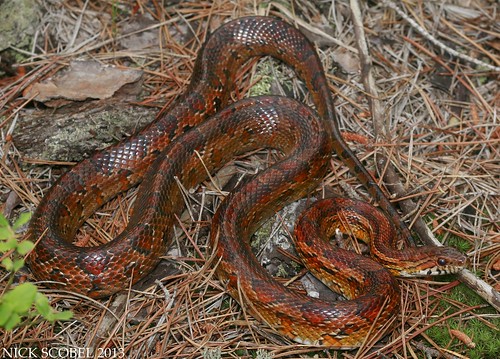
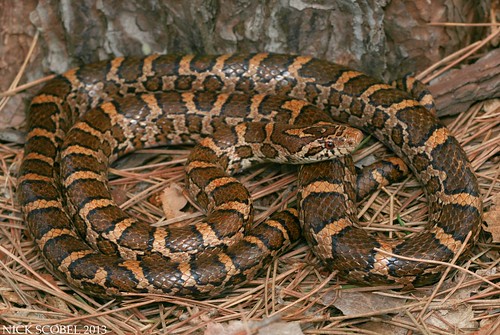
Corn Snake - Pantherophis guttatus

Corn snakes reach their northern range limit in the pine barrens. I only managed to observe one individual over the previous two summers, so it was exciting to find this handsome fella. After a few quick photos, we parted ways. I moved on to another sandy ridge in hopes of seeing a few more rattlesnakes. I managed to spot this large gracid female coiled in the shade.
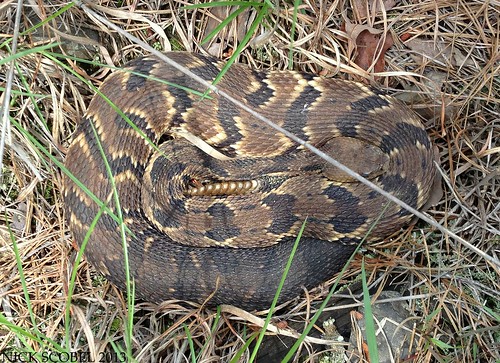
Timber Rattlesnake - Crotalus horridus

She was in the blue, and sported some very canebrake-esque serrated chevrons. Pinebrakes have sometimes been compared to the canebrakes of the southeastern coastal plain. Canebrakes usually sport the same serrated chevrons, a rusty dorsal stripe, and a prominent post-ocular stripe on either side of the head. Most snakes in the pines lack these stripes, but some do have faint indications of them. I didn't bother the snake and moved on. About fifteen minutes later, I spotted this big girl laid out in the pine straw.
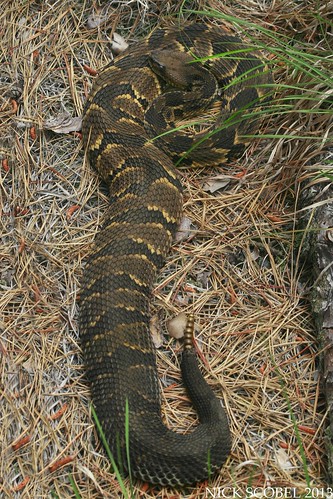
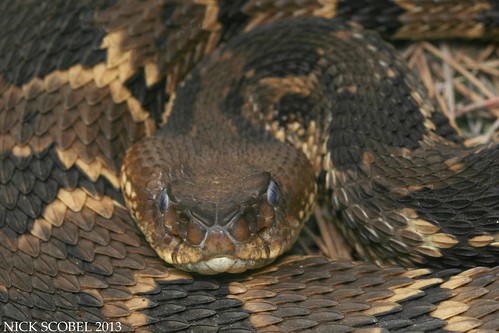
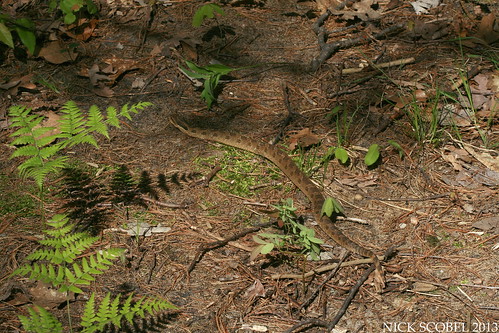
 Timber Rattlesnake - Crotalus horridus

This was another large female. She did not move a muscle and allowed me to get some awesome shots with my zoom lens from a few feet away. Horridus are always an impressive species to encounter in the field and seeing multiple in a weekend was awesome. As I was leaving the area, I heard what some movement around the base of a pitch pine and managed to snag this nasty juvenile racer for a few photos.
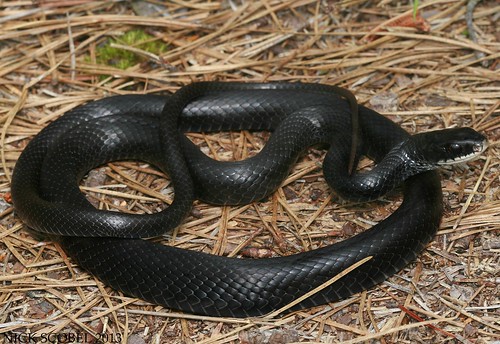
Northern Black Racer - Coluber constrictor constrictor

Racers are biters to begin with, but this snake was like a bat out of hell. I don't think I've ever had one bite me as many times as this one did. I got a few quick shots and moved on before I lost too much blood. 
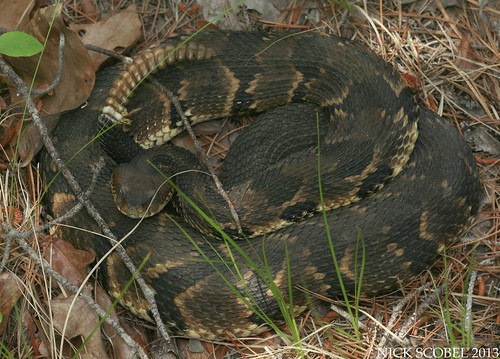
 

As the heat of the day picked up, I went and grabbed some lunch at one of my favorite delis in the pine barrens and then made my way to another site.
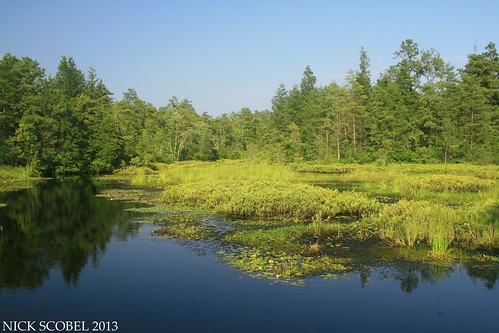

This large series of abandoned cranberry bogs is not only beautiful, but it's also fantastic habitat for Eastern Kingsnakes (Lampropeltis getula) and some of the larger turtle species which inhabit the pine barrens. While driving the sand roads whichc criss cross the impoundments, I found several large redbelly turtles out on the move, including one nesting female.

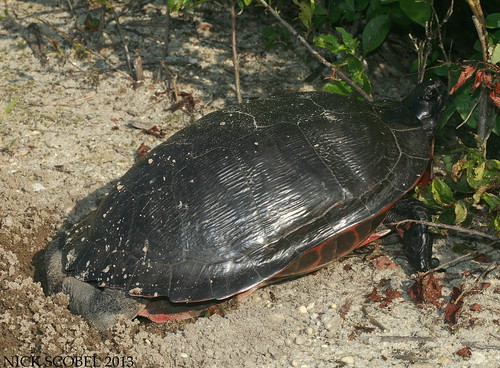
Northern Redbelly Turtles - Pseudemys rubriventris rubriventris

Redbellies are exceedingly skittish for their large size and often drop in from a basking location when you're more than thirty yards away. It was pretty cool to see one up close and to watch one of the females dig for a few minutes. As the weather began to cool down, I went to meet up with a few good friends that I'd herped with over the past two summers in the pine barrens. We drove to a few flipping sites and flipped a few racers under cover. It was an encouraging sign, and about a half hour later we flipped this magnificent sight.
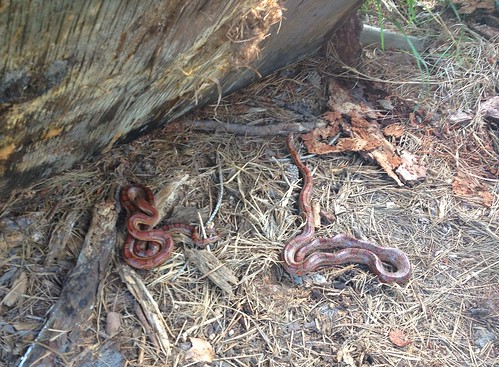
Corn Snakes - Pantherophis guttatus

I don't think any of us were ready for this flip, it will definitely be a memorable one. Corns are scarce in the pine barrens and they carry a state endangered listing in New Jersey, so seeing two in one spot like this was awesome. We gently laid the board back down and moved on. Had that been the end of the night, it would have been a great way to end the day. But as it turns out, sometimes luck is on your side. We moved on to another spot and tried flipping some more cover. I was stoked when we flipped this gorgeous hognose.
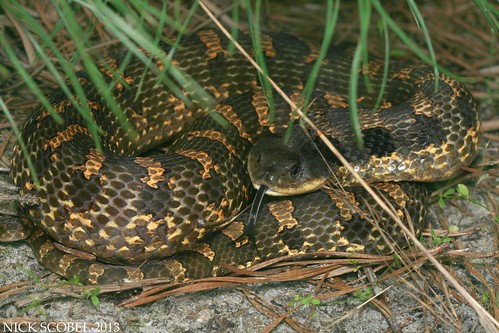
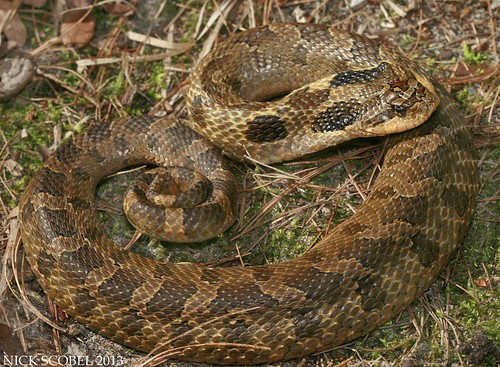
Eastern Hognose Snake - Heterodon platirhinos

This large individual quickly retreated beneath a small pitch pine and began to hiss defensively. I don't think I've seen a wilder looking pattern or coloration myself in the wild, other then some bright yellow individuals I've seen in southeast Michigan. The snake did the usual hognose thing and after a short photo session we moved on. Later on, we flipped this gorgeous snake.
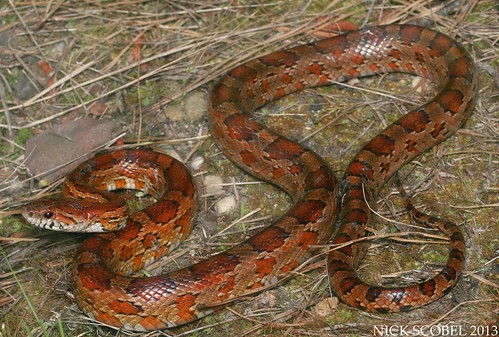
Corn Snake - Pantherophis guttatus 

After a brief photo session, we moved on as the sun began to set. The humid weather seemed to be ideal for frog activity, and so we headed to a swamp in hopes of seeing one of poster species of this region. We arrived after dark to a cedar swamp which was alive with the sounds of several different anuran species. I heard the characteristic kwonk-kwonk-kwonk and followed it to a small pitch pines and spotted a few of these colorful little fellas.
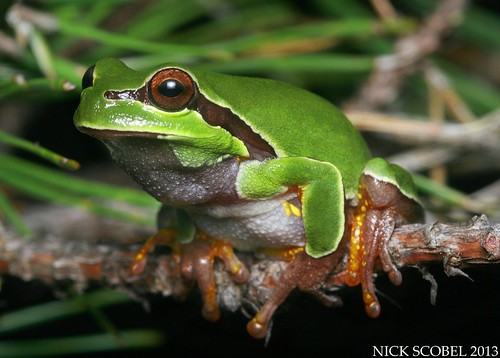
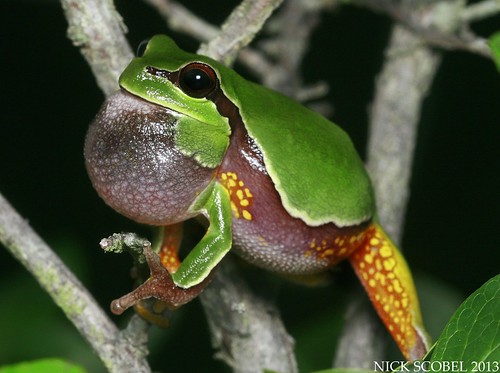
Pine Barrens Treefrogs - Hyla andersonii

This species is truly stunning. The emerald green is accented by the lavender stripes and yellow mottling on the legs. We ended up seeing quite a few individuals and closed off an outstanding weekend in the field in great way. Despite the hoards of biting flies, ticks, and chiggers, the Garden State holds a special place in my heart and I can only hope to end up there again sometime in the near future.

Friday, June 21, 2013

A Memorable Trip Up North

Memorial Day weekend always seems to be one of most productive times of the year here in Michigan, and this year I was able to take a trip to northern Michigan over the holiday weekend with my good friends, Chris and Matt Boguslawski. The guys have a cabin up in the Manistee National Forest, probably the most beautiful natural area in Michigan's lower peninsula. This huge expanse of forest is also home to some of the state's more elusive herpetofauna. I met Chris early on Sunday morning, and we headed northward. Along the way, we decided to pit stop along the west side of the state to look for Black Rat Snakes (Pantherophis obsoletus), arguably one of the toughest snakes to find in the state, but we struck out. By the late afternoon, we arrived at our destination for the next few days.


After dropping our things off at the cabin, we picked up Matt, loaded our gear, and set out for the evening to a few spots Chris new of. Our first stop was a small meadow amid a jack pine forest which had several boards and other cover scattered throughout it. After a few minutes of flipping with no luck, we decided to move one. But as we were leaving, Matt spotted this large snake coming out of a large leaf pile.

Eastern Milk Snake - Lampropeltis triangulum triangulum

Not the prettiest milk I've ever seen, but large and impressive to be sure. This adult was in shed and had a rather nasty looking sore on the tip of its snout. We snapped a few photos and moved on. While driving towards our next stop, we cruised a large DOR blue racer which had been hit earlier in the day, this would be the only way we would see racers the entire weekend. Our next spot was a small bridge crossing near a river. While traversing the area, we found this snake out on the move in the late evening, a welcomed surprise that all of us were excited to see.

Eastern Hognose Snake - Heterodon platirhinos

This was Matt's first Michigan hognose, and Chris's first hognose in Michigan since we was in his teens. Even for me, this was the furthest north I've ever seen one in Michigan. It had a wonderful sandy brown coloration that you don't often see in individuals from the southern lower peninsula. 


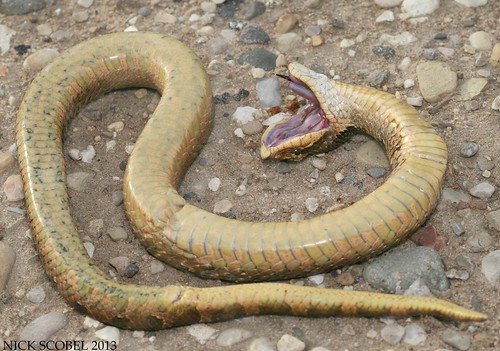
We got to see the full show, which is a typical display for this species. You can even notice some of the blood being discharged from its mouth, hognose snakes make every effort to make their death feigning as realistic as possible. We parted ways with the snake and headed back to the cabin for a well cooked meal. We arose early the next morning and headed further north to some boggy wetlands. Around noon, we arrived at this location.


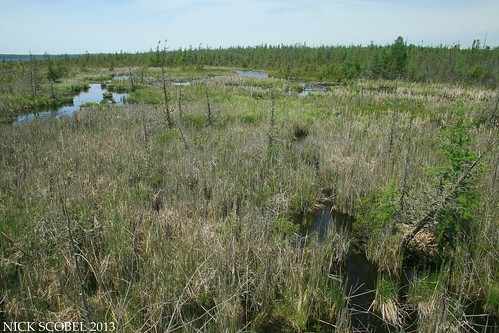
This large conifer swamp is home to Michigan's only venomous snake, the eastern massasauga. Temperatures were warm and the skies were hazy, perfect weather conditions for basking rattlesnakes. We spread out into the area, carefully stepping through the spongy terrain. While I was curling around the base of a tamarack tree, a dark shape managed to catch my attention.

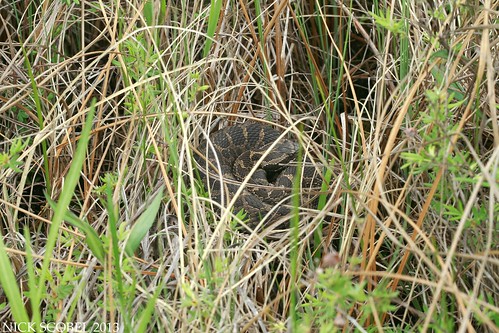
Eastern Massasauga Rattlesnake - Sistrurus catenatus catenatus

A sharp looking rattlesnake, this small adult was coiled right out in the open attempting to warm up in the hazy sunlight. We didn't bother it much, other than for a few quick photos. Massasaugas are always a treat, especially when you find them further north in the state. We walked around a bit more and flipped an in-shed juvenile milk snake. I also managed to catch Chris and Matt at a rather inopportune moment, well for Chris anyways.


Our next location took us about thirty miles from where we had been to an isolated two-track in the middle of nowhere on state land. Eventually, we found ourselves at a crossroads between the two-track and an ORV trail. A short distance away, we entered this gorgeous site.


As soon as we entered this bog, I looked at the guys and exclaimed, "we're going to find a green snake here." The ground was damp and carpeted with bright green moss. Scattered patches of leatherleaf and sedges looked like ideal cover. We spread and and scanned the area slowly. Within a few minutes, I spotted this pretty ribbon snake moving around in a small seepage.

Northern Ribbon Snake - Thamnophis sauritus septentrionalis

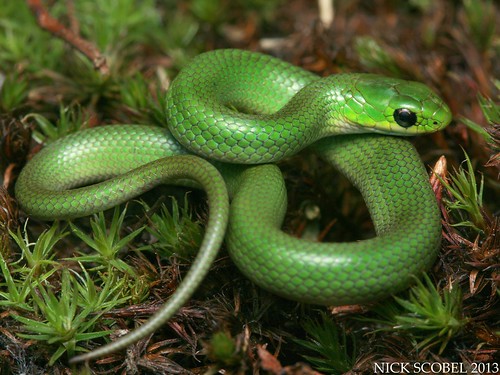
We ended up seeing a few more ribbon snakes and the lone garter snake we would see the entire trip. We continued to walk carefully through the area looking for a moving piece of grass. Suddenly, Chris called out, "Green Snake!" Matt and I ran over to see Chris staring at a thick patch of sedges, he had lost the snake. We spent a minute carefully looking through the sedges and Chris managed to make a quick grab on this yearling green snake, my first on the Michigan mainland.

Smooth Green Snake - Opheodrys vernalis

There was some rejoicing between the group, this is a snake that had been on the guys list for quite some time. We spent a few minutes photographing this little guy, and then moved on. As nice as the juvenile was, I wanted to see a nice adult. As I was traversing one patch of the bog, a slight movement in the grass drew my eye to this gem. If it hadn't moved, I would have walked right past it, the camouflage on this species is amazing.

Smooth Green Snake - Opheodrys vernalis

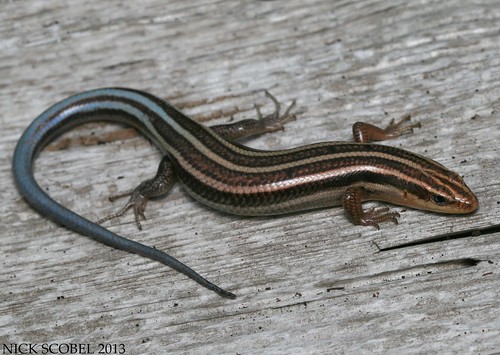
This was a healthy adult, and is easily one of my favorite snakes which is found in the Great Lakes region. Sadly, this species seems to still be declining in the state. It was once common throughout much of the lower peninsula, but has since become rare or absent from much of its former haunts. It does remain locally common in the Upper Peninsula, but is only found in a few scattered locations in the northern lower. Likely the large reason for its decline is the conversion of meadows and wetlands to agricultural lands. Green snakes are strictly insectivorious, and because many agricultural operations spray pesticides, it seems as though green snakes have been affected just as much as the pests. Places like this are few and far between in the lower peninsula, and to see that this species is still hanging on in some areas is encouraging. We made the drive back towards the cabin and stopped at Jamesport Brewing Company in Ludington, where I enjoyed a guacamole burger and two of their Scottish Strong Ales. If you're a beer lover, a highly recommend a visit to the place if you're near Ludington. The next morning brought rainy weather, but we endured and headed out into the field. Flipping cover was the name of the game on this day, and we managed to find two five-lined skinks under cover, including one gorgeous juvenile.

Five-lined Skink - Plestiodon fasciatus

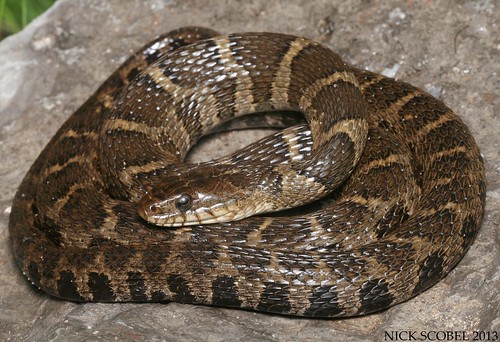
As the day went on, several heavy thunderstorms passed through the area. So to kill time, we drove many roads across the area in hope of seeing a box or wood turtle out enjoying the weather, unfortunately we struck out. By the late afternoon, the rain finally quit and the land began to dry out. We pit stopped along a stream corridor and flipped a few rocks and managed to find a few snakes, including a queen snake, my first from this far north in the state.

Northern Water Snake - Nerodia sipedon sipedon

Queen Snake - Regina septemvittata

The queen was definitely an exciting find, it seemed as though each day of the trip had provided a great find. And the day wasn't over yet, so we decided to go walk a clearing that Chris had checked before and thought it looked good for blue racers and hogs. We flipped a small log in the middle of the clearing and found our fourth milk snake on the trip, and the third county we had seen one in.

Eastern Milk Snake - Lampropeltis triangulum triangulum

We continued to traverse the clearing. While moving through a small area of shrubs in the center of the area, Chris called out, "Box turtle!" Matt and I quickly ran over to see this sight, a typical fashion to find a box turtle indeed.

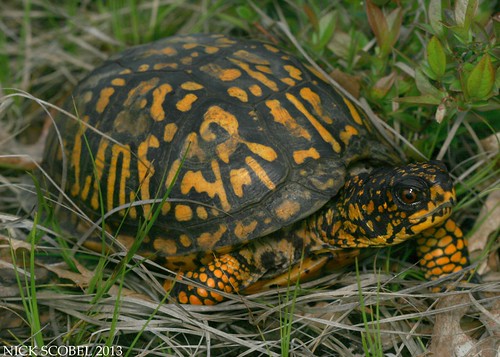
Eastern Box Turtle - Terrapene carolina carolina

I hadn't seen a box turtle in Michigan for a few years, so this was an encouraging find. Northern Michigan is the northern limit of this species' range in the United States, they are scarce and uncommon in the state. This was also a gravid female, likely utilizing this open clearing as a staging area for nesting in the coming weeks. It capped off our third fantastic day in a row. The next morning, we packed up and began the lock trek home to southeast Michigan but decided to make one last pit stop along the way. We headed out to a small wet meadow in hopes of seeing some turtles. The weather was warm, and the skies were overcast, perfect conditions for the species we were hoping to see. Our first find was this juvenile Blanding's Turtle, an uncommon sight these days it seems.

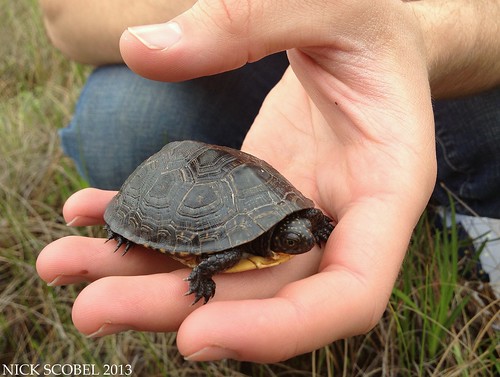
Blanding's Turtle - Emydoidea blandingii

Like many imperiled turtle species, Blanding's Turtles face a major threat from raccoons due to high nest predation. Adult members of this species seem to be in no short supply, but many are upwards of 40-50 years in age. Juveniles like this seem to be scarce, indicating there is low recruitment. So, finding one in this age class is always a good sign. We let the little fella on his way and continued to scan the area, within a few minutes I spotted this gorgeous turtle basking in some sedges.

Spotted Turtle - Clemmys guttata

This gorgeous female was one of the nicest individuals of this species I've seen. We snapped a few photos and then continued the drive home, it was a great way to close an amazing trip. I'd like to thank Chris and Matt for their hospitality, and for probably the best few days in the field I've ever had in Michigan. I hope to do it again sometime. Until next time, happy herping.

Saturday, June 1, 2013

A Quick Spring Summary

Hello, everyone! It's been quite an absence since my last blog entry. It's been another odd spring here in Michigan, while it came a month early in 2012, the spring has arrived about a month late in 2013. Things have been out, but not in big numbers like I've seen in years past. Near the end of April, I jaunted down to the southwest corner of the state to explore some new areas. I pit stopped at an area along the way to take a quick look for a few species. It didn't take long, as I found this pretty girl out and about.

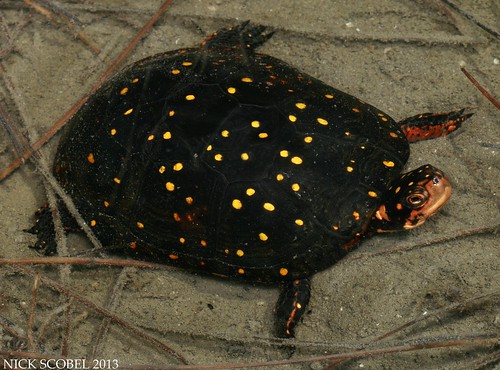
Spotted Turtle - Clemmys guttata

Female spotted turtles feature a bright orange chin which makes them easily distinguishable from males. This turtle was cooperative enough to let me shoot a few quick photos. A few more turtles were seen moving about the wetland during my short visit, but I also managed to stumble across a few snakes.

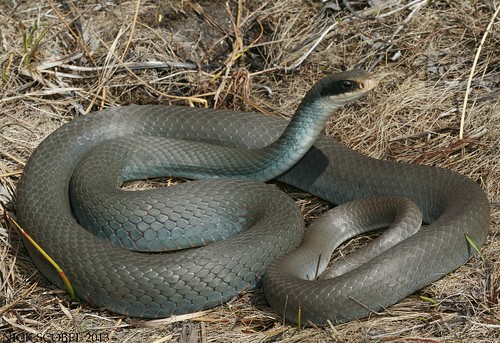
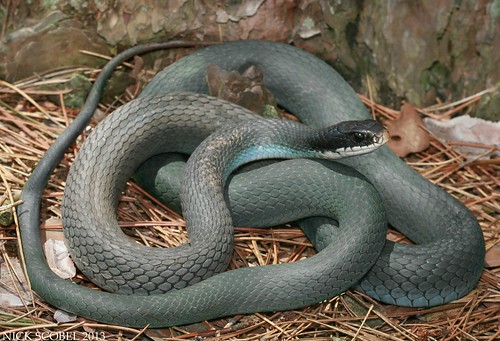
Blue Racer - Coluber constrictor foxii

Blue racers are always a treat. This large individual was found basking in the open, and after a quick chase I was able to apprehend it for a few quick photos. Temperatures continued to climb into the low 70s, perfect weather for massasaugas to be out. For whatever reason none made an appearance on this day, much to my chagrin. A good friend of mine was out on the east side of the state on this day and had temperatures that were considerably cooler, and he saw three massasaugas out basking. Needless to say, I was a little bit frustrated. My field time was limited in the following weeks, but I did manage to get out on a cool weekend afternoon. While walking along a river corridor towards a tin site, I stumbled onto this large male wood turtle.

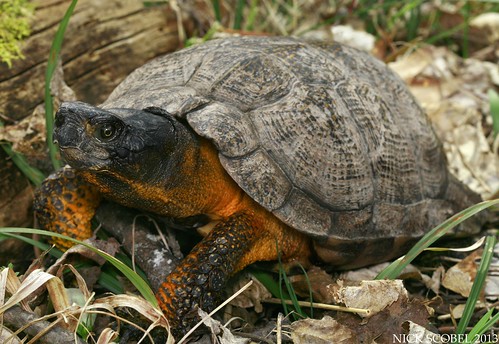
Wood Turtle - Glyptemys insculpta

After snapping photos, I continued upriver to a small clearing I've been to many times to flip some tin. The habitat in this area looks promising for hogs and green snakes, though neither have shown up as of yet. But I did manage to flip this large milk snake under a sheet of tin, a large female I've seen before.
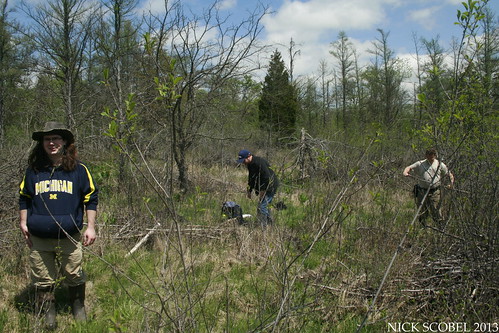
 Eastern Milk Snake - Lampropeltis triangulum triangulum

A week or so later I went out with a CMU graduate student who's doing research on blue racers to a spot not too far from campus to hopefully take some blood samples for genetic analysis. Temperatures were scorching for this time of the year and we arrived at high noon. Luckily, I was able to spot this adult taking shelter in the shade of a briar patch.

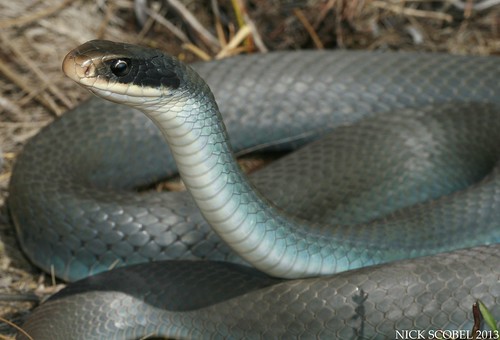
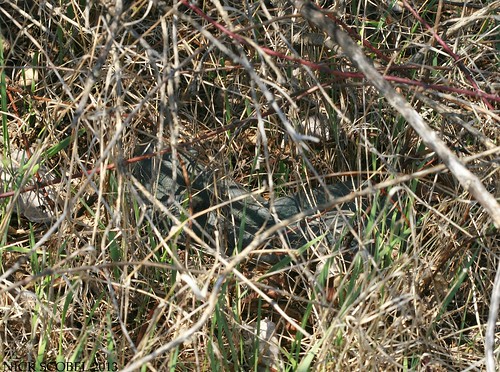
Blue Racer - Coluber constrictor foxii

Racers from this population seem to be more blue than any others I've seen in the state and feature a jet black head, truly gorgeous. We ended up seeing a grand total of three, not too bad considering the temperatures were in the mid 80s. A few weeks later, Tim Warfel and Mike Pingleton came up for a short weekend trip to see a few different species. Michigan weather can be described as temperamental at this time of the year, and despite warm temperatures earlier in the week, the Saturday forecast was for partly cloudy skies and temps only reaching the high 50s. When we met early in the morning, it was overcast and in the high 40s. We made a jaunt to an open meadow and managed to score a blue racer basking in the cool weather. After getting on the board, we headed over to another location and quickly scored a Butler's Garter Snake (Thamnophis butleri). As we were photographing the snake, the clouds parted and the temps quickly rose into the low 60s. We quickly moved to this fantastic prairie fen.


We spread out and walked carefully through the fen, checking around the edges of small shrubs, sedge tussocks, and tamarack trees. After a few minutes, Chris called out that he had found the snake we were looking for, a snake that Tim had traveled 2,600 miles to see.

Eastern Massasauga Rattlesnake - Sistrurus catenatus catenatus 

A healthy adult male, this snake was warmed up and jumpy. We were able to get him to coil for a minute or two to snap some photos and then let him on his way. It was exciting for Tim and Mike to be able to see one of these guys after a long trip, and also for me as this was my first massasauga of the 2013 field season. 


We packed up our gear and moved on. It was the middle of the afternoon and because we had crossed off a massasauga on the list, I asked Tim and Mike what else they would like to look for since we had the afternoon to kill. They asked how likely it would be to find an Eastern Fox Snake (Pantherophis gloydi) at this time of the year. I told them that it was hit and miss, but we would have a chance if we decided to go for it. We jumped in the car and booked it down to extreme southeast Michigan. After walking some coastal marsh for some time, Chris flipped a large rock which revealed this beauty.

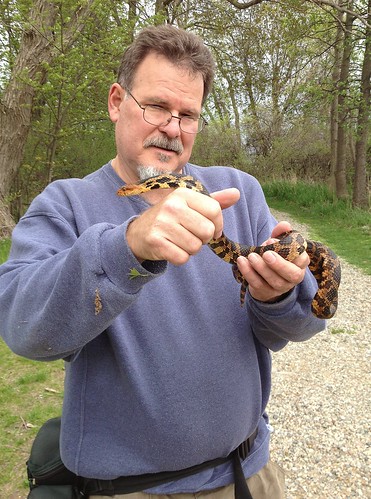
Eastern Fox Snake - Pantherophis gloydi

Mike Pingleton examines his first adult gloydi

Tim enthralled with his first Eastern Fox

We finished a day of cool weather with a rattlesnake, fox snake, butler's garter, and a blue racer. Given the weather conditions, we were all quite satisfied. We closed the evening with a few beers, great food, and a lot of laughs at the Brown Jug in Ann Arbor. I want to thank Tim and Mike for a great time in the field, I hope to see them again this year down in Croatan.