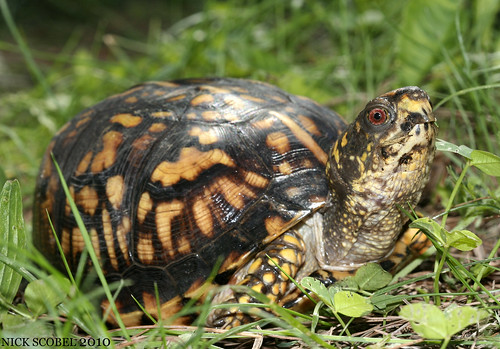
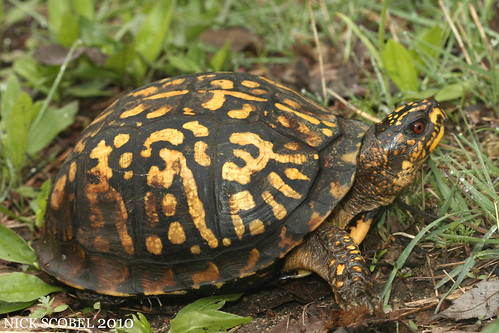
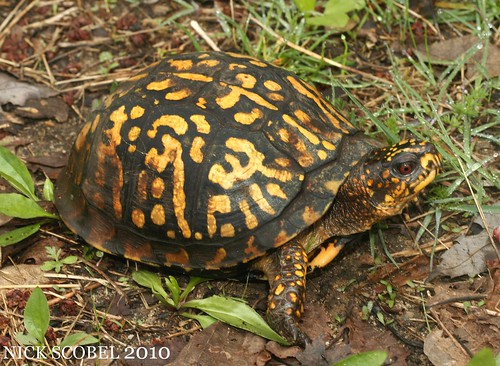
Of all Michigan turtles, the Eastern Box Turtle is by far the most charismatic. A Species of Special Concern in Michigan, this species has declined drastically from its former distribution in the state. Nest predation, habitat fragmentation, road mortality, and illegal collection are the catalysts for the decline of the Eastern Box Turtle. Today, populations persist in pockets where grassland and mature woodlands still exist without fragmentation. Michigan individuals are often brightly colored with yellow or orange and have much broader carapaces than individuals of the same species which exist farther south in the range. This summer, my internship has allowed me to get direct involvement with the study and management of this species through captive head starting programs and aiding in telemetry studies.

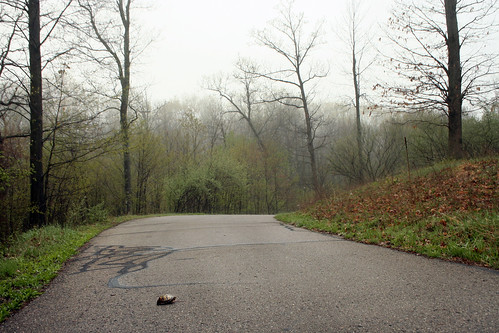
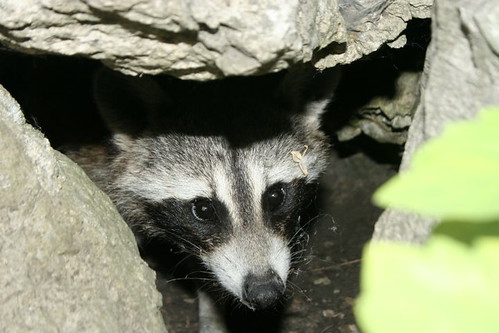
Even today, nest predation and road mortality are the most significant threats to the longterm survival of this species in Michigan. Raccoons are estimated to occupy 700-800% of their original population numbers at the turn of the century. This explosion in population is due to the species ability to adapt the modern urban landscape and capitlize on being an opportunist when it comes to feeding. One behavior that the raccoon has learned is rading turtle nests which have been freshly laid. This has gotten to the point that usually the only turtle nests one can find is a predated nest by racoons. Roads are also an issue. Box Turtle habitat is often fragmented due to development and roads and in areas where populations exist, this species is extremely vulnerable to being killed moving from one patch of habitat to another.

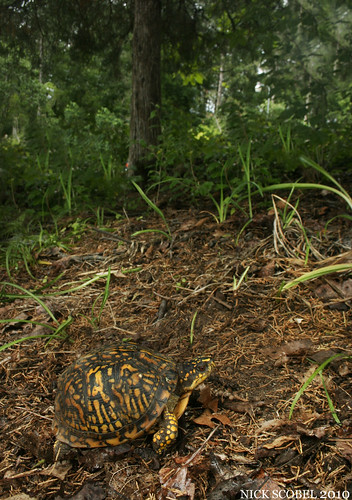
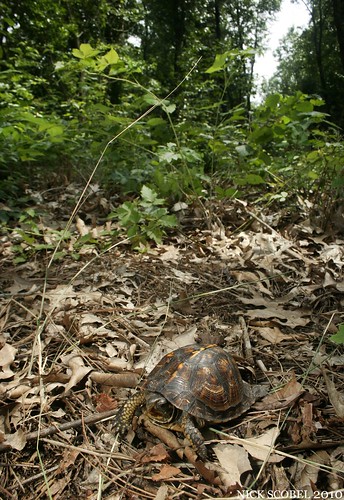
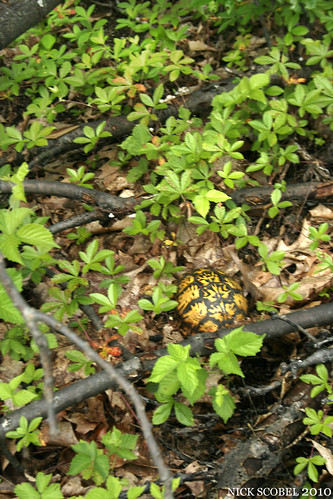
Farther south in their range, Box Turtles are traditionally known as a woodland species. But in Michigan, they prefer a mosaic of community types. Michigan Turtles often are found along woodland edges in grasslands but they occasionally wander into wetlands such as fens. They are often found in some sort of cover and are rarely out in the open except after summer rainstorms. Here's an example of a Box Turtle as found, see if you can spot her.
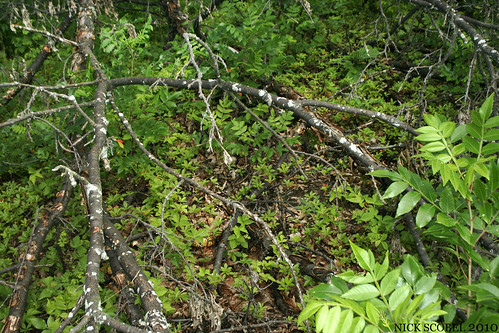
See her?
Box Turtles have a wide diet which includes worms, insects, plants, berries, and fungi. In the late summer when wildberries fruit out and drop to the ground, Box Turtles can often be found concentrated under or around large berry patches. Sometimes the evidence of Box Turtles is hard to miss.
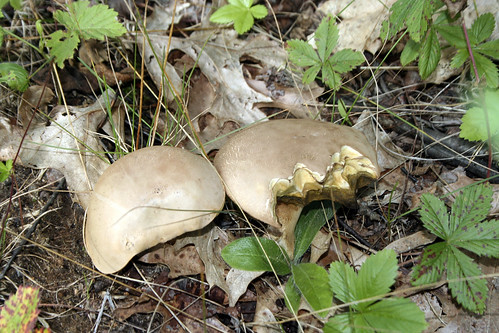
These mushrooms bare the unmistakable beak marks from a foraging Eastern Box Turtle.
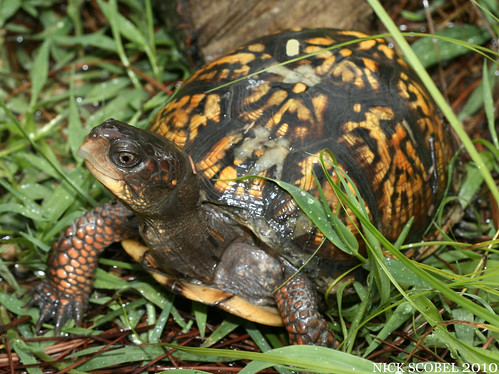
The culprit as found a few feet away. Earlier this summer we were lucky enough to aid in a few telemetry studies on EBTs in southeast & southwest Michigan. Studies such as these which evaluate habitat use, home range size, diet, and other factors are critical for the continued understanding of the life history of the species which in turn helps land managers properly manage habitat where these turtles exist of have the potential to exist.