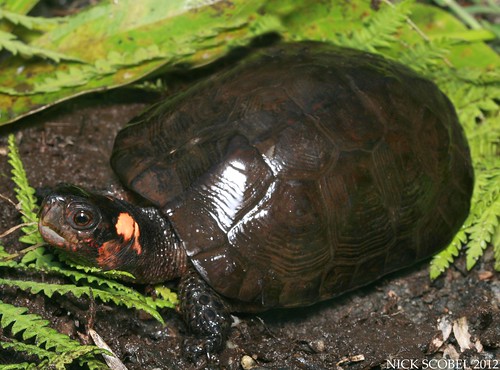
Monday, September 3, 2012

Northern Michigan Massasaugas & Mudpuppies

Labor day weekend is often viewed as the last official weekend of summer before everyone goes back to school and is often a great weekend to be in the outdoors. I had originally planned to paddle on of northern Michigan's rivers, but upon the realization that hundreds of drunk tubers had beat me to the punch, I decided it was best to make other plans. I drove an hour to the north of CMU to meet up with my good friend Chris, who's family has a cottage on an inland lake in the area. Chris had mentioned we would have a decent chance of seeing one of Michigan's more secretive amphibian species, and after flipping a few large rocks in the lake, we apprehended one of my favorite species.

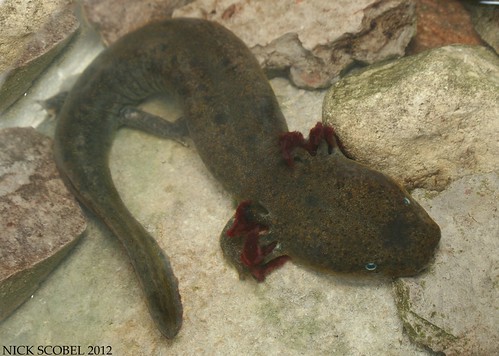
Mudpuppy - Necturus maculosus maculosus

These large aquatic salamanders are the largest species of amphibian which inhabits the state, with adults ranging from 8-15 inches. Mudpuppies are neotenic, meaning that they retain larval characteristics through adulthood. In the case of this species, the external gills which most larval amphibians have are never lost as mudpuppies mature, making them a permanent resident of aquatic environments. They prefer cool, oxygen rich waters with plenty of rocks for them to hide underneath. In Michigan, mudpuppies inhabit clear creeks, rivers, and deep inland lakes. After an interesting photo session, we let the water dog go back into the lake. We poked around a few areas nearby and came up empty handed. After brainstorming a few idea, we decided to make a two hour trek further north in hopes of seeing our first northern Michigan massasauga. 
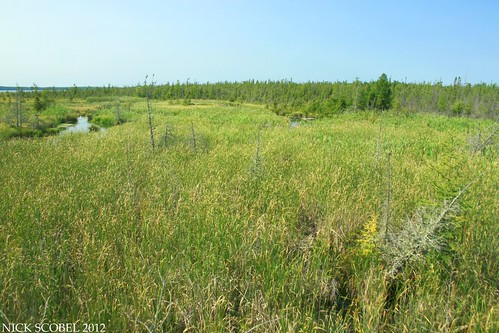

This massive conifer swamp is home to a stable population of massasaugas and is just a short drive from the Mackinac Bridge. Conifer swamp is a groundwater-influenced, minerotrophic, forested wetland dominated by northern white-cedar (Thuja occidentalis) that occurs on organic soils primarily north of the climatic tension zone in the northern Lower Peninsula. Other common trees species may include balsam fir (Abies balsamea), tamarack (Larix laricina), and black spruce (Picea mariana). After traversing the area for about an hour, we began to get a little discouraged. But just as we were about to leave, my eyes caught a glimpse of a familiar pattern.
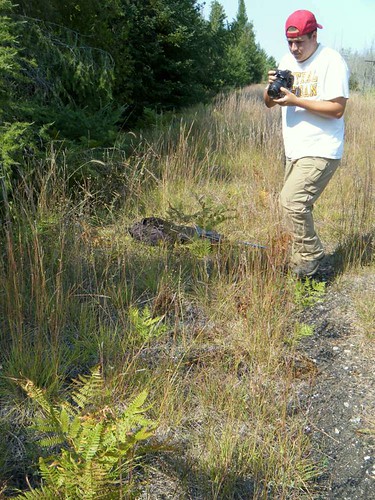

This beautiful massasauga was laid out in the shade of a cedar tree, I couldn't help but shout, "Sauga!" to get Chris's attention. He quickly ran over to get a few in situ shots of the snake before a brief photo session.

Eastern Massasauga Rattlesnake - Sistrurus catenatus catenatus

Easily one of the nicest examples of this species I've ever seen, this snake was exceptionally marked and sported a beautiful tan coloration that I don't often see in the southern part of the state. After seeing massasaugas from both SE and SW Michigan, it has long been a goal of mind to find a photograph a rattlesnake in northern Michigan. The populations up north have not been studied nearly as much as those in the southern part of the state, and because the habitat in Michigan is much different, so is the ecology of northern massasauga populations. A recent study done by Bruce Kingsbury and his lab at IPFW examined the ecology of a few northern populations in order to help make better informed management decisions for land managers in northern Michigan. It was a great labor day weekend, hope you all enjoyed yours as well!

Wednesday, August 29, 2012

The North Woods

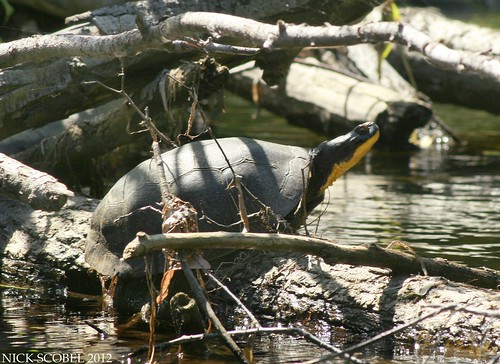
Michigan's new advertising campaign for tourism; Pure Michigan, may be a little bit over the top. But with to be fair, there is something about the northern lower peninsula that I love. As you progress further north in the state, the forests and rivers begin to change from the ones that exist in the southern reaches of the state. The woodland corridors that follow meandering rivers and streams become populated by northern boreal species like cedar, birch, and hemlock. Crystal clear streams with sandy bottoms hold multitudes of trout, smallmouth bass, and other game fish species. These rivers are a place I love to spend time at, and one afternoon this week I had the chance to get out for a few hours in hopes of seeing some wildlife. It didn't take long to get my first surprise of the day as I found this riverine Blanding's Turtle out for a bask.

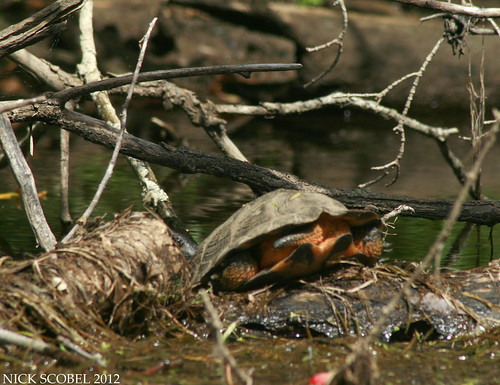
Blanding's Turtle - Emydoidea blandingii

One of Michigan's larger turtle species, Blanding's Turtles generally inhabit marshy ponds and backwaters with lots of aquatic vegetation. But in the northern part of the state, they can often be found in larger rivers basking alongside map turtles and wood turtles. It was a nice way to start off my paddle and nearby I was able to sneak up on this little shorebird.

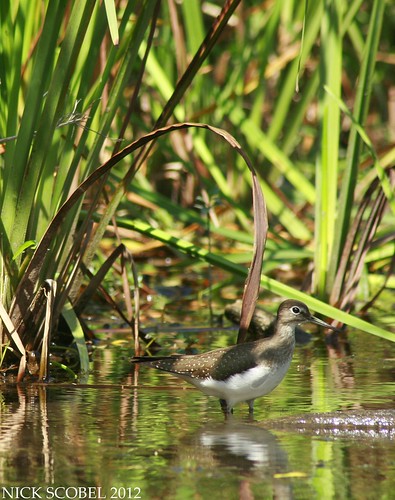
Solitary Sandpiper - Tringa solitaria
 
Sandpipers never far from a source of water where they move quietly along the shoreline amongst dense vegetation, I don't always get decent shots of birds so I was excited when this one let me get fairly close. The next hour of my paddle was quiet in terms of turtle diversity, though tons of Northern Map Tutles (Graptemys geographica) were seen. In need of some encouragement, I portaged at an area along the river I know of to look for a few snakes. A large sheet of tin revealed this absolute screamer of a milk snake.

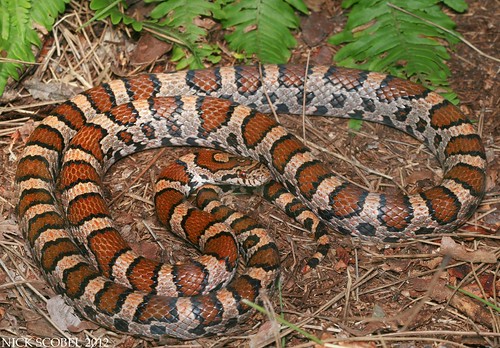
Eastern Milk Snake - Lampropeltis triangulum triangulum

A beautiful specimen, this large adult had recently shed and was exhibiting some brilliant orange and red coloration, the photo doesn't do it justice. Though they are not often seen out in the open, milk snakes are probably much more common in Michigan than most people think. They are rodent control specialists and can readily be found around human habitation, especially in rural areas like farms. After firing a few photos, I headed back to my kayak and was on my way once more. Generally wood turtles are a lock at this time of year on rivers in the northern reaches of the state, but as I was nearing the end of my route I was beginning to worry that I would strike out. About twenty minutes out from my pull out point, I spotted a flash of orange to my left.

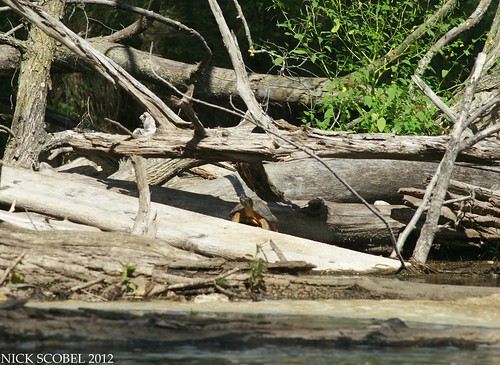
Wood Turtle - Glyptemys insculpta

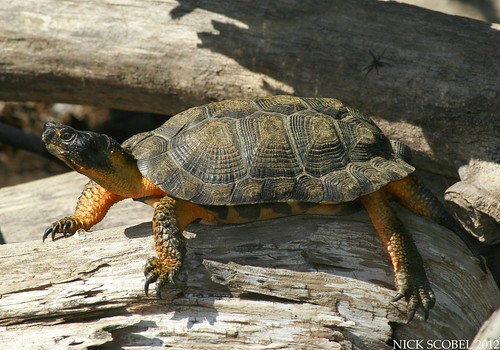
All I manged to get was this shot of the ass end of this wood turtle, soon after she slipped into the water before I could reposition my kayak for a better shot. Nonetheless I was happy because I had managed to not strike out on woods. Working on wood turtle research out east for the past two summers has given me such a greater appreciation for this species, especially in terms of its ecology. As much as I like the looks of the ones out east, Michigan wood tutles are much more attractive in my opinion and kayaking for them is a relaxing way to enjoy field time. My trip down the river had been nice, but as I was about to reach my portage I spotted this big boy from a long way off.

Wood Turtle - Glyptemys insculpta

This big male was a real nice way to end my excursion and he was found in a section of the river that I have not seen a wood turtle before. After firing a few photos, I parted ways with me and got off the river for the day. It was a nice afternoon and I hope I can get a few other river systems this fall for this species before the cold begins to set in.

Thursday, August 23, 2012

Hogging the Spotlight

The dog days of summer are beginning to wind down as autumn inches ever closer, and that means that one of the best times of the year for snake movement is approaching. But even the end of August and early September can be productive, as many species of snake give birth or hatch out. I made a trip down to a truly awesome location on private property on a beautiful evening this week. I've mentioned this area in previous posts including Hognose Snakes in Southeast Michigan. The family that lives on this property have an ecological treasure, as many species that are not common in southeast Michigan exist here. Even the Eastern Box Turtle is found here in small numbers, a true rarity for the fragmented landscape of this area.

.
This area is truly unique for southeast Michigan and is reminiscent of the Oak Openings region of northwestern Ohio which features a mosaic of oak-pine forest, oak savannahs, and wet prairies. Because these two areas are only separated by a half hour drive, it is likely that this was once a large stretch of contiguous habitat stretching from the Lake Erie coast of Michigan through to the Toledo area. The sandy soils and abundance of toads makes this area a hotbed for hogs, and on this evening I was rewarded with this tiny neonate.

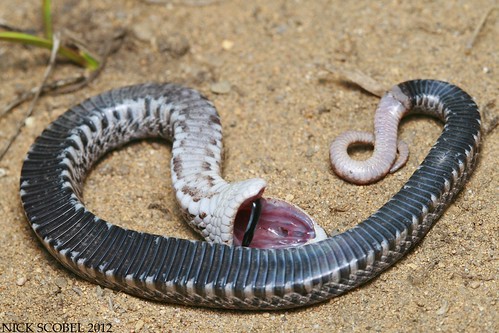
 Eastern Hognose Snake - Heterodon platirhinos

Cute would be a perfectly acceptable scientific term to describe neonate hognose snakes, this individual was likely a few weeks old and no more than five inches in length. Like the Northern Pine Snake, female hogs seek out open sandy areas as potential nest sites in early to mid June. Using their upturned snout, they excavate a nest over the course of a few days and lay a clutch of eggs deep in the nest and then leave. The young hatch out in late August or early September, but this year's batch was out early likely because of the record breaking temperatures this summer. Like any other hogs I've seen, this youngster was not shy about being theatrical.


After a short photo session, this little guy was let on his way back to the open sandy field he was found in. I'm hoping that I can score one or two more hognose snakes before the season ends and should have a good shot as they get moving in mid September. Until then, happy herping!

Saturday, August 18, 2012

Warm Michigan Welcome

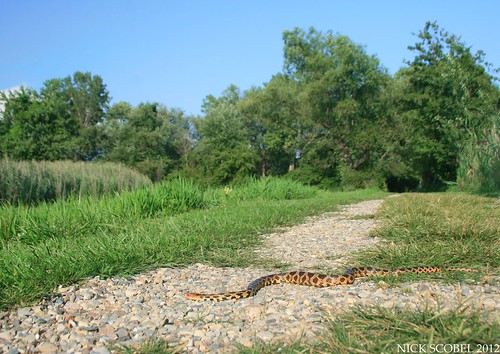
My return to the Wolverine state has been challenging in terms of field time. The limited time I've spent in the field so far has been extremely slow, as Michigan is experiencing one of it's driest summers in history. This has put a real damper on snake movement, thus far massasaugas have been completely absent from sites that they are reliably found at this time of year. After two days of consistent rain, I decided to head out to the coast to look for some snakes that may be moving in the late afternoon. My suspicions were confirmed when I bumped into this beautiful snake on the move along a levee in a coastal marsh.


Eastern fox snakes are arguably the most attractive snake species which inhabit Michigan, and this adult was a testament to that. It had recently shed and was sporting its sharp new colors. This was a nice change from trudging through waist high bluestem and goldenrod while striking out hard on massasaugas all week, this snake was right out in the open and a nice welcome home gift.

Eastern Fox Snake - Pantherophis gloydi

Fox snakes are members of the Rat snake family and primarily feeds on rodents, amphibians, birds, and bird eggs in these coastal wetlands. Michigan has lost more than two-thirds of its former coastal wetlands, drastically reducing suitable habitat for this species. Remaining fox snake populations are isolated in southeast Michigan where suitable coastal marsh habitat is intact, although they can also be found along rivers further inland at a few locations. An upcoming all day massasauga excursion and paddling some rivers will be highlighted in future posts, stay tuned.


Friday, August 10, 2012

Bidding Farewell to the Bog Turtle

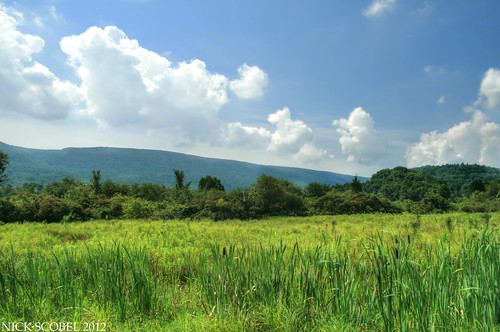
It's hard to believe that my second summer in New Jersey has come to an end. Between working lots of hours during the week and getting out in the field on the weekends, the past three months have flown by. One of the greatest things about my time here has been the opportunity to work with biologists on several conservation projects involving threatened & endangered species, particularly regarding to turtles. Though I can't go into much detail about the research project I've been working on, I can mention some highlights that the area has to offer. Earlier this week, we ventured north to a beautiful site set in the highlands of New Jersey.


This high quality limestone fen is home to a population of Bog Turtles. This species prefers wetlands with ample emergent vegetation such as cattails, sedges, rushes, and ferns and cold, slow moving water from seepages. This particular fen is found at high elevation in the mountains, and the scenery here is astounding compared to other bog turtle sites I've been to. The northern population of Bog Turtles in the United States is generally considered to be a lowland species, but there are exceptions. While the southern population is generally found in high elevation mountain bogs in the southern Appalachians of Georgia, Tennessee, and the Carolinas. Though this site was not technically a mountain bog, the montane backdrop and terrain made it an awesome site to look for Bog Turtles. The weather this day was in the low 80s and the humidity was low, a comfortable day to be out surveying for this species, and after an hour or so we finally hit pay dirt.

Bog Turtle - Glyptemys muhlenbergii

A beautiful little female that was found resting in a small seepage which meanders throughout the fen and likely the last bog turtle I will get to see for a long time. Boggies are an endearing turtle species, they are unique in terms of their habitat and ecology, and it doesn't hurt that they are undeniably cute. It has been a true privilege to have the opportunity to work with these guys over the past few years and I can only hope that my paths will cross with this species sometime in the future.