Friday, June 10, 2011

Pine Barrens Treefrogs

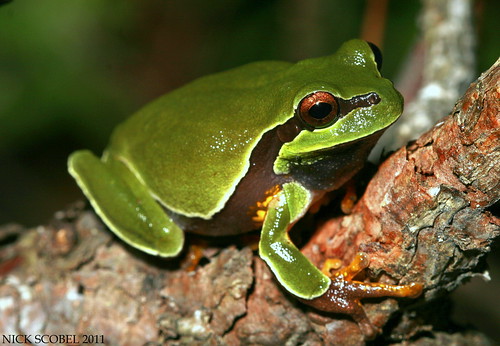
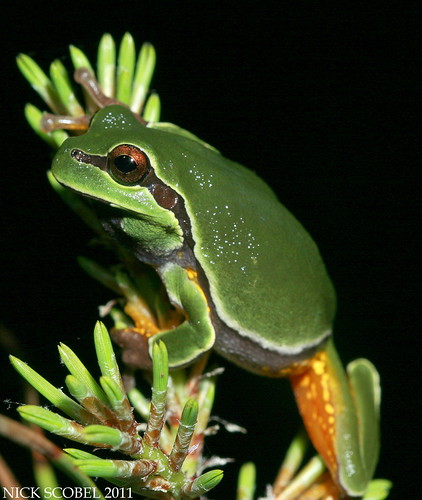
Since being in New Jersey, actual free time has been limited to the weekends. A few weekends back, I had the opportunity to travel south in New Jersey to the pines to search for ones of my targets for the summer, the Pine Barrens Treefrog. This species is arguably the most attractive treefrog found in North American, inhabiting acidic bogs & marshes in the pinelands of New Jersey, Florida, and the Carolinas. During the breeding season, males can be heard calling in large concentrations but this species is rarely seen outside of breeding time.

 Pine Barrens Treefrog - Hyla andersonii

After heading down the coast for Diamondback Terrapins, we headed back north through the pine barrens and stopped at an area I was directed to by a friend. There are many acidic marshes & bogs throughout the pine barrens which serve as breeding sites for pine barrens treefrogs. We arrived at dusk and wandered out to the edges of the bog hoping to hear the sounds of males calling. It was quiet, so I followed the directions of my friend to honk like a goose to entice the males to call. I did my best and before long we were surrounded by a chorus of kwonk-kwonk-kwonk. We dispersed and followed the calls of males to try and get on in hand for photos. It took me twenty minutes or so, but eventually I found my first calling from a small Atlantic White Cedar.

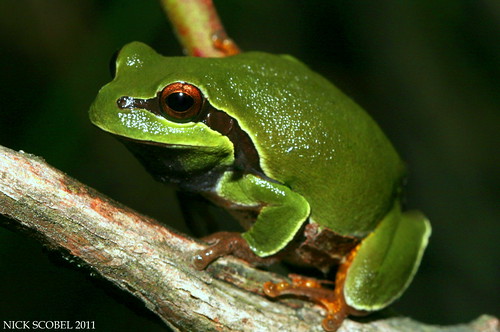
Pine Barrens Treefrogs - Hyla andersonii

I was expected PBTs to be around the size of a Gray Treefrog but was surprised by how small they were. Their small size coupled with the thick habitat made locating calling males difficult, but we managed to get three of them in hand. This species is easily the most attractive treefrog species I've seen in North America. It was a fun night that I won't soon forget, that's all for now. Until then, happy herping.

Thursday, May 19, 2011

Hog Wild

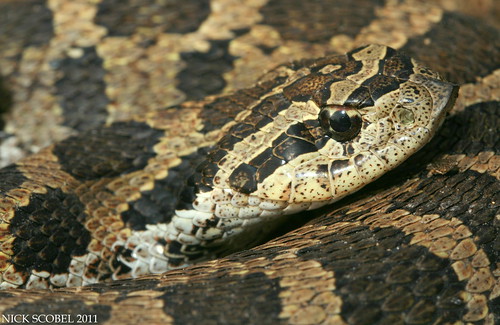
Of all the unlisted species of snake that inhabit Michigan, there is one that has been my nemesis for many years. It is a snake that is supposed to be found statewide where sandy soil and toads are found. The species I'm referring to is the Eastern Hognose Snake, a robust Colubrid that puts on quite a show when encountered. Though it is said to be found statewide, it is mostly likely isolated to spotty locations in the thumb & southeast Michigan, and is more widespread on the western side of the state. I saw one up near Sleeping Bear Dunes when I was a kid, but since that time I have been unable to track down a live on here in the Wolverine state, but I did get lucky and find this one in Illinois last fall.

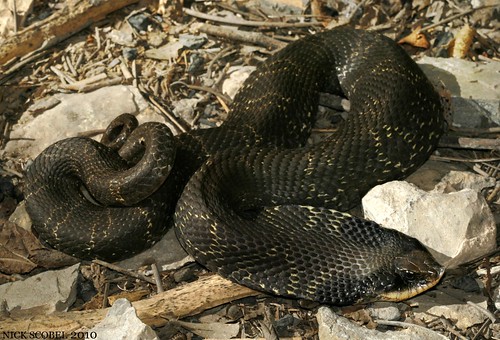
Eastern Hognose Snake - Heterodon platirhinos

Recently I was told about a pocket of habitat on private property in southeast Michigan where a family sees hogs frequently. I was perplexed, as the area is less than ten miles from my house and has literally been under my nose all this time. They agreed to let me visit the property several times if I would agree to take their kids out once or twice to see some stuff. On a warm, muggy morning I decided to swing by their place and check it out for the second time. My first visit yielded Wood Frogs and a quick glimpse of a Blue Racer.


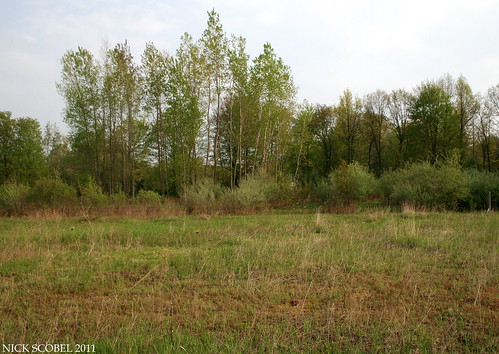
The majority of the property and surrounding areas is similar to the photo above, basically relict oak savannah that has been developed. The soil here is extremely sandy, with scattered grasses and shrubs, and a small creek and wetland nearby. After walking for about fifteen minutes, a splash of color caught my eye.


The splash of color was accompanied by a short, high-pitched hiss that brought my eyes to this awesome snake. It immediately flattened its neck out like a cobra and continued to hiss in textbook form, its easy to see why some rural folk refer to these snakes as puff adders.

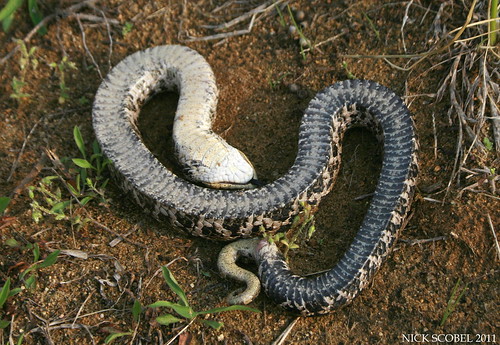
Eastern Hognose Snake - Heterodon platirhinos

The Eastern Hognose Snake gets its name from the upturned rostral scale on the end of the snout which is uses to help burrow into loose, sandy soil. Hognose snakes are also known for their incredible defensive strategy, if the animal is touched it will flip on its back, writhe about, open its mouth and play dead. This snake was kind enough to put on a show for me as well.


I was elated to finally find one of these snakes in Michigan after such a long hiatus. And it was a great way to close my spring here in Michigan in the final weeks before I move to New Jersey for the summer. That's all for now. Until next time, happy herping!

Monday, May 9, 2011

Spring Serpents

Its hard to believe its already a few days into the month of May. With school, work, and getting ready for my summer job in New Jersey, the past month or so has been an absolute whirlwind. Michigan has had an extremely wet spring, with many rivers flooding and others reaching their breaking point. It hasn't seemed to affect the snakes too much, as I've seen many species so far this spring. I figured I'd do a quick recap of some of the species I've managed to encounter so far this spring.

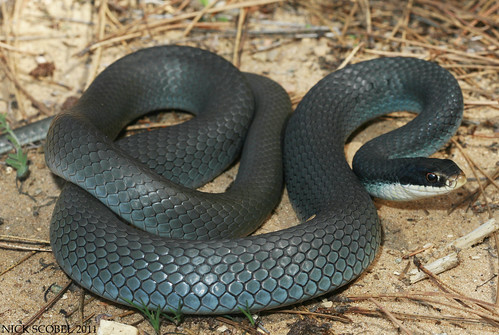
Blue Racer - Coluber constrictor foxii

It's been a wonderful spring for Blue Racers, as I've seen more than a dozen individuals at a handful of sites in Montcalm, Oakland, and Washtenaw counties. This absolutely gorgeous individual was found in a sandy field bordered by pines up in Montcalm County, and had obviously recently shed as indicated by its bold colors. Most of the Blue Racers that I've seen are not as blue has the one pictured above, but every now and then you can find real nice ones. 


Open fields and meadows with sparse vegetation like the area in the photo above are ideal for Blue Racers. This species is found in the southern and western lower peninsula, though they have declined considerably in southeast Michigan over the years as urban sprawl has claimed much of their former habitat. But there are still pockets of them where the right habitat exists, particularly in preserves and on state land. Here's two more representatives from southeast Michigan.

Blue Racers - Coluber constrictor foxii

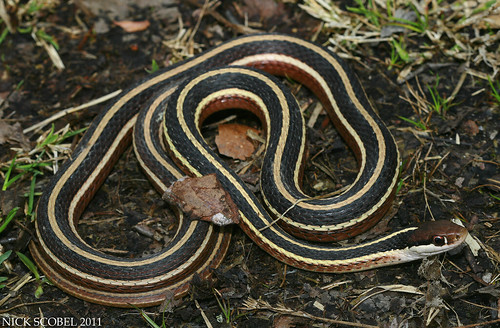
Besides blue racers, there's also been a few species of interest that I've been able to see quite a bit this spring. Northern Ribbon Snakes have been extremely common this spring, I always enjoy seeing them.

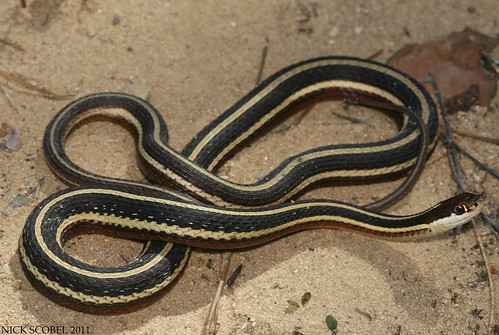
Northern Ribbon Snakes - Thamnophis sauritus septentrionalis

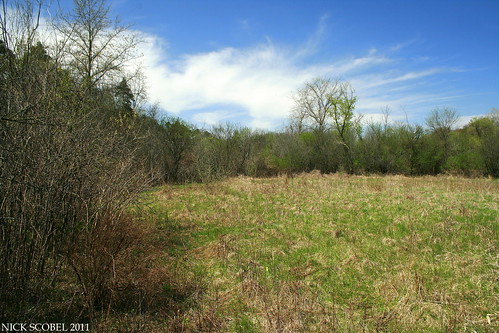
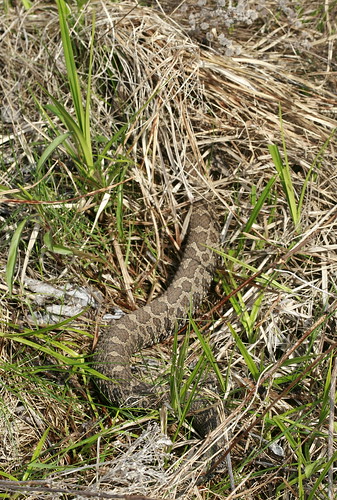
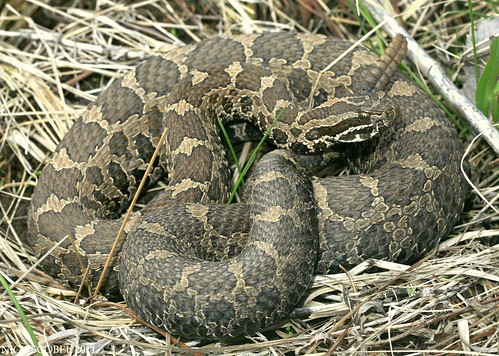
Ribbon Snakes seem to be pretty common in some areas of Michigan, and oddly absent in others. The second individual pictured above was found at a location that I've been visited since I was a kid and is only the second ribbon snake I've ever seen there. So it was quite an exciting find for that place to say the least. One snake species I've had quite a bit of luck with so far this spring is the Eastern Massasauga, seeing well over two dozen individuals all across Michigan. This past weekend, I visited this nice little meadow.


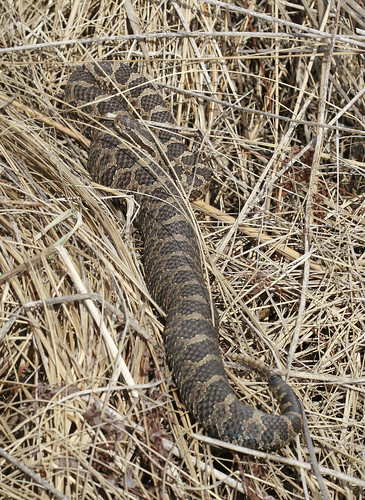
This small meadow is bordered by a fairly large wetland complex and serves as ideal summer habitat for rattlesnakes. Last year I managed to see several large gravid females and lots of juveniles utilizing this field from May through September, it would appear that this is a major birthing area for this population. On this particular morning, it didn't take long to turn up this big bruiser.
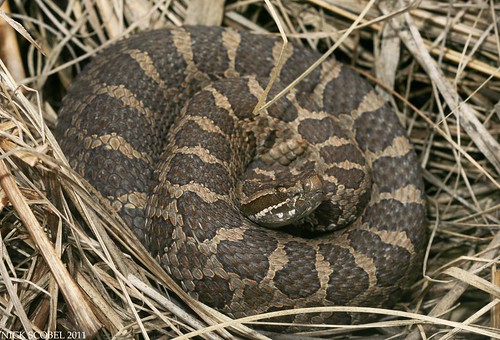
Eastern Massasauga Rattlesnake - Sistrurus catenatus catenatus

I've also seen a smattering of the real common snakes such as Browns & Garters, but I'll share a few photos of each species. 

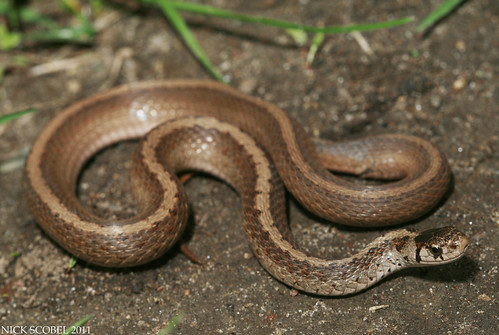
Northern Brown Snake - Storeria dekayi

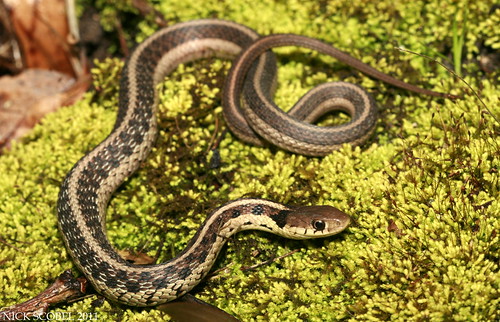
Eastern Garter Snake - Thamnophis sirtalis

I've seen browns in fairly large concentrations and garters are nothing to get excited about, but this little snake had some nice black blotches on the neck on each side, similar to a Checkered Garter Snake. That's all for now. Until then, happy herping.


Thursday, April 28, 2011

A Month of Massasaugas

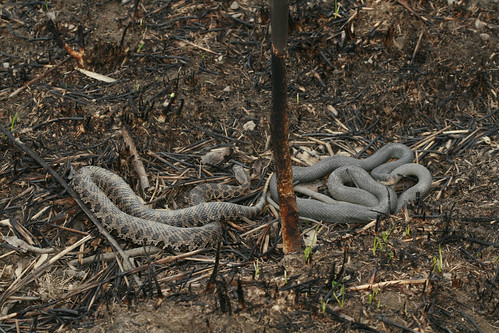
There's nothing I enjoy more than getting into the field in the month of April for rattlesnakes. I've managed to hit the jackpot for these snakes this month as I won't be around this summer due to a job with the U.S. Fish & Wildlife Service over in New Jersey. Earlier this week, I managed to sneak downstate for a day to meet up with Jason Folt in southeast Michigan. Our first stop was a recently burned fen area near a lake edge. It has rained all morning but the sun was beginning to peak out and temperatures had climbed into the high 60s, we liked our chances.


With this area freshly burned, crayfish burrows and anything else on the surface was extremely visible. It didn't take us long to find our target, and Jason spotted this unlikely pair.


What is so odd about this scene is that Blue Racers have been documented to be a predator of Massasaugas. However, this Blue Racer was only about two feet long and would have had a tough time taking down an adult rattlesnake. What's even more interesting is that this pair probably shared the same burrow for the winter, as the racer quickly darted down a crayfish burrow a foot or two away. After photographing the rattlesnake, she slipped down the same exact burrow.
Eastern Massasauga Rattlesnake - Sistrurus catenatus catenatus

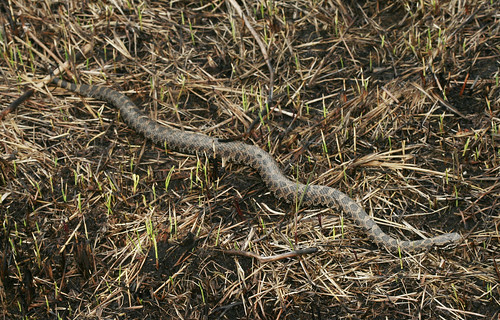
After letting this big girl on her way, we pushed farther back into then fen. Less than a few minutes later, I spotted this rather thin adult on the crawl about fifteen yards ahead of us.


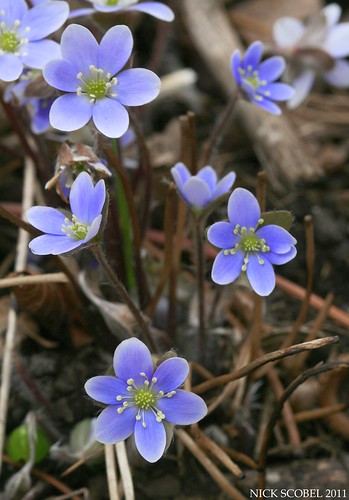
We quickly snapped some shots of this animal without disturbing it and moved. I spied a few large patches of Round-lobed Hepatica nearby and headed towards them, before I could get my camera gear out Jason called out that he had found yet another Massasauga. I quickly ran over to him to see another mud covered adult coiled in the open. We snapped a few photos without disturbing the snake and I went and snagged a few shots of the hetatica.

Round-lobed Hepatica - Hepatica nobilis

We kicked up a few other common snakes including Garter & Ribbon Snakes and decided it was best to move on. Jason said he had seen some nice Blue Racer habitat on our way in, so we decided to first pit stop there to see if we could find one. We arrived at a small meadow bordered by shrubs and forest, it looked ideal. Although racers have declined significantly in the southeast portion of the state, there are still some pockets of good habitat that hold good numbers of them. A few minutes passed and on our way out Jason called out, "Big racer!" 


Near a small shrub was this beast, everything of five feet in length. It never ran, but rather held its ground and flattened its neck vertically like an Indigo Snake and hissed loudly. It was definitely one of the nicest looking Blue Racers I've had the opportunity to see here in Michigan.

Blue Racer - Coluber constrictor foxii


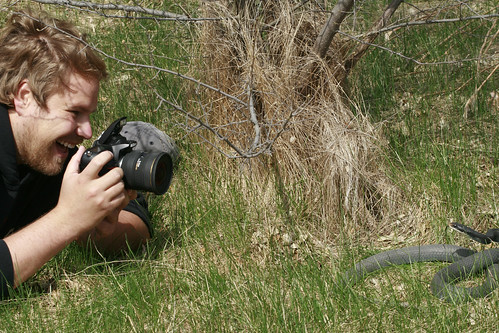
Shortly before the picture above was taken, the snake struck right at Jason and whacked his camera sqaure on, we both shared quite a laugh. Jason's dogs Cid & Joy seemed to give the snake no attention and were too busy chasing each other around in the field. After photographing this snake, we returned to our cars and figured out what our plan of attack was next.


We both knew of a few sites nearby and decided to give a spot a try where Jason had seen a juvenile rattlesnake the year before in the middle of summer. A short drive and we arrived at our location and set out.

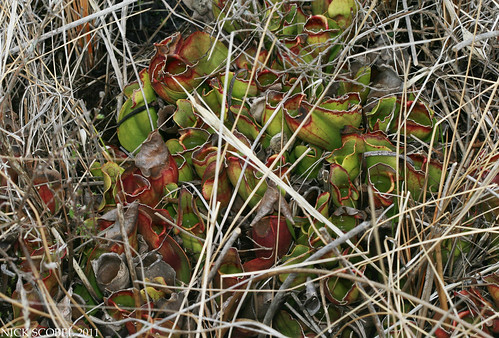
Purple Pitcher Plant - Sarracenia purpea

This is an extremely high quality fen, with many interesting plant species including pitcher plants & sundews. I had been to this area the year before and only managed to find some garters, a few water snakes, and a nice case of Poison Sumac. The clouds had parted rather nicely, and the temps had reached the low 70s by this point in the afternoon. We spread out a little bit and as I was roundng a small patch of sedge & poison sumac a bit of patterning caught my eye.


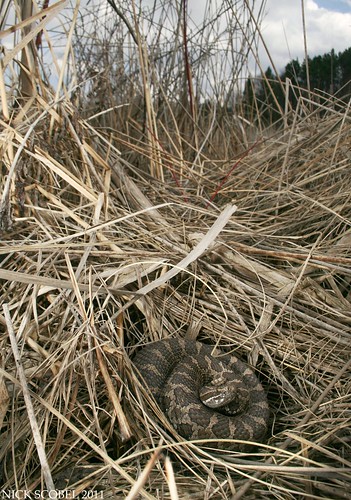
I quickly called out, "I've got one right here!" This rattlesnake was in the most classic coil I've ever seen from an individual of this species. This snake also was not caked in mud and dirt likes the ones at the other site were, it was absolutely gorgeous. This snake was so cooperative photos and never even budged or rattled once while I shot some photos of her.

Eastern Massasauga Rattlesnake - Sistrurus catenatus catenatus

After shooting this gorgeous snake for a few minutes, I moved on but was quickly interrupted as I spotted this absolute bruiser about twenty feet away from the first snake. This snake made a hasty exit down into the sedges and likely into a crayfish burrow.


After this snake made an exit, we spread out quite a bit into the fen and stirred up one or two garter snakes. As we were heading back to the cars, I was alerted by a short, high pitched buzz near my feet and looked down to see our sixth and final rattlesnake of the day a few feet from my left foot hidden in some sedges.
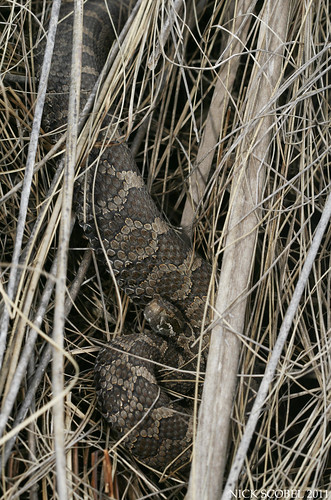

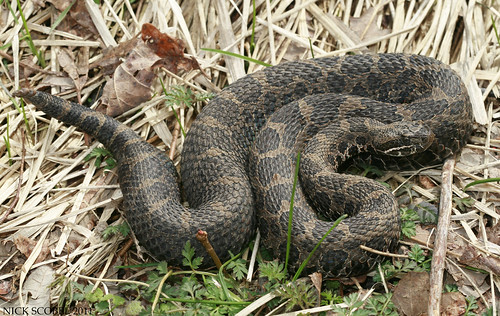
This snake buzzed angrily and then quickly disappeared into the sedges. 6 Eastern Massasaugas in a single day tied my record for one day, and I believe Jason more than doubled the amount of Eastern Massasaugas he had seen in Michigan in the past few years in a single day. So to say the least, it was a pretty incredible day. Multiple rattlesnake days have been commonplace for me so far this spring, and I've already seen well over 20 individuals in the month of April. A few weekends back, I had to chance to take out a group of enthusiastic young herpers ranging from ages 5-12 for rattlesnakes. Their parents; Cara and Marty, tagged along to ensure the kids were safe. We met up with Chris, Colin, and Matt Boguslawski and Curtis Hart joined as well. With a large contingent, we liked our chances at scoring a rattlesnake. With the sun shining, we set out around 10:30AM and within a few minutes Curtis spotted a large adult emering from its crayfish burrow near a stream bank.


We simply snapped a few photos of this snake from a distance and moved on. A little further up the trail, we spotted our second rattlesnake of the morning, a familiar female that I've seen several times this spring and regularly over the past years. She was on the crawl in the open along the edge of a tamarack swamp.


We spent a few minutes watching her make her way through the sedges. The kids asked tons of questions about Massasaugas and I tried to do my best to keep up! We circled the trail and came back to where we had seen the large female emerging from her burrow earlier in the morning. She was nowhere in site until I turned around and spotted her basking in the open on the opposite side of the trail. After getting a good look at her out in the open, we concluded that she was gravid as indicated by her overly swollen back half of the body. We snapped some shots of her and then she decided the wanted to cross back to the edge of the opposite side of the trail. The kids and everyone admired her as she made her away across the trial.
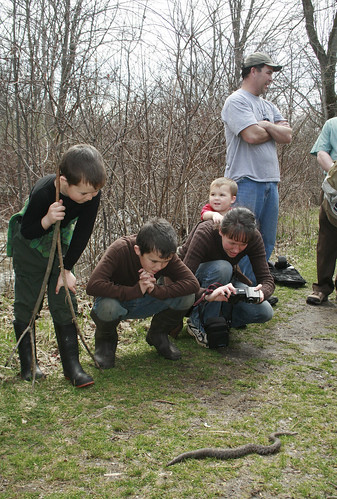
I absolutely love this photo. You can see how amazed the kids were, I only wish so many young kids shared the same interest & passion for wildlife and nature that these kids do. A little later on, one of the youngsters called out, "Rattlesnake!" I couldn't even see where he was looking, but as he pointed to the base of a shrub on the edge of the tamarack swamp I noticed a well patterned adult Massasauga coiled in the sun. It amazes me how young kids have the ability to spot things in this manner.

Eastern Massasauga Rattlesnake - Sistrurus catenatus catenatus

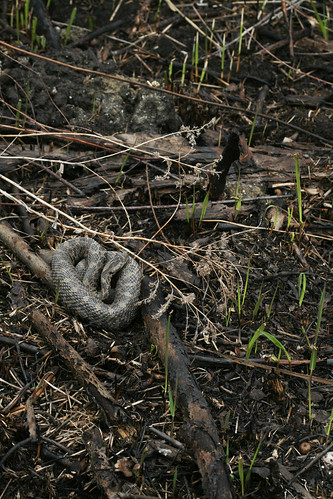
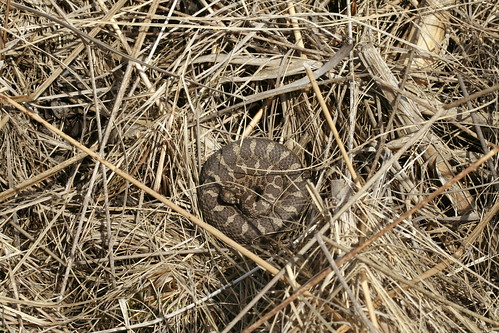
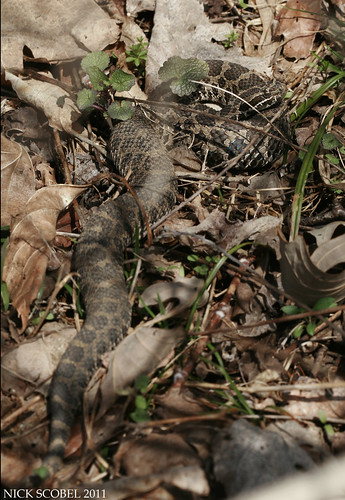
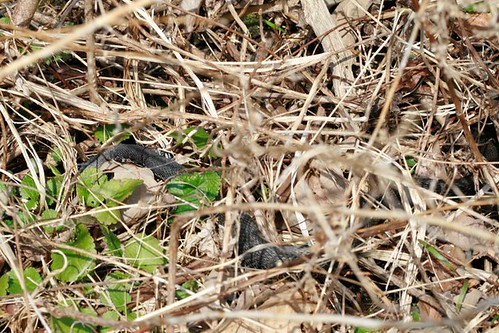
The last observation that I'll share from this spring was a few weekends back. It was a cool, blustery morning with temps in the low 50s and wind gusts up to 40mph. I decided to go for a walk at a local area and wasn't expecting to see much. As I was walking a trail, I noticed a flash of color that caught my eye. I looked over to the edge of the trail to see this in some sedges along the edge of the tamarack swamp.


At first I wasn't quite sure what I was looking at. The dark coloration looked like dark garters I've seen in the area, but once I looked at it a little more I was pretty excited to say the least.

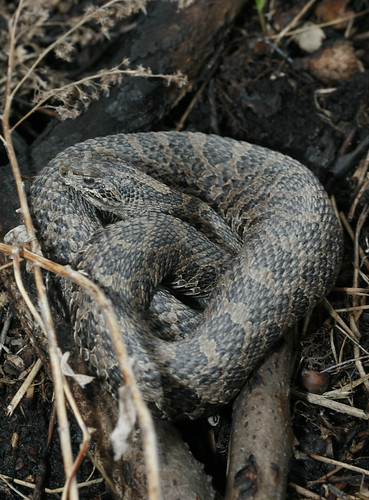
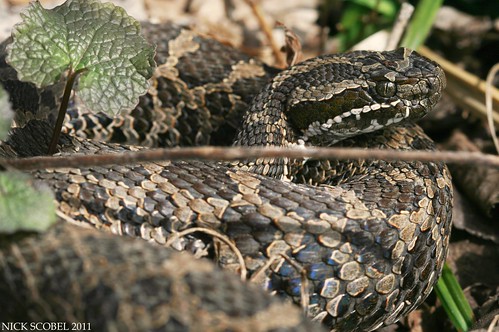
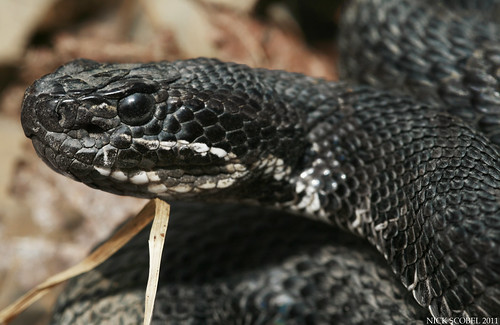
Eastern Massasauga Rattlesnake - Sistrurus catenatus catenatus

This is a melanistic Eastern Massasauga Rattlesnake. Melanism is genetic abnormality that causes higher amount of dark pigment due to the presence of melanin, the result is an almost completely black animal. This is an uncommon occurance in Eastern Massasaugas, but some populations have large amounts of melanistic individuals. They can be completely black, or have faint traces of patterning as with this individual. It was one of the best finds I've had over the past few years, and I'm glad I finally got the chance to get some good photographs of one. It's been a busy April, so thats all for now. Until then, happy herping!

Wednesday, April 27, 2011

Michigan's Curious Caudates

Michigan's salamander diversity is pretty low given its northern latitude and general uninteresting topography. We've got four Ambystoma species, Four-toed Salamanders, Mudpuppies, Redbacks, and Newts. But there's two species here that are relatively unique and somewhat under the radar. One was discovered back in the early 2000s and the other wasn't found until a few years ago. The presence of these two species is so unknown, that neither are listed on the DNR's website for Michigan reptiles and amphibians. The two species of interest are the Northern Dusky Salamander & Two-lined Salamander. Both species are widespread throughout eastern North America and  are denizens of woodland creeks, brooks, springs, and seepages. But both are several hundred miles out of their recognized ranges here in Michigan. This has sparked debate as to whether or not these salamanders are a relict native population or if they were introduced here.

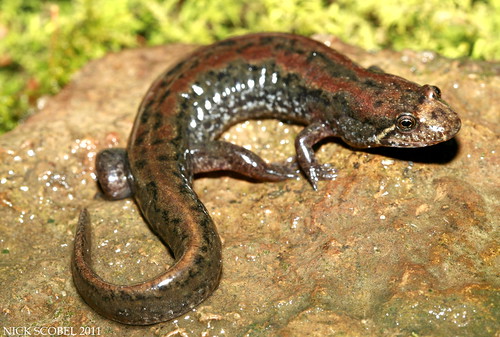
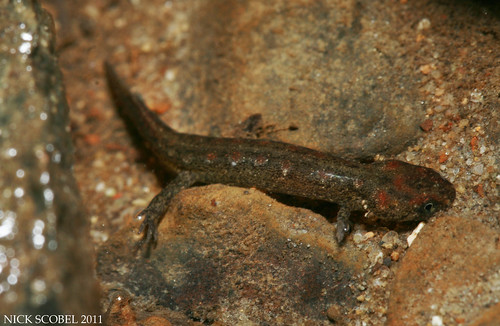
Northern Dusky Salamander - Desmognathus fuscus

Northern Dusky Salamanders are denizens of creeks, brooks, and seepages in forested areas and are never far from a trickling source of water. They are a robust species with a knife-like trail and the hind limbs are generally larger than the forelimbs. The genus Desmognathus, comes from the Greek word desmos, meaning ligament, and the Latin word gnathos, meaning jaw. The genus name is in reference to the large, strong bundle of ligaments in the jaws of members of the genus that gives Dusky salamanders a large, bulging jaw. The Northern Dusky is extremely variable in coloration. Michigan individuals may be brown, red-brown, or olive in coloration with lighter or darker coloration on the heads and dorsal surface. Some Michigan individuals have bold red coloration on the head and dorsal surface as the first animal pictured above. Although the coloration is extremely variable, all Northern Dusky Salamanders have a light diagonal line running from the eye toward the jaw.


Juvenile Duskies usually have have 6-8 yellow or red blotches along the dorsal surface which can often be obscure.  Females lay eggs in the summer under rocks, logs, and other forms of cover in the stream or in nearby wet habitats such as seepages and springs. The larvae are completely aquatic have small, but functional gills. The gills of larval stream salamander species are generally reduced in comparison to those of larval Ambystoma species as there is a great availability of oxygen in clear, moving streams in comparison to stagnant, vernal pools.


This rocky stream amid a beautiful Eastern Hemlock forest harbors Michigan's only population of Northern Dusky Salamanders. In terms of habitat, this area is extremely unique to Michigan as it lies in a deep ravine and filled with Eastern Hemlock, a generally uncommon tree species in the state. There are several springs and seepages are adjacent to the stream and flow into it. Duskies are extremely abundant at this site and utilize all types of cover around the edges of the stream including rocks, rotting locks, and leaf packs. 

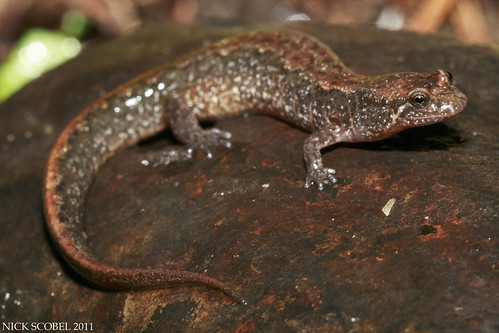
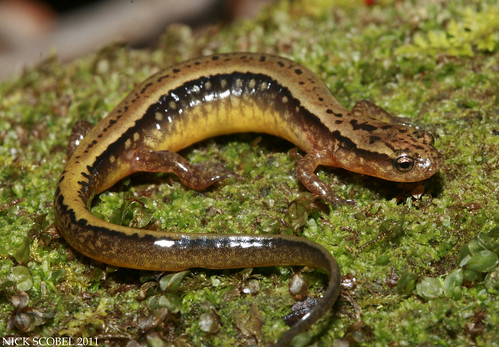
Southern Two-lined Salamander - Eurycea cirrigera

The other unique salamander species is the Southern Two-lined Salamander. It is a small, boldy colored species which inhabits brooks, streams, springs, and seepages in eastern North America. Like the Northern Dusky Salamander, this salamander is several hundred miles out of its recognized range here in Michigan. Beyond genetic research which has determined that Michigan's population is E. cirrigera as opposed to E. bislineata, very little is known about them here. A limited number of specimens have been found, but the good news is that Michigan's population is reproducing as larva, eggs, and females guarding nests have been documented. The individual above is a gravid female which was found under a rotting log near a stream bank. Further research is needed in order to better understand the Two-lined Salamander's ecology here in Michigan. That's all for now. Until then, happy herping!