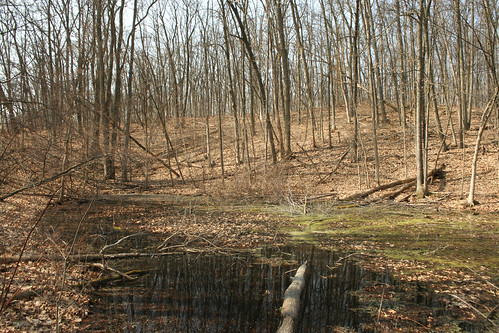
It's nearing the end of March and usually I'm still awaiting the arrival of the spring rains to bring out the waves of amphibians in the Michigan woodlands. However, this spring things have been a bit different. I arrived back from my spring break trip to Florida on Saturday, March 14th. As my plane landed at 6:30PM, I was greeted with temperatures in the 40s and heavy rain. Before I knew it I was heading out to a new site with a herpetologist to search for a rare Michigan amphibian. The pool we surveyed that night and the following morning was not in the typical upand deciduous forest I'm used to. This pool was located in a lowland flatwood forest dominated by Oaks and the ice hadn't completely thawed in the pool just yet.

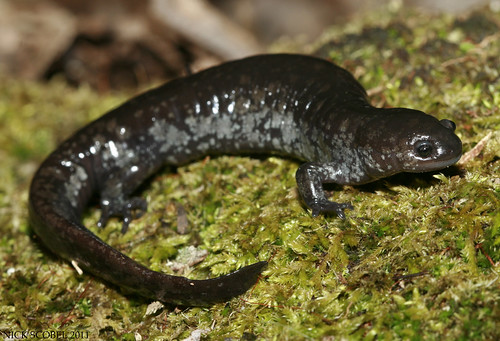
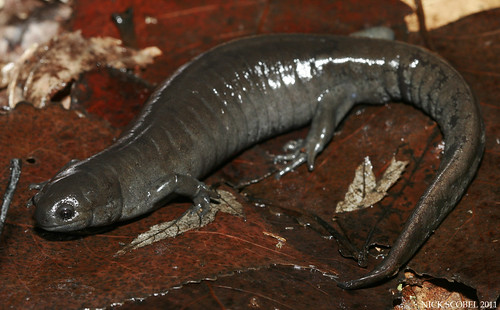
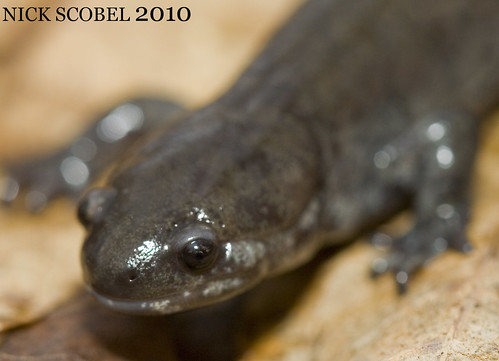
The one species in particular we were interested in was the Smallmouth Salamander. This is a very common species throughout its range, but Michigan lies at its northern range limit. This fact coupled with pollution, development, and other factors has left only a handful of breeding populations left in the state. In fact, the Smallmouth Salamander is listed as Endangered by the Michigan Department of Natural Resources. We were lucky enough to find more than a dozen individuals during the night and the next morning, these were my first Smallmouths in Michigan, a real treat.
Smallmouth Salamander - Ambystoma texanum
Smallmouths and Tigers are amongst the earliest of the salamanders to emerge in Michigan every spring, often moving while most of the pools are still iced over except for the edges. A week or two later as the ponds thaw and the rains come again, a few more species also emerge on rainy nights. This vernal pool is a site I've visited for several years now and it amazes me the amount of amphibian this pool holds in the spring despite being nestled in an extremely developed area.
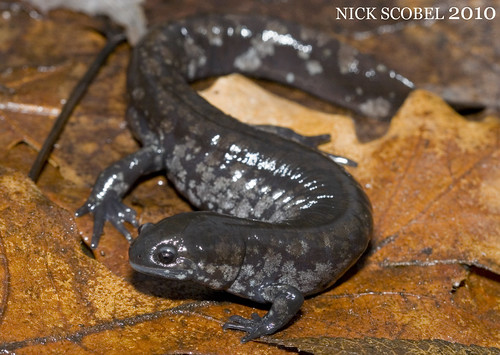
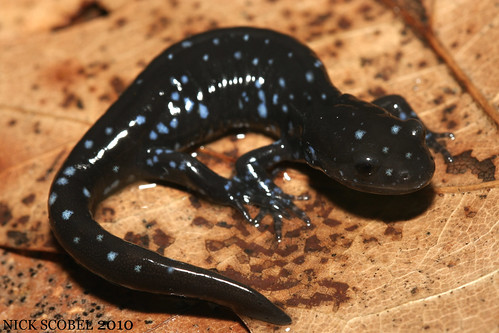
On a few night outings and trapping sessions at this site, I was able to encounter quite a few of the different salamander species found here. It's a place that I just have to visit each and every spring. So without further adeu, here's the animals.
Red-spotted Newt - Notopthalmus viridescens
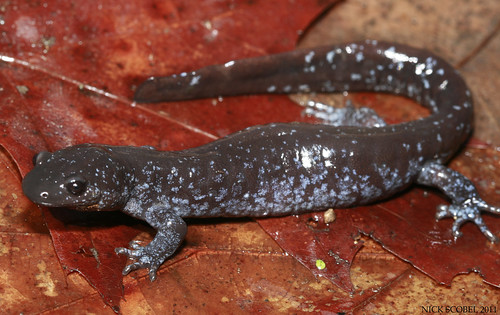
Blue-spotted Salamander - Ambystoma laterale
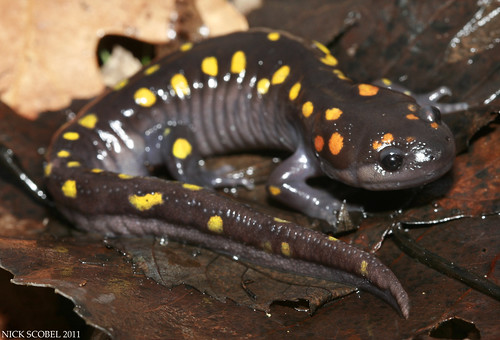
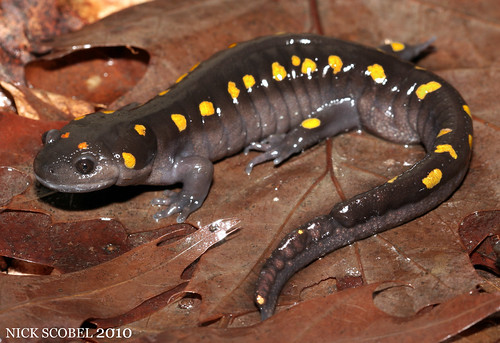
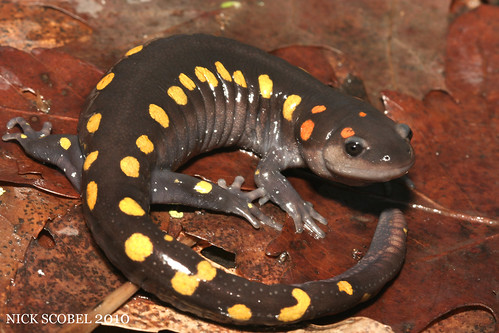
Spotted Salamander - Ambystoma maculatum
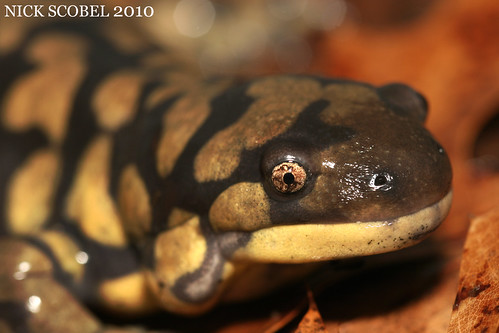
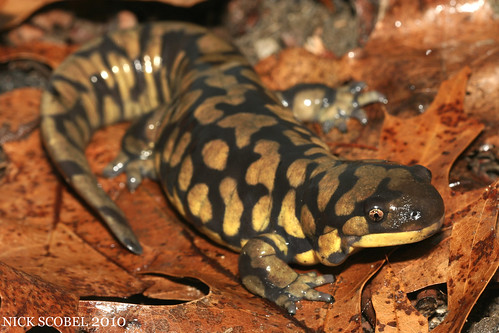
As I sit here in my room up at CMU and stare out into the dry evening, I envy the rain that sweeps across the southern half of the state and once again avoids mid-Michigan. However, finding this beast today was well worth trudging through the rain in southeast Michigan.
Eastern Tiger Salamander - Ambystoma tigrinum