Wednesday, April 21, 2010

Michigan Mudpuppies

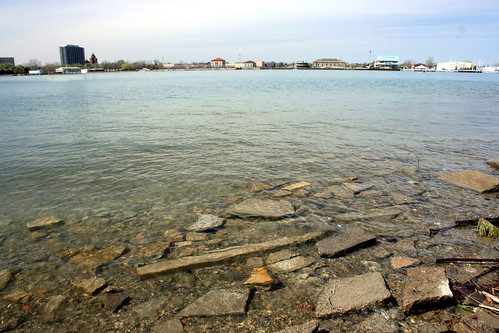
With the exception of the Marbled Salamander & Western Lesser Siren; both of which are likely extirpated in Michigan, there was only one species of salamander that I had not seen in the state, the Mudpuppy. Necturus are commonly known as "water dogs" throughout their range due to the myth that they bark, which is far from the truth. They are large salamanders that remain aquatic throughout their entire life, keeping their external gills that most salamander lose over time at they become adults, this makes the Mudpuppy a more primitive salamander in the evolutionary tree. They occur in lakes, rivers, and creeks throughout their range, but prefer very cool water with high oxygen levels. Farther south in their range, streams of higher elevation provide that cold oxygen rich water, but in Michigan these types of streams are not common. So where do they live in Michigan? The answer is in deep water of lakes and rivers, where they occasionally wander in to shallow water to lay eggs and feed. This makes targeting Mudpuppies here a daunting task and one I've avoided for too long. A few weeks back, Jason Folt and I were fortunate enough to join a few researchers who are doing Mudpuppy research in southeast Michigan. After making acquaintances, we loaded up and headed out to our first field site.


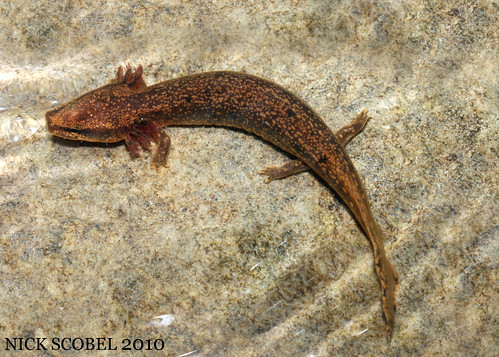
We waded into the forty degree water and began flipping rock after rock in several feet of water, waited for the silt to clear, and then look for any movement. We were looking for young mudpuppies taking shelter in the shallow areas of water, while the big adults tend to spend their time in much deeper water. Before long, Jason called out that he had got one, a first for him in Michigan and a lifer for me.

 Mudpuppy - Necturus maculosus

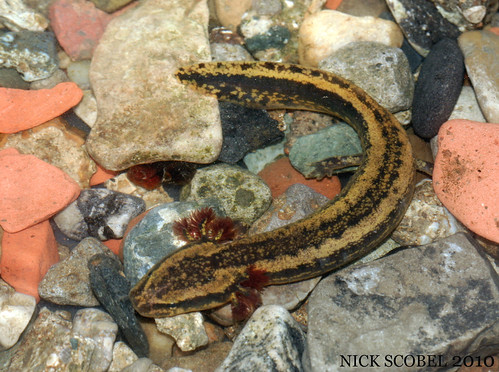
Over the next few hours, we all flipped at netted additional specimens at a few different sites. The two researchers measured, weighed, and took other field data on all the individuals we found. They are trying to assess the health of the Mudpuppy population in southeast Michigan, as well as the species' habitat utilization.


We ended up seeing a total of six individuals, and were able to capture five of them. We didn't see any large adults, but I hope that return trips with the researchers this summer will produce some of the bigger ones in the river system. A great way to spend a beautiful April day.

Mudpuppy - Necturus maculosus

Tuesday, April 6, 2010

Early April Buzztails

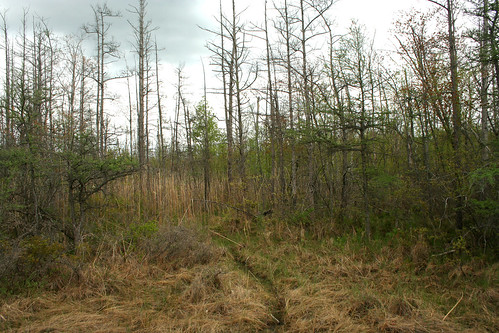
Periods of warm weather are a staple of every spring. There are periods of weather in the 60s or low 70s and then the transition back to cool weather in the 40s and 50s. But the first week of April in Michigan has been anything but ordinary. Temperatures have sored into the high 70s and even hit 80 in some places. This presents a unique opportunity to get out and enjoy the weather and hopefully encounter a denizen of Michigan's peatlands. Friday morning I arose early and headed out to one of my places for a hike, I had the trails to myself and the sunlight was hitting the ground at a warm 65 degrees by 9:30AM.


A few garter snakes darted off the trailside where they had been basking as I passed by. The birds were singing, and the distant sound of woodpeckers knocking on the dead tamracks could be heard. Eventually, a dark shape materialized trailside in an open sunny patch of sun.


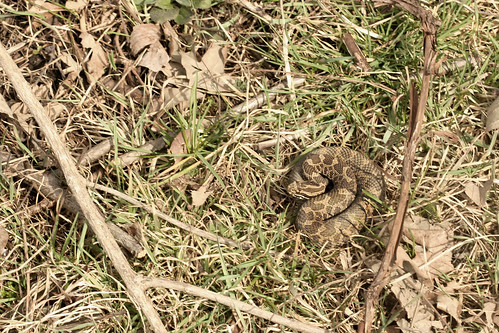
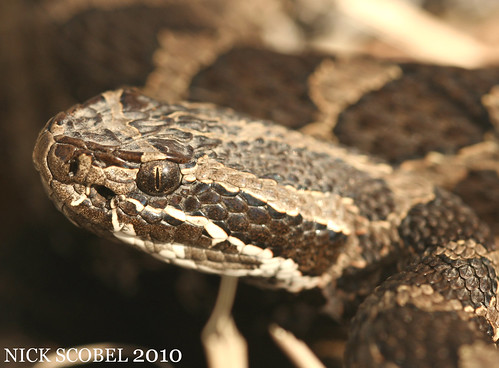
A beautiful sub-adult out in a coiled position for an early morning bask. It was more than willing to sit still for a few pictures.

Eastern Massasauga Rattlesnake - Sistrurus catenatus

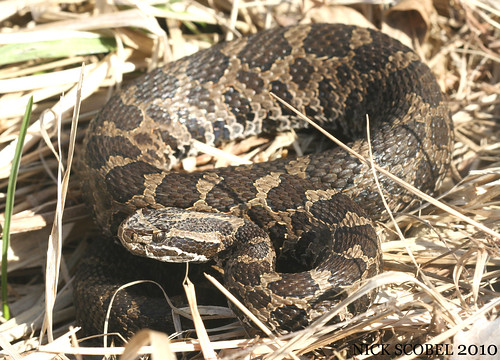
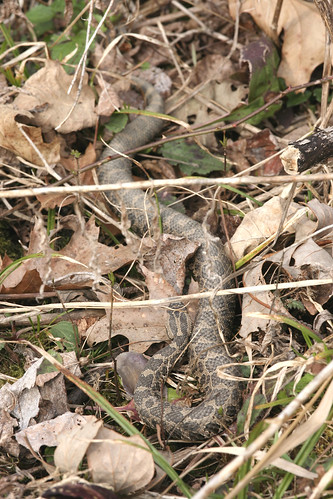
Seeing one rattlesnake in a morning is a nice treat, but seeing two is lucky. A few hundred feet up the path from the first snake was an even larger individual basking on some fallen down sedge grass.

Eastern Massasauga Rattlesnake - Sisturus catenatus

The following morning, I headed out around 10AM because the colors were a little cooler and the skies were sunny with haze. I also noticed some garter snakes out moving about in the morning sun. After seeing a few buzztails the morning before, I was hoping I'd be lucky enough so see another individual out along the trails. I got my answer just after 10:30 AM as I noticed this layed out a few feet off the trail near a largr stand of tamaracks.


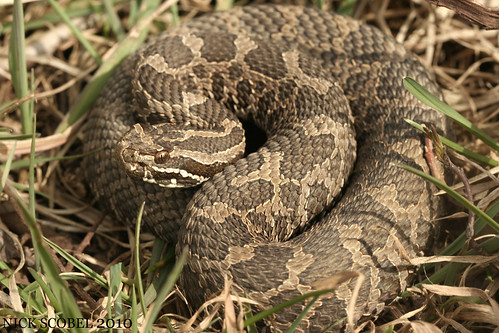
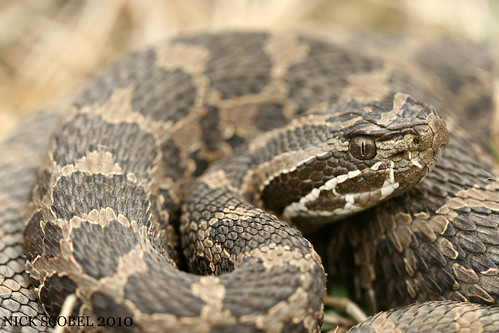
This snake was a large gravid female, estimated to be in the 23-24" range. She noticed me and coiled quite quickly to stand her ground. You can notice from these photos how swollen she was with embryos growing inside of her.

Eastern Massasauga Rattlesnake - Sistrurus catenatus

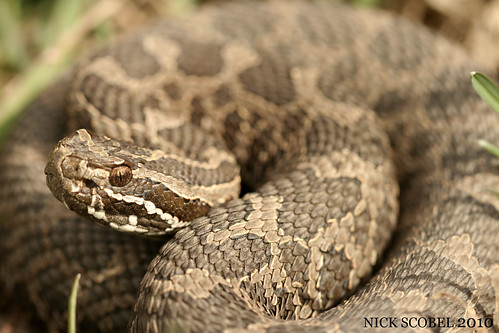
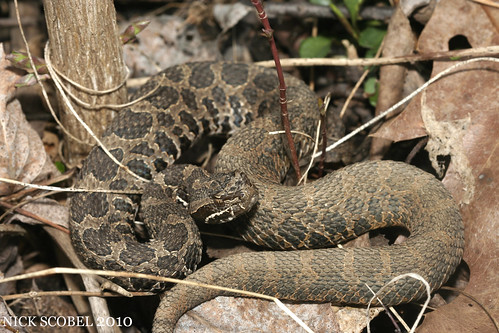
As I was photographing the gravid female, I heard a small buzz coming from behind me. Imagine my susprise when I turned around to see a yearling massasauga coiled just a few feet away. One of the few times I've seen two massasaugas near each other. All together, that made it a four rattlesnake weekend and brings my observations to five on the year. Should be a good field season!

Eastern Massasauga Rattlesnake - Sistrurus catenatus

Wood Turtles

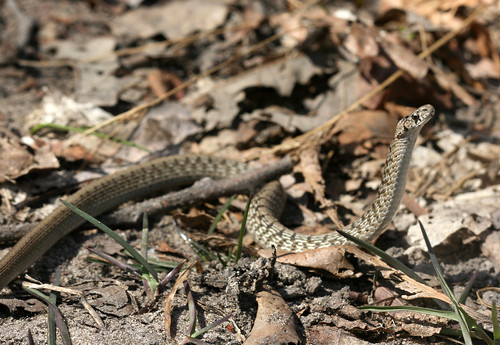
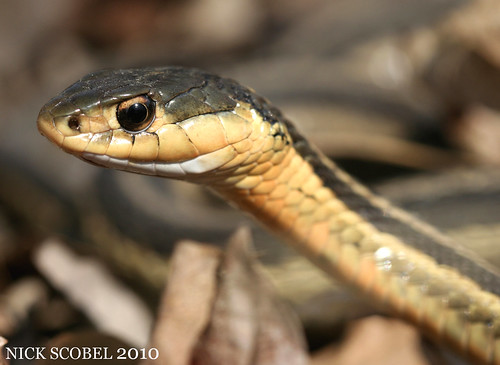
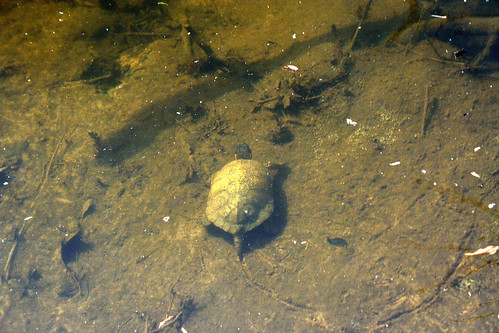
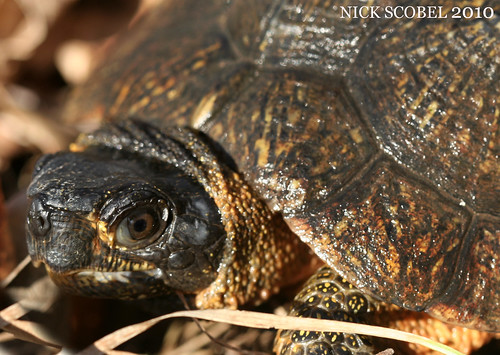
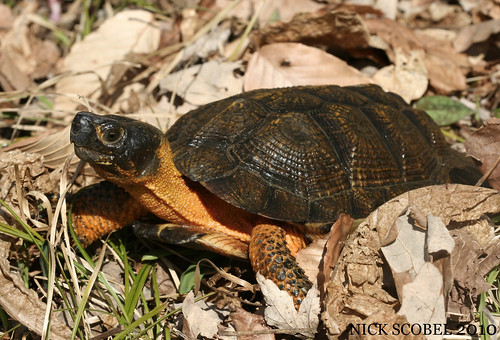
Well, its early April and I've already found and documented 18 species of reptiles and amphibians since mid-March in Michigan this spring. Of these species that I've seen, there's a particular species of turtle that inhabits the northern region of the Lower Peninsula and into the Upper Peninsula. It is a turtle of clear, cool rivers and adjacent woodlands. It is of course Glyptemys insculpta, the Wood Turtle. These turtles are an intermediate between river turtles like the Northern Map Turtle and terrestrial turtles like the Eastern Box Turtle. Woods spend most of their time in the early spring in the rivers and then eventually move into the woodlands by early summer. In late March, a good friend and I decided to take a hike along a local river and see what sorts of herpetofauna we could find.


We noticed good numbers of Map Turtles basking on fallen logs, so we were hopeful that several other species would be out and about. There was no lack of snakes in the floodplain forest, as we found several species moving about in the warm afternoon sunshine.

Northern Brown Snake - Storeria dekayi

Eastern Garter Snake - Thamnophis sirtalis

Eventually by walking along the river's edge we got lucky. These things just stand out in the crystal clear water. He was in pursuit of a smaller wood turtle a little farther out, we just sat and watched him moving about for a few minutes.


Farther downstream we found two males out and about for a stroll along the river's edge. They were more than cooperative for pictures as they moved about along the forest floor. This species of turtle has more personality than any other reptile or amphibian I've ever encountered in the field.


Wood Turtles - Glyptemys insculpta

Monday, March 29, 2010

Spring Salamanders!

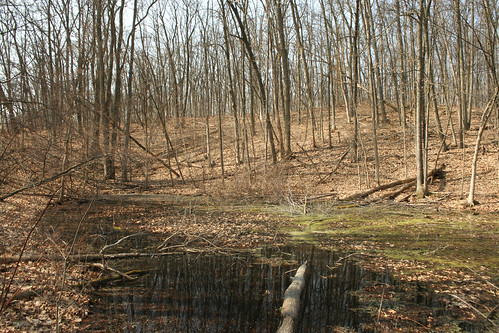
It's nearing the end of March and usually I'm still awaiting the arrival of the spring rains to bring out the waves of amphibians in the Michigan woodlands. However, this spring things have been a bit different. I arrived back from my spring break trip to Florida on Saturday, March 14th. As my plane landed at 6:30PM, I was greeted with temperatures in the 40s and heavy rain. Before I knew it I was heading out to a new site with a herpetologist to search for a rare Michigan amphibian. The pool we surveyed that night and the following morning was not in the typical upand deciduous forest I'm used to. This pool was located in a lowland flatwood forest dominated by Oaks and the ice hadn't completely thawed in the pool just yet.


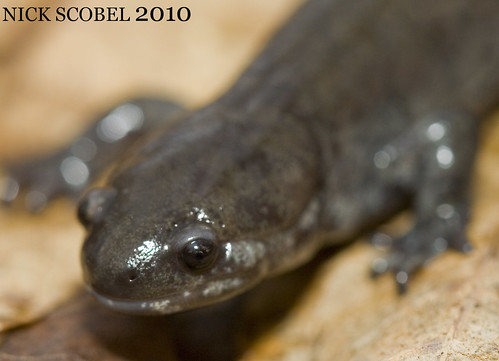
The one species in particular we were interested in was the Smallmouth Salamander. This is a very common species throughout its range, but Michigan lies at its northern range limit. This fact coupled with pollution, development, and other factors has left only a handful of breeding populations left in the state. In fact, the Smallmouth Salamander is listed as Endangered by the Michigan Department of Natural Resources. We were lucky enough to find more than a dozen individuals during the night and the next morning, these were my first Smallmouths in Michigan, a real treat.


Smallmouth Salamander - Ambystoma texanum

Smallmouths and Tigers are amongst the earliest of the salamanders to emerge in Michigan every spring, often moving while most of the pools are still iced over except for the edges. A week or two later as the ponds thaw and the rains come again, a few more species also emerge on rainy nights. This vernal pool is a site I've visited for several years now and it amazes me the amount of amphibian this pool holds in the spring despite being nestled in an extremely developed area.


On a few night outings and trapping sessions at this site, I was able to encounter quite a few of the different salamander species found here. It's a place that I just have to visit each and every spring. So without further adeu, here's the animals.

Red-spotted Newt - Notopthalmus viridescens

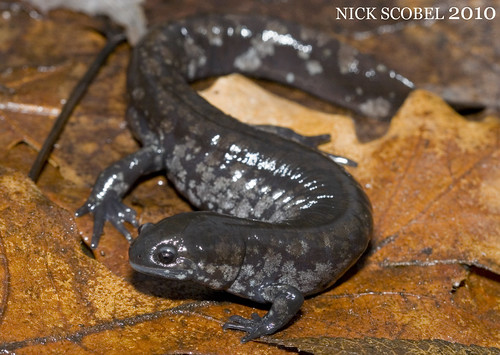
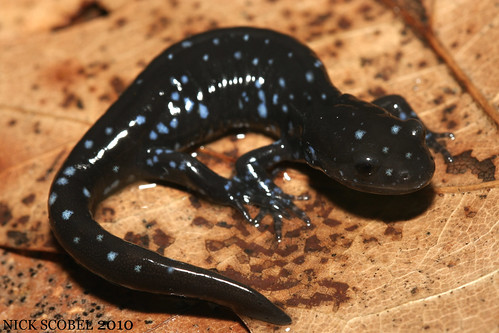
Blue-spotted Salamander - Ambystoma laterale


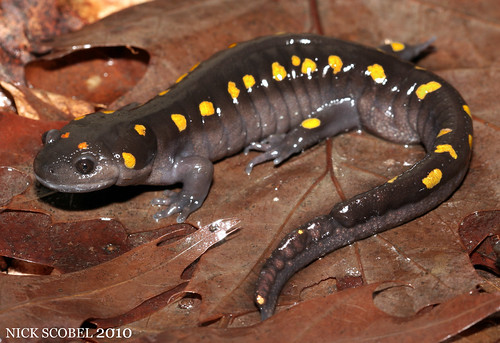
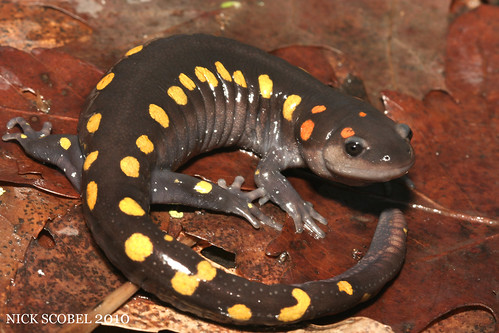
Spotted Salamander - Ambystoma maculatum

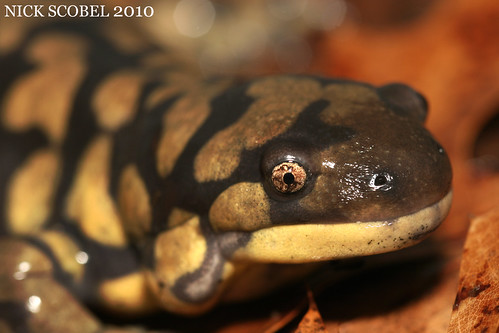
As I sit here in my room up at CMU and stare out into the dry evening, I envy the rain that sweeps across the southern half of the state and once again avoids mid-Michigan. However, finding this beast today was well worth trudging through the rain in southeast Michigan.


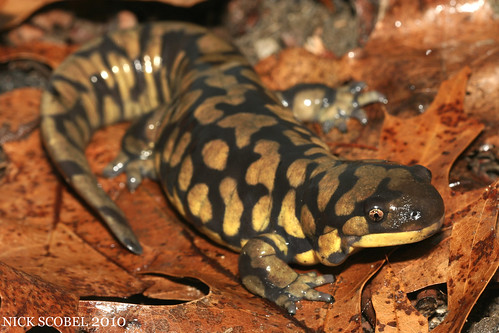
Eastern Tiger Salamander - Ambystoma tigrinum

Sunday, March 21, 2010

The King of the Southeastern Pinelands

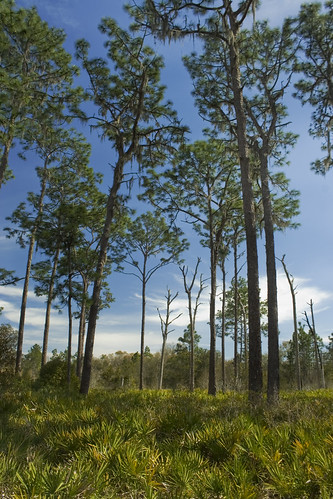
I recently had my spring break trip to the great state of Florida. My first destination of the trip was a tract of pine flatwoods in Polk County. In the past I've seen a great number of species in the area and it has proven to be a productive area. The main target of my trip as always was the king of the southeastern pinelands, the Eastern Diamondback Rattlesnake.


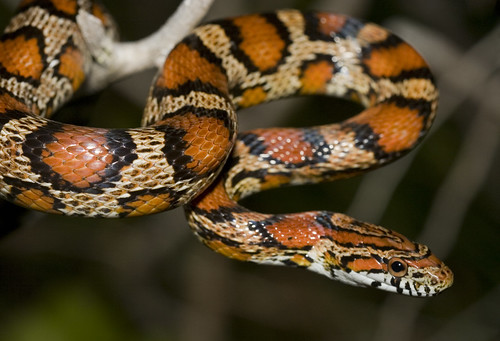
Things during the first half of the week were quite slow in central Florida, as temperatures held in the low 60s and got into the low 40s and high 30s at night. On Wednesday, my cousin Robbie and I headed out for a three day trip to southern Florida. Temps were much more favorable and it proved to be productive right away as we found this beauty out and about just after dark.

Corn Snake - Pantherophis guttatus

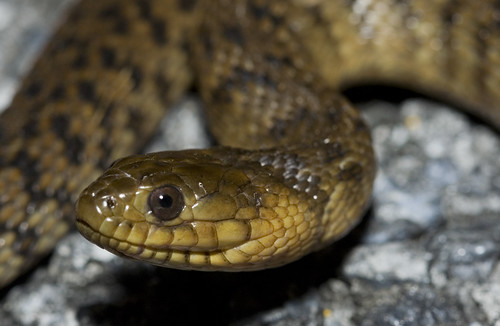
There were also several species of Nerodia out and about on the roads, the coolest of which we saw was this small Florida Green.

Florida Green Water Snake - Nerodia floridana

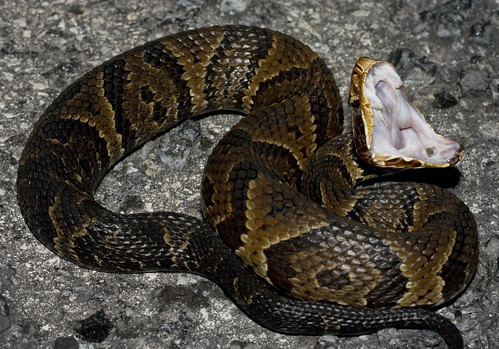
There's never a shortage of these pit vipers in Florida, this one was particularly set in showing its namesake.


Florida Cottonmouth - Agkistrodon piscivorus conanti

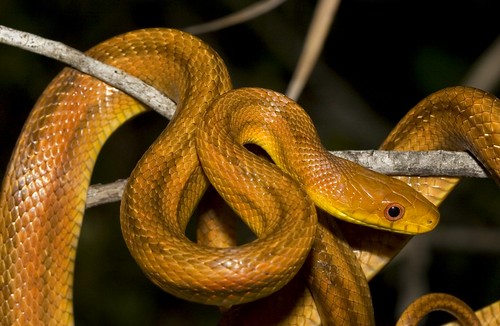
Later on in the night, I finally broke on a curse of a snake that I had only seen in the form of a DOR. This beautiful rat was found 200 yards up the road from a huge corn snake at around 12:30 AM.

Yellow Rat Snake - Pantherophis quadrivittatus

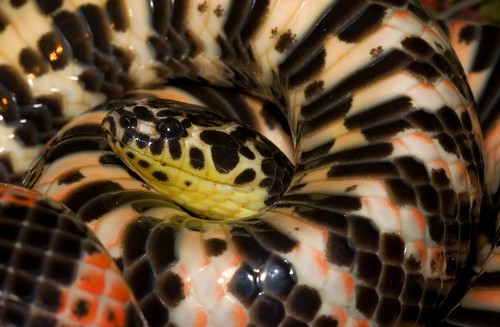
Things eventually began to slow down on the roads, and seeing snakes every five minutes turns into a snake once every half hour. At 2:30 AM, we noticed a large shape on the edge of a roadway and U-turned to find this beautiful serpent out and about on a dry night, which is odd for the species.

Eastern Mud Snake - Farancia abacura abacura

The next morning we arose around 10 AM and headed out to get some breakfast. At around 11 AM the sun broke out from behind the clouds and the temps climbes into the low 80s. As we rounded a corner my cousin questioned, "Whats that ahead in the road?" I looked up to see a dark shape several hundred yards ahead in the road, the closer we got the more it looked serpentine. And once we realized what it was, we both couldn't believe our eyes.


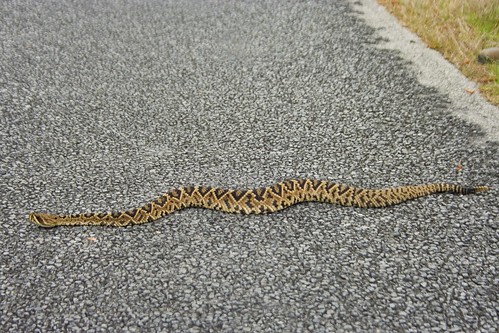
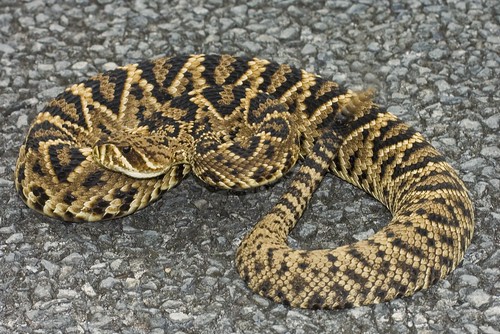
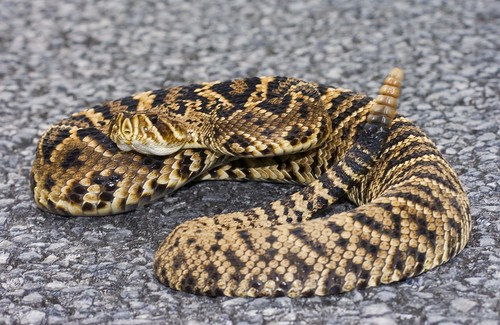
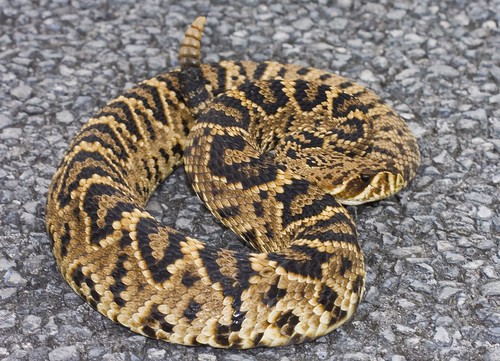
A three foot Eastern Diamondback Rattlesnake layed out in the road right ahead of us. We jumped out and began a long anticipated photography session with this beast, words can't describe how excited I was to see this species of snake.


Eastern Diamondback Rattlesnake - Crotalus adamanteus

An amazing species of snake that finally made an appearance...