Sunday, April 17, 2011

What's in My Camera Bag?

I was recently reading through Jason Folt's blog; The Buckeye Herps Blog, and came across a blog he posted about his camera gear. It inspired me to do a similar post in nature, as I get tons of questions through my blog, email, and website on what kind of camera equipment and other field gear that I have. So I figured I would share what I carry with me in the field.

Camera

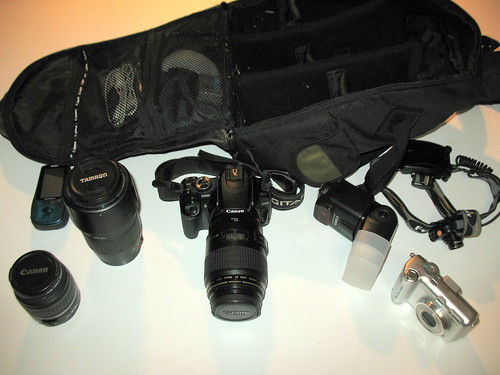
I'm a Canon guy, and have been shooting with Canon for the last five years or so. I have nothing against Nikon, Pentax, or Olympus and I think all three companies make great cameras and lenses. A few years back when I was in the market to move from point & shoot cameras to a DSLR, I was looking for an entry level outfit that would deliver quality performance for a reasonable price. I finally found what I was looking for in a lightly used Canon EOS Rebel XT with a standard kit lens. I was a newbie to DSLRs and it took me awhile to get ahold of shooting in full manual mode, but eventually I started to get the hang of it. Over the past few years, I've updated my camera body to a Canon EOS Rebel XTi and have added several accessories including two lenses and an external flash unit. My current outfit includes the standard Canon 18-55mm kit lens, a Canon 100mm f/2.8 USM macro, a Tamron 75-300mm telephoto, and a Canon Speedlite 430EX II flash with a Sto-fen Omni-bounce diffuser.
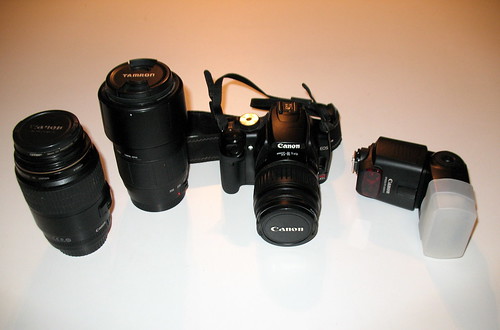

My camera outfit is by no means robust, but for now I'm satisfied with the results I get from a relatively modest arsenal. The Rebel XTi is a compact DSLR that features come aspects of higher level DSLRs, but also makes digital photography relatively user friendly for the shooter. Eventually, I'd like to upgrade to one of Canon's higher level models (40D, 7D, or 5D Mark II) but as of now those are out of my price range and I'm happy with the images I get with my current setup. The first lens I'll touch on is the standard Canon EF-S 18-55mm kit lens that came with the camera. Though it is a pretty cheap lens, if used correctly it can deliver some pretty nice shots. I've found it to be particularly useful because of its wide angle capabilities for capturing "in habitat" photos of herps. Armed with a polarizing filter, I've been extremely happy with some of the shots I've gotten out of this little crappo lens.
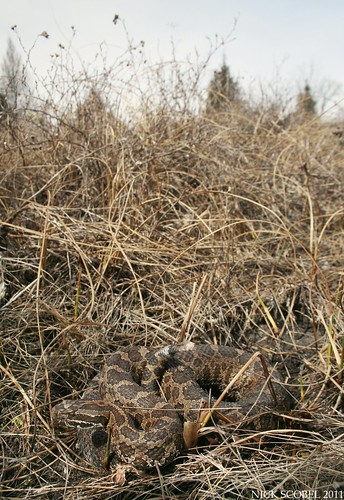

Eastern Massasauga, Sistrurus catenatus, Canon Rebel XTi, Canon 18-55mm, natural lighting & fill flash
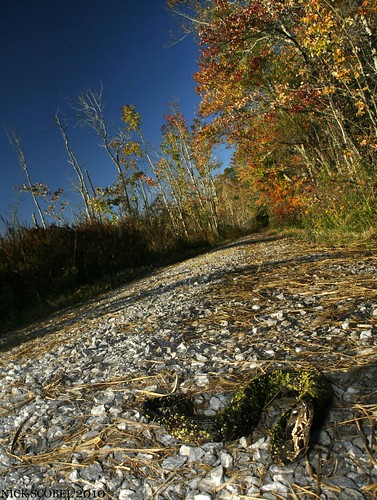
Cottonmouth, Agkistrodon piscivorus, Canon Rebel XTi, Canon 18-55mm, natural lighting & fill flash
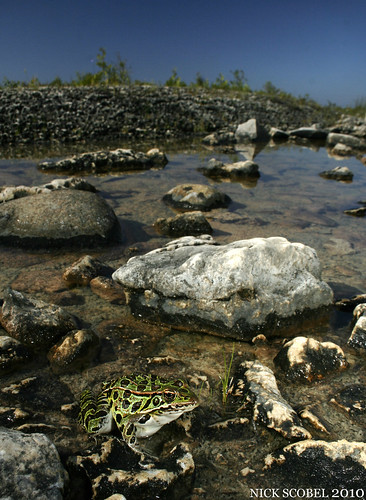
Northern Leopard Frog, Rana pipiens, Canon Rebel XT, Canon 18-55mm, natural lighting & fill flash

Using a combination of natural light & fill flash seems to produce to best results for me, I've found that a little flash can help reduce some of the harsh shadows and help liven the photo. The most recent lens that I bought was the Tamron 75-300mm telephoto. I was looking for a telephoto zoom lens that had a decent reach at a relatively cheap price, and I found the Tamron for just over $100. It's a pretty slow lens (f/4.5-f/5.6) that is worth the money I paid for it, but all I really needed was something that would help me reach basking turtles of nearby birds, and I was willing to sacrifice speed for price. Though its not a great lens, it has performed decently enough for me in the field, especially from a kayak while looking for turtles. Here's a few of the shots this lens has pulled for me.
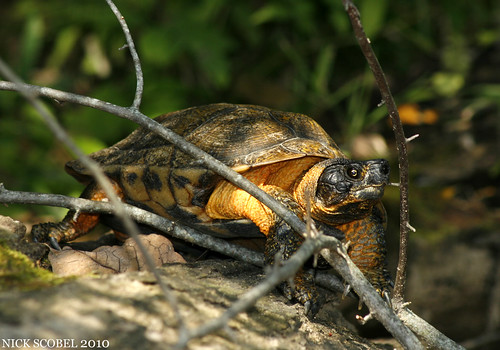
Wood Turtle, Glyptemys insculpta, Canon Rebel XTi, Tamron 75-300mm, natural lighting & fill flash
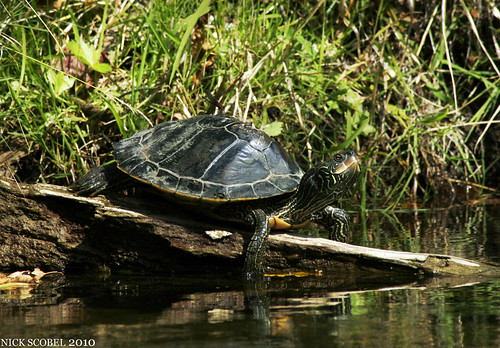
Northern Map Turtle, Graptemys geographica, Canon Rebel XTi, Tamron 75-300mm, natural lighting
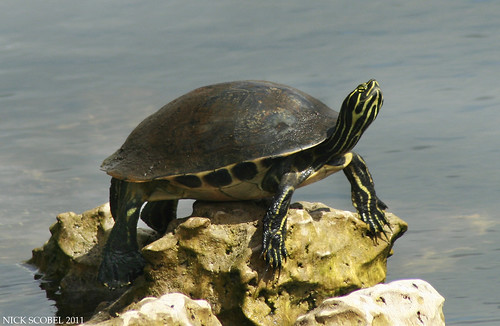
Peninsula Cooter, Pseudemys peninsularis, Canon Rebel XTi, Tamron 75-300mm, natural lighting

The final lens I'll comment on is the Canon 100mm f/2.8 USM macro lens. This is by far the best lens I have and it has been worth every penny I paid for it. 95% of the herp photos I take are with this lens, simply because of how sharp & fast it is. Though I almost always use manual focus, the USM (ultrasonic motor) that powers the auto focus is extremely fast and quiet and the sharpness of the images it produces is astounding. 


This setup utilizing the Canon Revel XTi, Canon 100mm f/2.8, and Canon Speedlite 430EX II comprises almost 90% of the herp photos I take. Though simple, the ability to direct the flash head up, down, left, or right can help lighting significantly and the Sto-fen Omni-bounce diffuser helps soften the light a little bit. The macro lens is incredibly versatile and delivers images of large and tiny specimens that are sharp as a tack. 
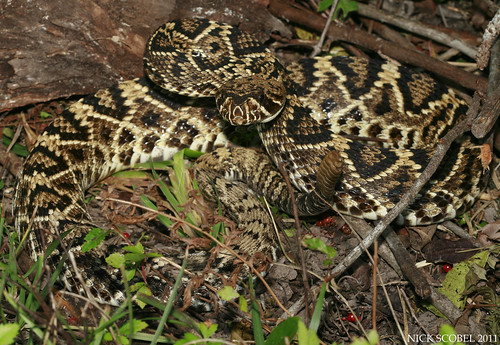
Eastern Diamondback Rattlesnake, Crotalus adamanteus, Canon Rebel XTi, Canon 100mm f/2.8, fill flash

Eastern Box Turtle, Terrapene carolina, Canon Rebel XT, Canon 100mm f/2.8, fill flash

Eastern Massasauga, Sistrurus catenatus, Canon Rebel XT, Canon 100mm f/2.8, natural lighting

As I mentioned before, my camera aresenal is limited but functional, and I'm quite happy with the results I've gotten from it. In the future, I'd like to upgrade to a professional model of camera and maybe get another lens or two, but for now I'm just fine. Other important items that I carry in my bag are a GPS unit and a headlamp. The GPS unit is a Garmin eTrex model that is a few years old, but its functional and lets me record any important coordinates while in the field. I recently purchased a new headlamp, the Fenix HP10. It is the brightest headlamp on the market that runs on AA batteries. It has four light setting ranging from 7-225 lumens and a battery life of 18 hours at the lower settings. It is waterproof up to fifty feet under water and has been awesome in the field thus far. So as Jason said, what's in your bag?

Friday, April 15, 2011

A Day to Rememeber

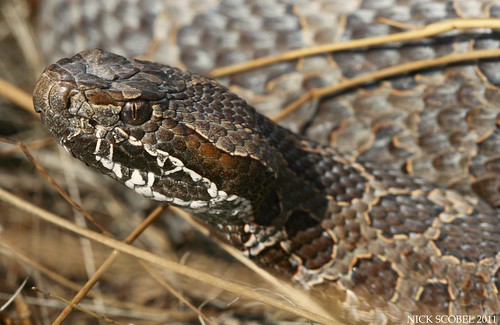
It's hard for me to think of a habitat that I enjoy as much as prairie fens. These alkaline pH wetlands are home many rare & endangered plant and animal species, and are a globally rare ecosystem. On a warm spring day, I had the chance to visit such a place with a few friends from MSU. After a few hour drive, we arrived at our destination and headed out. Fens are fragile habitats and its important to leave as minimal of an impact as possible. This is partly why I don't often visit fens, and the ones that I frequent a lot in southeast Michigan have trails which run around the periphery of them, that way I'm not trudging through such a unique ecosystem. But today, we decided to make our only visit to this particular fen and set out. It wasn't long before we were welcomed by this gorgeous snake.


Eastern Massasauga Rattlesnake - Sistrurus catenatus catenatus

This large female was basking no more than a foot from her crayfish burrow. Most of the habitat in this fen has 5-6 inches of standing water with lots of sedges over top of the water, but in this particular area the elevation changed by maybe a foot or two and the area was damp but had no standing water. There were crayfish burrows everywhere and its amazing how a slight change in elevation can create habitat that rattlesnakes will utilize, all the rattlesnakes we would see on this day would be in this particular area of the fen.


The majority of this large fen had standing water, and this low depression in the fen had actually filled with water over time and become a small permanent pond. We decided to check the pond and surrounding areas for our main target, an very seldom seen little turtle that inhabits these types of habitats. It didn't take long for my friend Bryan to spot our first turtle of the day.

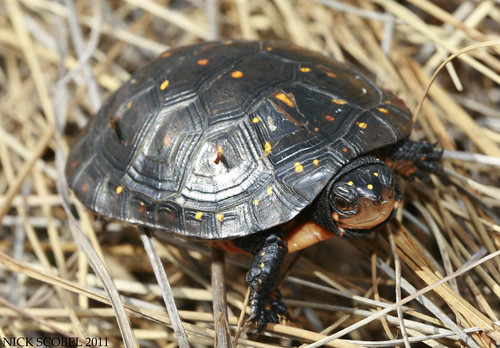
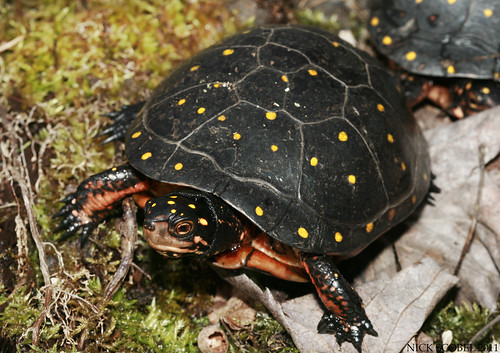
Spotted Turtle - Clemmys guttata

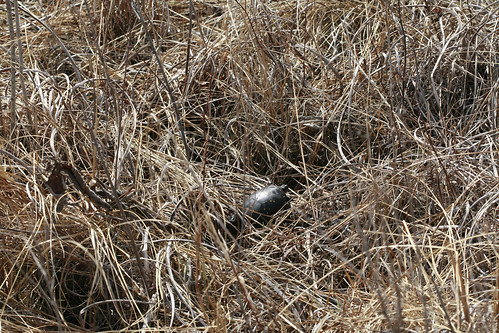
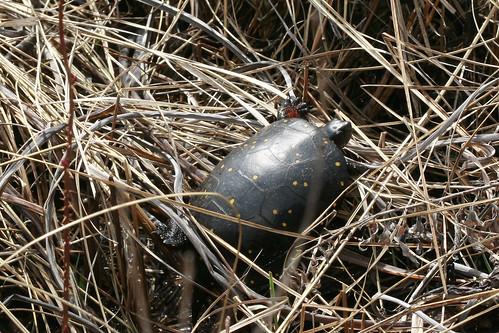
Spotted Turtles are a small, secretive species that inhabits fens and marshes such as the place we were at on this particular day. They prefer shallow, clear water ecosystems with a mucky or muddy bottom with plenty of emergent vegetation for them to bask on. This small individual was doing just that, soaking up some sun on a patch of sedges right along a small meander of water in the fen. Spotted Turtles are Michigan's rarest turtle species and are listed as a Threatened species in the state. The main factors for their decline in Michigan and throughout their range is habitat loss and illegal collection. Because of their handsome appearance and small size, Spotted Turtles are a highly sought after species in the pet trade and some individuals can go for a lot of money on the black market. Sadly, some populations that were once robust have been reduced to very low numbers and in turn have suffered from a loss of genetic diversity. Because of their habitat preferences, Spotted Turtles don't have nearly the same problems with nest predation by raccoons that other species like the Wood Turtle, Blanding's Turtle, and Eastern Box Turtle have. After shooting a few photos of the little guy, we headed farther out into the fen and before long I spotted a dark spot ahead of me in the sedges.


This was our second Spotted Turtle of the day, an adult male. Most of the turtles we saw on this day were basking in the same fashion that this guy was. We only shot a few photos from a distance and moved onward. Because Spotted Turtles are a state protected species, we tried to ensure that we did not harass any animals beyond what was necessary in order to get a few photos. In this case, this male was in a textbook position and made for a great photo that did not require handling him. We moved back to an area where we had seen the rattlesnake early in the day and before long I noticed this big girl in front of me.


I called out to the guys that I had found a rattlesnake, and as they were traversing over JP almost stepped on another massasauga basking a few feet away from the one I had just found. He dropped his camera bag down near where the snake he had seen was so that we could get a look at it once we got some photos of the snake I had found. This large individual was resting right next to its crayfish burrow, but didn't seem to alarmed at our presence right next to it. We pulled back the sedges over he top of it in order to get a few shots of the snake without disturbing it, this snake was even larger than the first one we had seen, right around the 28-30" range.

Eastern Massasauga Rattlesnake - Sistrurus catenatus catenatus

The massasaugas at this location were quite light in coloration compared to the individuals I'm used to seeing. This was also the first opportunity I've had to observe a massasauga in southwest Michigan, as all of the individuals I had seen previous to this day had been in southeast Michigan. I was impressed at how healthy and fat these snakes were, especially considering the fact that they had just emerged from a long winter. We shot a few photos of this big snake, and then moved over to where JP had seen the other snake, and I was elated to see that the snake was a juvenile massasauga, probably a newborn from last summer.


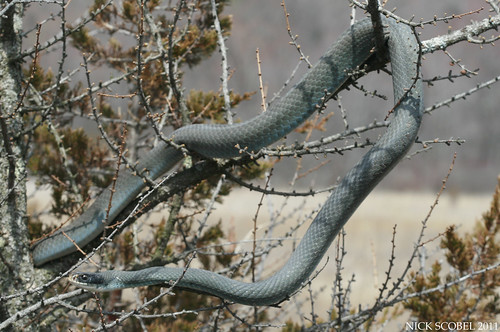
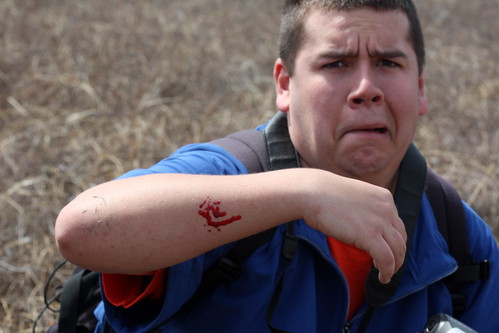
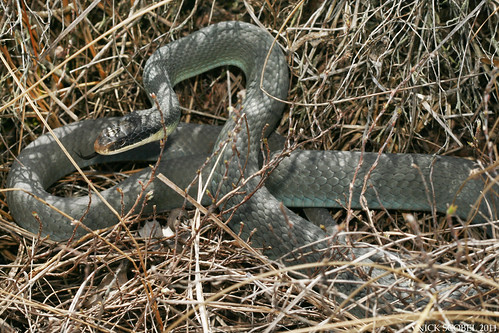
According to Jim Harding, this population is rumored to have suffered some declines many years ago as there were reports on intentional killing of rattlesnakes at this site and its status was unknown. We only explored a small portion of the fen, and four massasaugas including this small individual. With signs of reproduction going on and a good cluster of snakes, it seems that this population is managing to hold on. Just as we were packing up our camera gear, Bryan called out that he had found a big snake. Before we could get close enough to see what it was, he yelled, "Racer!" I ran in his direction and got a glimpse of an extremely large Blue Racer and managed to chase is down and get a hand on it. As soon as I grabbed it, it swung right up and let me know it didn't appreciate being grabbed. In hopes of avoiding another bite, I placed it in a small Cedar tree nearby where it sat comfortably for a few minutes and allowed us to snag a few quick shots.

Blue Racer - Coluber constrictor foxii


Not far away, JP spotted another Blue Racer laying in a loose coil in the fen. Upon our approach, the snake coiled and held its ground instead of taking off. It coiled, rattled its tail, and struck vigorously at us as we shot some photo. Most racers I've seen take off rather than stand and hold their ground, but this small adult was an exception that made for a great photo shoot.

Blue Racer - Coluber constrictor foxii

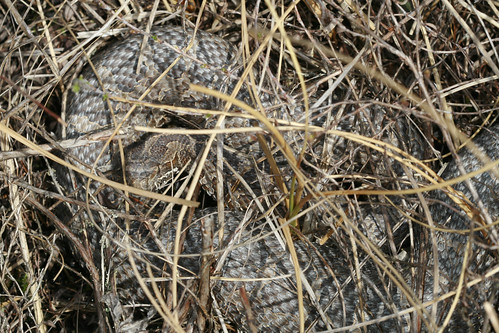
While the guys were photographing this snake, I ventured a little further away to see if I could find some more turtles. My path was interrupted however,as I almost stepped on our fourth and final massasauga of the day basking in cover right next to her burrow. 

 
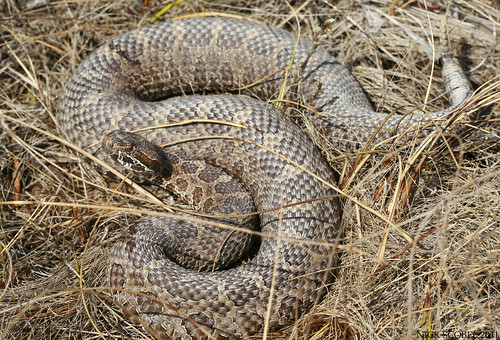
I called the guys over and we grabbed our cameras for a quick photo session. This was the largest rattlesnake we saw on the day, and it was easily apparent that this was a gravid female. We used some equipment to pull back the grass over top of her to get some photos, but were careful not to disturb her in any way shape or form. She buzzed loudly and gave us a great pose for some photos.

Eastern Massasauga Rattlesnake - Sistrurus catenatus catenatus

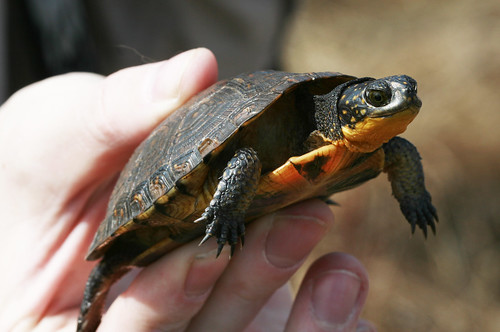
After shooting some photos of this big girl, we moved on in hopes of finding a few more turtles. We eventually got near the edge of the fen where the water levels were much higher and began seeing turtles again. I spotted a very shy adult male Spotted Turtle basking on some sedge and then JP managed to get his hands on a juvenile Blanding's Turtle that was basking on some sedge nearby as well. It was the first juvenile Blanding's Turtle I've ever seen and was one of the day's highlights.


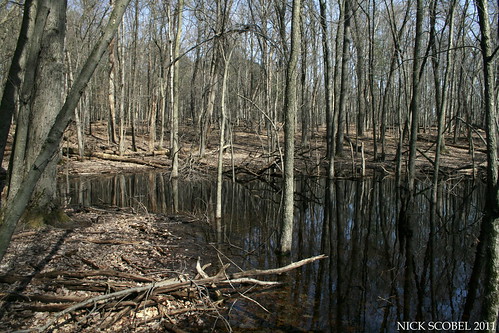
We eventually got ourselves out of the fen and into some nearby woods as we headed back to the car. As were heading back, we followed the sound of some Wood Frogs to a nearby vernal pool and decided to check it out in case there were any salamander egg masses or salamanders along the edge of the pool under logs and other cover.
As were were walking towards the pool, we noticed a large group of turtles basking on a fallen tree in the middle of the pool. As we got closer all of them dropped into the water before we could get a good look at them. Having our suspicions, we decided to check it out and were pretty amazed what we found.

 Spotted Turtle - Clemmys guttata

We managed to find nine Spotted Turtles swimming around in the vernal pool, bringing our total on the day to thirteen. From what I know and have read, Spotted Turtles utilize vernal pools in the northeast during the spring. However, I've always heard of them being strictly associated with marshes and fens here in Michigan and have only heard of one instance of them being found in vernal pools in Michigan. The pool was a long distance from the fen and it would be an understatement to say that all of us were surprised. It was an amazing way to cap off a truly memorable day in the field that I won't soon forget. That's all for now. Until next time, happy herping!

Tuesday, April 12, 2011

April Amphibians

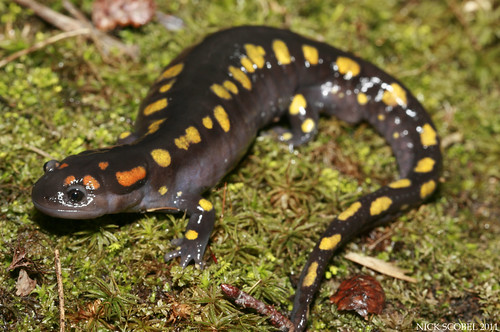
It's mid april here in the Wolverine state and this past weekend finally brought some decent weather conditions since we last had herp activity in late march. Friday night brought some much needed rain to southeast Michigan, and I headed out in the field to check some vernal pools for salamander activity. My outing gave me the chance to test my new Fenix HP10 headlmap out in the field. The HP10 is the brightest headlamp available that runs on AA batteries, with four settings ranging from 7-225 lumens. It is waterproof up to 50 fifty feet underwater and is virtually indestructible. My new equipment paid off quickly, as we spotted the first of many Spotted Salamanders swimming about in the vernal pool.

Spotted Salamander - Ambystoma maculatum

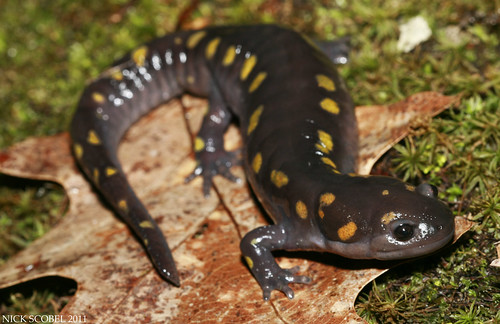
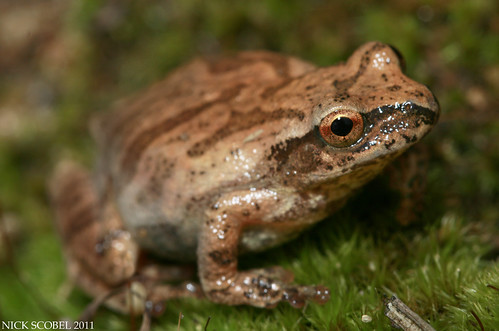
I observed a few egg masses in the pool itself and although a few males were seen, most of the salamanders seen in the vernal pool were large gravid females. It's been an odd spring here in Michigan, with some major temperature extremes that have really segmented salamander migrations and for the first time in a few years I wasn't able to observe a good migration. But even so, I was still able to see several more salamanders & newts in the pool. Several spring peepers were observed in the immediate area as well.

Spotted Salamander - Ambystoma maculatum

 Spring Peeper - Pseudacris crucifer

And then today, I had the chance to head down to Montcalm County from CMU with my buddy Bryson Church in hopes of turning up some Blue Racers. It ended up being cool and cloudy, and no racers made an appearance. But while in the field, we followed the sounds of a chorus of Wood Frogs to this nice vernal pool nearby. There was an abundance of sphagnum moss and I mentioned that it looked like pretty decent habitat for Four-toed Salamanders.

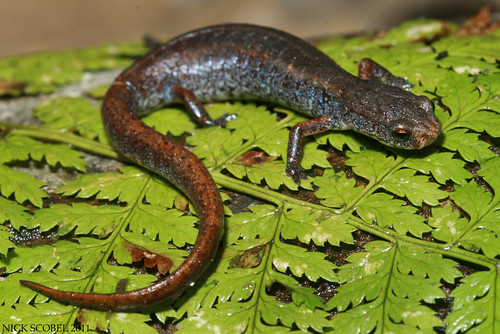
I decided to wade out in the the pool, and pull back some of the sphagnum moss on the fallen tree in the center of the photo above. What I found was well worth the outing today, a gravid female Four-toed Salamander.

Four-toed Salamander - Hemidactylium scutatum

That's all for now. Until then, happy herping!

Tuesday, March 22, 2011

Michigan Season is Underway!

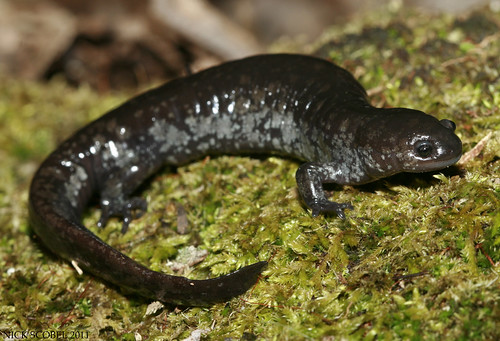
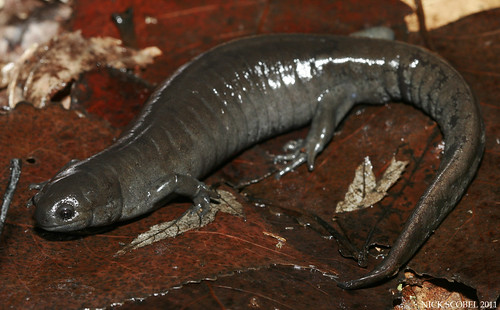
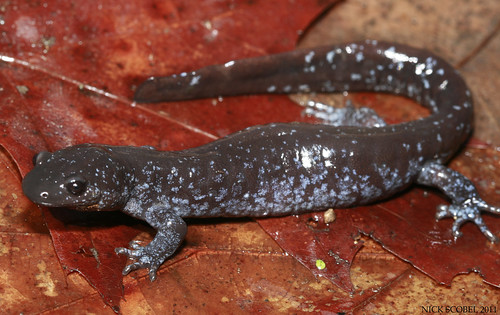
This past weekend, we finally got some rain in southeast Michigan and it got some stuff moving. I spent some time aiding a study that is ongoing to the genetics of the Smallmouth Salamander in Michigan. This species reaches its northern range limit in extreme southeast Michigan. This area is the population center of the state and is extremely developed. Though Smallmouth Salamanders were probably never extremely common in Michigan, fragmented habitat has caused a decline in their numbers and they can now only be found in 2 or 3 locations and are listed as a state Endangered species. The point of this study is to take tail clips for genetic analysis to understand the genetic health of the few Michigan populations and to monitor breeding activity. We managed to trap and process over 100 animals over the course of two nights and also had some other species show up as well. All of these specimens were found at the same breeding site.

 Smallmouth Salamander - Ambystoma texanum

Unisexual Hybrid Salamander - Ambystoma sp.

Unisexual hybrids can be diploid, triploid, or even tetraploid. These animals share the genotypes of the Blue-Spotted, Jefferson's, Smallmouth, and occasionally Eastern Tiger Salamander. These unisexually female salamanders migrate to breeding pools with other salamanders on warm, rainy spring nights where they utilize sperm from males of other Ambystoma species to fertilize their eggs. The sperm of the males stimulates unreduced eggs to develop, resulting in clones of the female, this is similar to a process known as gynogenesis. It is also possible for the genome to be replaced or for the number of chromosomes in the offspring to be increased. The genetics of these salamanders is still undergoing study by many researchers. Here's a few other animals that showed up this past weekend.

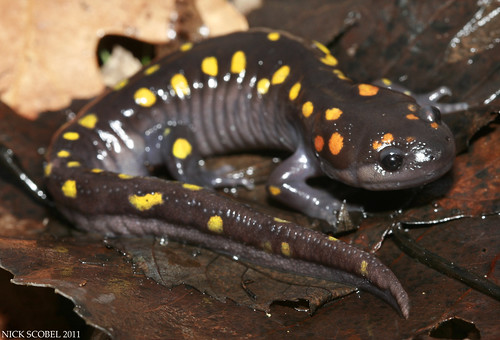
Spotted Salamander - Ambystoma maculatum

Eastern Tiger Salamander - Ambystoma tigrinum

That's all for now. Until then, happy herping!

Tuesday, March 15, 2011

Return to Florida

Once again, I'm back in winter's icy grasp here in Michigan. But last week I had the chance to get away to Florida for a short trip. For most of the week, I spent a lot of time in dry pine flatwoods, hammocks, scrub, and other xeric habitats in search of one of my favorite snake species. After hiking for several hours one morning in search of a diamond-like pattern, I headed back to the car to grab some lunch. Upon returning to the area in the middle of the afternoon, I noticed a dark shape in the road which turned out to be the snake I had been looking for.

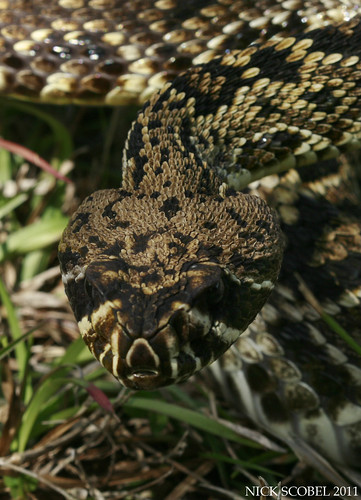
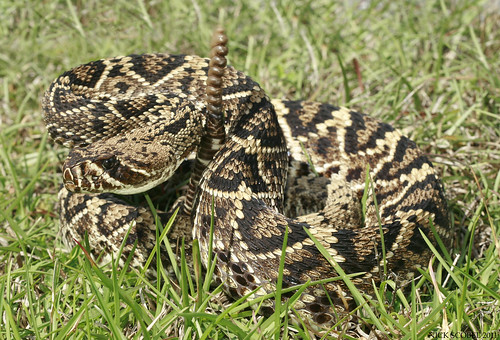
Eastern Diamondback Rattlesnake - Crotalus adamanteus

This large individual was making its way across the road about 2:30PM with sunny skies and an air temperature of about 84 degrees. Very similar conditions to the one I found last year in the same area in March. This big girl held her ground in textbook form and allowed me to photograph her for a good twenty minutes before backing herself into the thicket pictures above. She was around three and a half feet in length and full of attitude, it's hard to imagine what a five or six footer would be like.


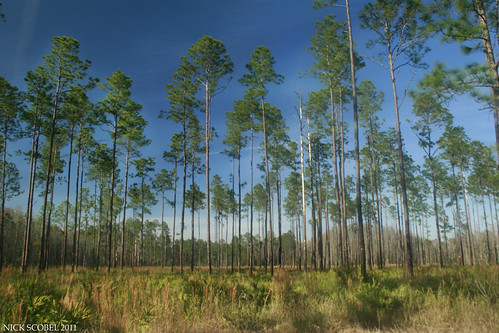
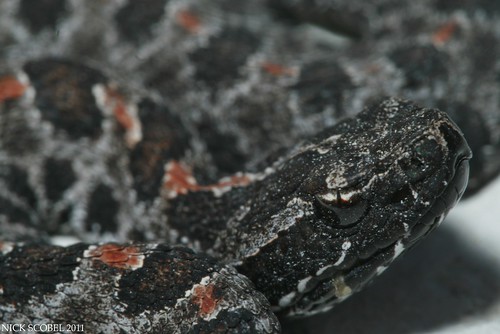
Eastern Diamondback Rattlesnakes and their smaller cousin; the Dusky Pigmy Rattle Snake, seem to prefer pinelands in general in the sunshine state. Sadly, these ecosystems are diminishing at an alarming rate due to the rapid development and expansion of the human population in Florida. But in some areas, large tracts of pine forest are still present and are a haven for many of Florida's reptiles and amphibian species. I spent quite a bit of time exploring areas like these in central Florida during the week.


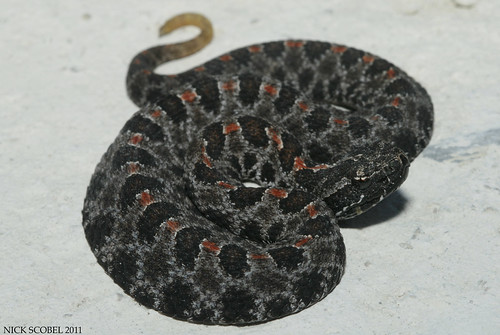
One a warm afternoon during the week, I spent a few hours driving this road in Sumter County in hopes of finding some herps on the move. After a few passes with no luck I was beginning to get a little discouraged, but finally on my fourth pass I was lucky enough to drive up on this little guy right in the middle of the road.

Dusky Pigmy Rattlesnake - Sistrurus miliarius barbouri

These small rattlesnakes are closely related to my favorite Michigan snake species, the Eastern Massasauga Rattlesnake. Despite their tiny stature, pigmies are pound for pound one of the most feisty venomous snake species I've encountered in the field. Most are very twitchy and bitey, and this juvenile was no exception. He hurled himself several times at my camera lens in hopes of causing an envenomation to my camera with no success. Every time I visit Florida, I hope I get the chance to encounter one of rat snake species that inhabits the state. This particular trip, I got the opportunity to find and photograph my first central Florida Yellow Rat Snake on the crawl in an oak hammock in the early afternoon.

 Yellow Rat Snake - Pantherophis quadrivittatus

Corn Snake - Pantherophis guttatus

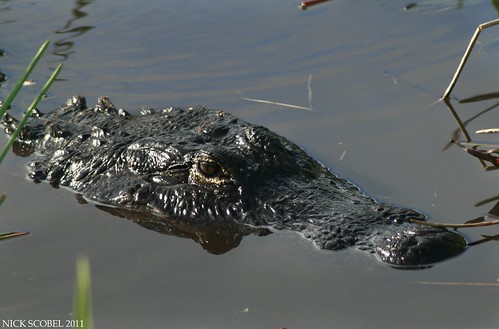
I had a few days to kill and spent them in the southern reaches of the state and had a chance to find and photograph both of Florida's crocodilian species. The American Alligator is extremely common statewide and can be found in almost any freshwater environment, while the American Crocodile is restricted to the brackish waters of the southern reaches of the state. Although the American Crocodile was once listed as an Endangered species, is has been recently downlisted to Threatened by the U.S. Fish & Wildlife Service.

American Alligator - Alligator mississippiensis

American Crocodile - Crocodylus acutus

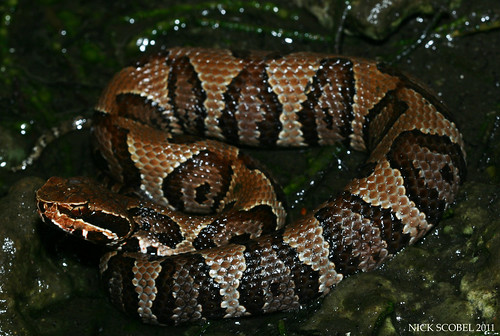
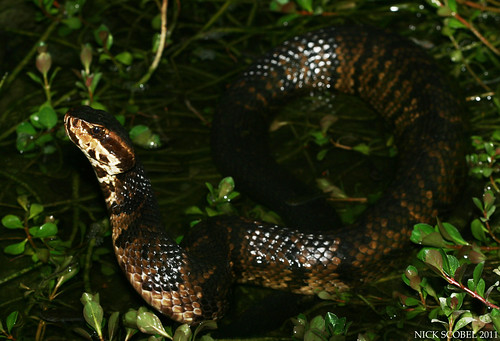
One of the coolest habitats in Florida is the cypress swamp. These hardwood swamps are retreats for many of Florida's reptile & amphibian species. In the north, Bald Cypress is the dominant species, but farther south Dwarf Cypress is the dominant. Checking these habitats at night by headlamp usually yields large numbers of this species, a trash snake to many.

Florida Cottonmouth - Agkistrodon piscivorus conanti

This large, bold species is always a treat to see no matter how many you've seen in the past. Cottonmouths are a viable part of any Florida swamp ecosystem and will always be a favorite snake species of mine. After rounding out the week in south Florida, I headed back home to Michigan and pit stopped in northern Florida to flip some tin with Daniel Dye. Although we didn't see much, he was kind enough to let me shoot some photos of this awesome snake species.

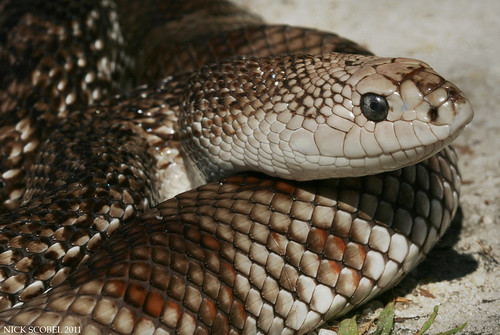
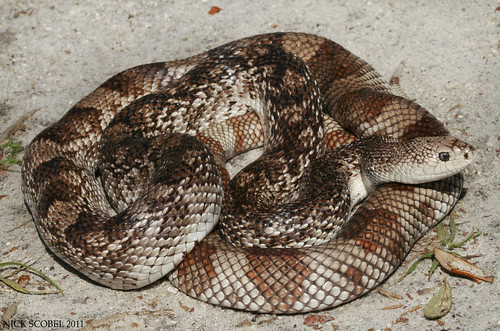
Florida Pine Snake - Pituophis melanoleucus mugitus

These large, powerful constrictors are exceedingly rare in Florida and are listed as a Species of Special Concern by the Florida FWC. They are restricted to xeric habitats where loose, sandy soil is available which allows them to burrow. They spend much of their time underground and have been found to be tied closely with active Pocker Gopher & Gopher Tortoise burrows in Florida. Habitat loss, illegal collection, and intentional killing is responsible for its decline. Continuing research and conservation is essential for the future of this snake in the southeastern United States. It was a great trip to Florida and can only hope my next trip will be equally as enjoyable. Until them, happy herping!